Introduction to Quantum Computing
Introduction to Quantum Mechanics
The Weird World of the Very Small
In our everyday lives, things are predictable. A flipped coin is either heads or tails. A light switch is either on or off. But when we zoom way, way down to the level of individual atoms and particles, the rules change completely. This is the realm of quantum mechanics, and it operates in ways that can seem strange and counterintuitive.
Instead of definite states, the quantum world is governed by probabilities and possibilities. A particle isn't just in one place; it exists in a cloud of potential locations. It’s not just spinning one way; it’s spinning in multiple directions at once. To understand how quantum computers work, we first need to get comfortable with a few of these bizarre, fundamental ideas.
Superposition
Imagine a spinning coin. While it's in the air, before it lands, what is it? It's not heads and it's not tails. In a way, it’s in a combination of both states. This is a rough analogy for a core quantum concept: superposition.
superposition
noun
The principle that a quantum system can exist in multiple states at the same time. Only when measured does it 'collapse' into a single, definite state.
A classical computer bit is simple; it's either a 0 or a 1. A quantum bit, or qubit, can be a 0, a 1, or a superposition of both. This quantum state isn't just a random mix. It's a precise mathematical combination of the two possibilities, described by a wave function. We can write this state, often called (pronounced "sigh"), as a combination of the basic states and .
The key moment comes with measurement. As soon as we try to observe a qubit in superposition, the wave function collapses. The qubit is forced to "choose" a single classical state, either 0 or 1. The probabilities of which one it will be are determined by those amplitudes, and . It's like the spinning coin finally landing: the uncertainty is gone, and we're left with a definite outcome.
Entanglement
If superposition is strange, entanglement is downright bizarre. It's a special connection that can link two or more quantum particles, no matter how far apart they are. Once entangled, they essentially behave as a single system.
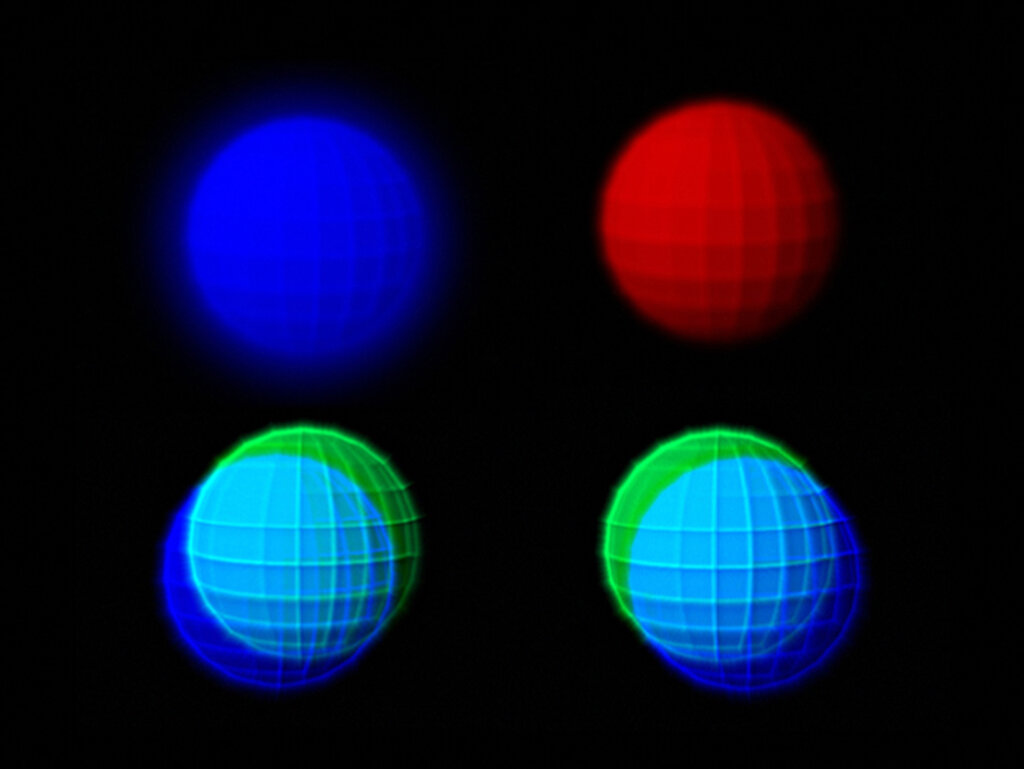
Imagine you have a pair of "entangled coins." You give one to a friend who travels to the other side of the world. You both flip your coins at the same time. The instant your coin lands on heads, you know with absolute certainty that your friend's coin has landed on tails. It’s as if the coins are communicating instantly, faster than the speed of light.
This is what Albert Einstein famously called "spooky action at a distance." The state of one entangled particle seems to instantly affect the other, defying our classical understanding of space and time.
entanglement
noun
A quantum mechanical phenomenon in which the quantum states of two or more particles are linked together. The state of each particle cannot be described independently of the others, even when separated by a large distance.
This interconnectedness is a powerful resource. While it doesn't allow for faster-than-light communication (a complex topic for another time), it does allow for powerful new ways of processing information. Superposition allows a qubit to explore many possibilities at once, and entanglement creates complex correlations between qubits that are impossible in classical computers.
How does the quantum realm described in quantum mechanics differ from the classical, everyday world?
What is the concept of 'superposition' as it applies to a qubit?
These two principles, superposition and entanglement, form the foundation of quantum mechanics and are what give quantum computing its extraordinary potential.