Introduction to Quantum Computing
Introduction to Quantum Computing
Beyond Bits and Bytes
The computer you're using right now thinks in a very straightforward way. Everything it does, from displaying this text to connecting to the internet, boils down to manipulating bits. A bit is the smallest unit of data and can only be in one of two states: a 0 or a 1. It's like a light switch that is either off or on. This binary system is the foundation of all classical computing.
Quantum computing takes a completely different approach. Instead of relying on classical bits, it uses the strange and wonderful rules of quantum mechanics to process information. This allows quantum computers to solve certain types of problems that are practically impossible for even the most powerful classical supercomputers.
Welcome to the Quantum Realm
The fundamental building block of a quantum computer is the quantum bit, or qubit. Unlike a classical bit that is either a 0 or a 1, a qubit can be a 0, a 1, or both at the same time.
This ability to exist in multiple states at once is called superposition.
Think of a spinning coin. While it's in the air, it's not definitively heads or tails—it's a blend of both possibilities. Only when it lands (or when we measure it) does it settle into a single, definite state. A qubit in superposition is like that spinning coin. It holds a probability of being 0 and a probability of being 1. Mathematically, we can represent this state as , where and are probability amplitudes.
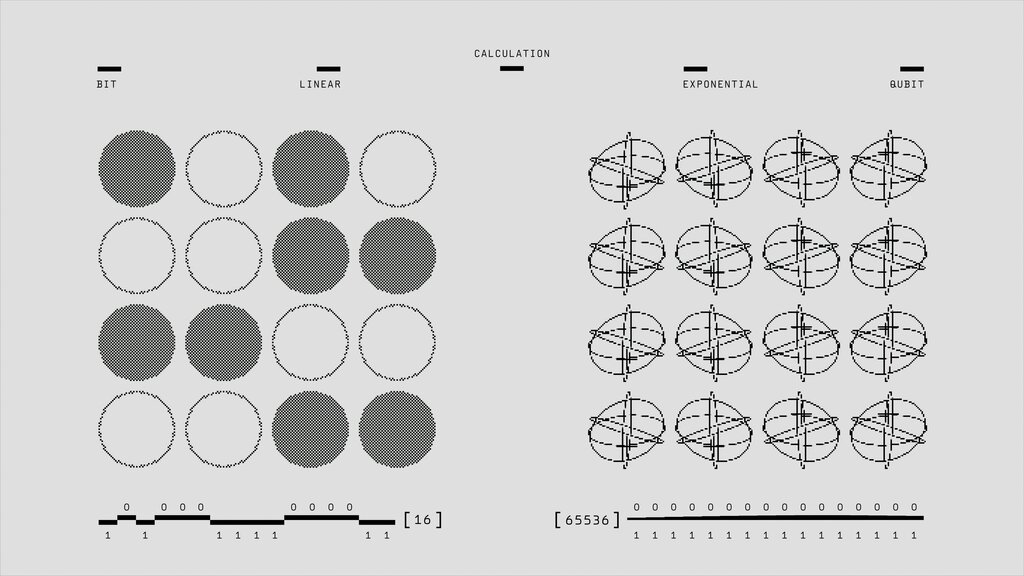
This property is a game-changer. Because a qubit can hold more information than a classical bit, a quantum computer's processing power grows exponentially with each added qubit. Two qubits can represent four states simultaneously (00, 01, 10, 11), three qubits can represent eight, and so on. This opens up a vast computational space for solving complex problems.
However, there's a catch. The moment we measure a qubit to see its value, the superposition collapses. The qubit is forced to "choose" a state, becoming either a definite 0 or a 1, just like a classical bit. The art of quantum computing lies in manipulating these probabilistic states without measuring them until the very end of a calculation.
A Spooky Connection
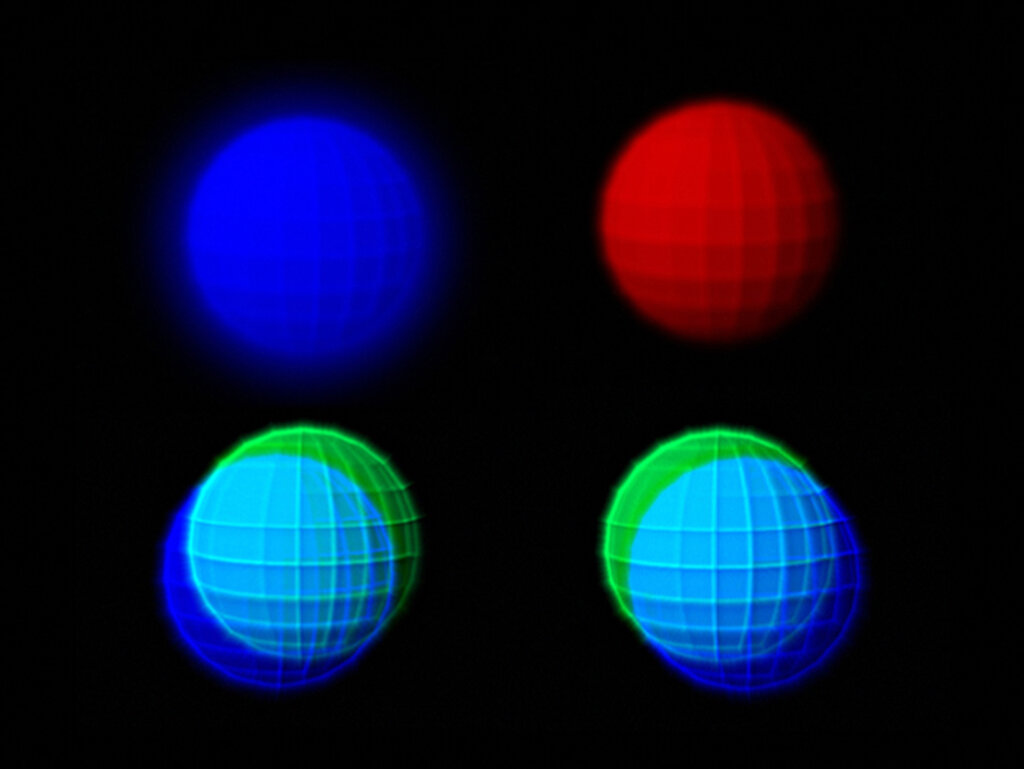
Another core principle of quantum mechanics is entanglement. This is a counterintuitive phenomenon where two or more qubits become linked in such a way that their fates are intertwined, no matter how far apart they are.
Another fundamental principle of quantum computing is entanglement, a phenomenon where two or more qubits become interconnected in such a way that the state of one qubit directly affects the state of another, regardless of the distance between them.
Imagine you have two gloves in separate, identical boxes. You don't know which is which. You keep one box and mail the other to a friend on the other side of the world. The moment you open your box and see a left-handed glove, you instantly know that your friend has the right-handed one. There was no communication needed at that instant; the outcomes were linked from the start.
Entangled qubits are like this, but even stranger. Until one is measured, both exist in an indefinite state. But the moment you measure one qubit and find it's a 0, you know with 100% certainty that its entangled partner will be a 1 (or vice versa, depending on how they were entangled). This connection is what Albert Einstein famously called "spooky action at a distance."
Quantum Operations
So how do we actually compute with qubits? In classical computers, logic gates like AND, OR, and NOT manipulate bits. Quantum computers have their own versions called quantum gates.
Quantum gates are operations that manipulate the state of one or more qubits. Instead of simple on/off logic, they perform rotations and transformations on the qubit's quantum state. This allows them to create and modify the superpositions and entanglements that are essential for quantum algorithms.
| Gate Type | Classical Example | Quantum Example | Function |
|---|---|---|---|
| Single-Unit | NOT Gate (flips 0 to 1) | Hadamard (H) Gate | Puts a qubit into an equal superposition of 0 and 1. |
| Multi-Unit | AND Gate (outputs 1 if both inputs are 1) | Controlled-NOT (CNOT) Gate | Flips a second qubit (target) only if a first qubit (control) is 1. Creates entanglement. |
The Hadamard gate is one of the most fundamental quantum gates. If you apply it to a qubit that is in the state , it will transform it into a perfect superposition of and . The CNOT gate acts on two qubits and is a key tool for creating entanglement between them. These gates, and others like them, are the building blocks used to construct quantum algorithms.
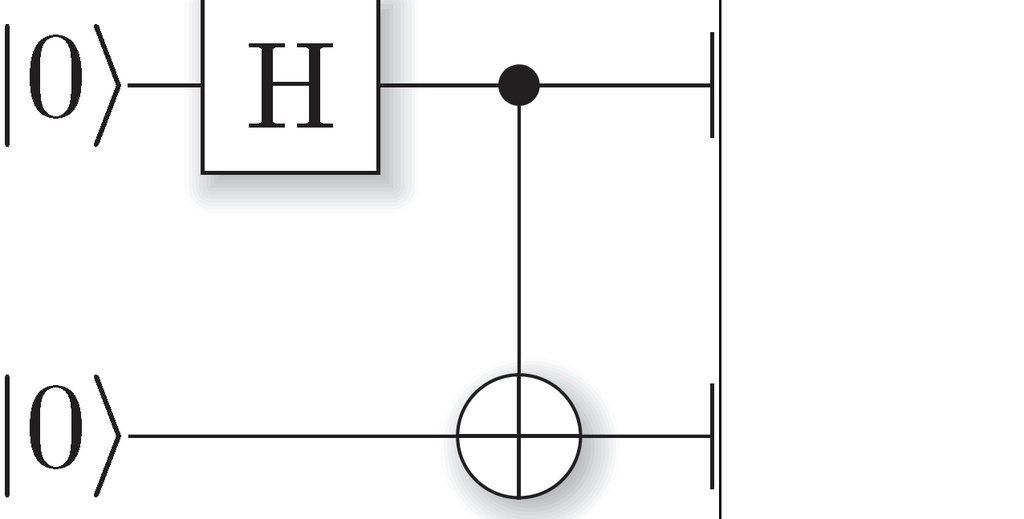
These three concepts—superposition, entanglement, and quantum gates—form the foundation of quantum computing. By harnessing them, scientists hope to tackle problems in fields like materials science, drug discovery, and complex optimization that are far beyond the reach of today's machines.
Ready to check your understanding?
What is the fundamental building block of a quantum computer?
The principle of superposition states that a qubit can be:
Understanding these principles is the first step into the revolutionary world of quantum information science.