Introduction to Quantum Computing
Introduction to Quantum Computing
A Different Kind of Computer
Classical computers, from your smartphone to the most powerful supercomputers, work with bits. A bit is the smallest unit of data and has a simple job: it can be either a 0 or a 1. Everything a classical computer does, from browsing the web to calculating a rocket's trajectory, boils down to manipulating billions of these tiny on-or-off switches.
Quantum computers operate on a completely different principle. They use a special kind of bit called a qubit. While a classical bit is limited to being either 0 or 1, a qubit can be a 0, a 1, or a blend of both at the same time. This ability to exist in multiple states at once unlocks a new world of computational power.
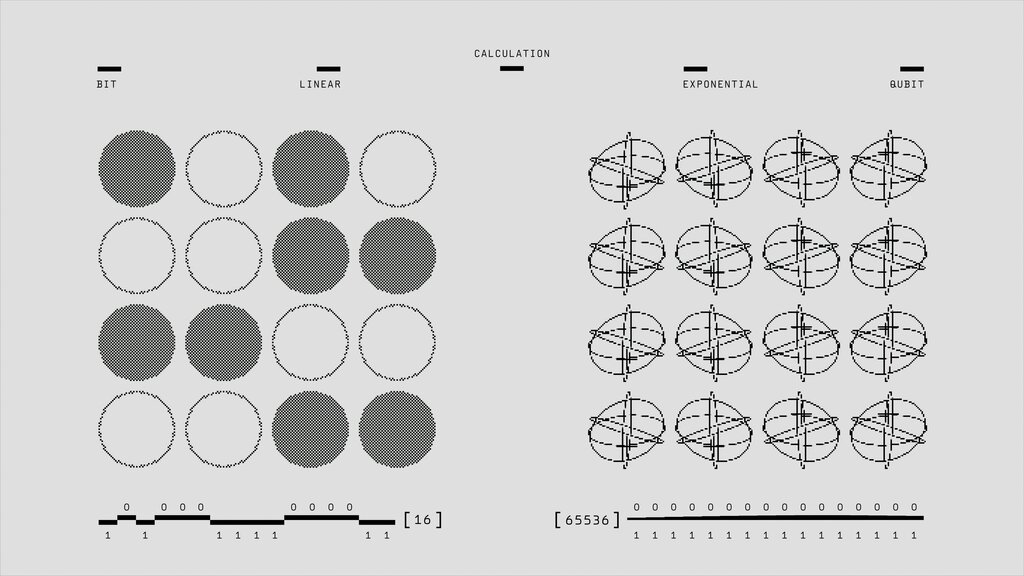
This fundamental difference means quantum computers aren't just faster versions of the computers we have today. They are a new kind of tool, designed to solve specific types of problems that are intractable for classical machines.
qubit
noun
The basic unit of quantum information. Like a classical bit, it can be a 0 or a 1, but it can also be a combination of both states simultaneously.
Superposition and Entanglement
Two core principles of quantum mechanics give qubits their power: superposition and entanglement.
Superposition is the ability of a qubit to be in a combination of both 0 and 1 states at the same time.
Think of a spinning coin. While it's in the air, it's neither heads nor tails—it's a blur of both possibilities. Only when it lands (when we measure it) does it settle into a definite state. A qubit in superposition is like that spinning coin. This allows a quantum computer to explore a vast number of potential solutions to a problem simultaneously. For example, two qubits in superposition can represent four states (00, 01, 10, and 11) at once. As you add more qubits, this power grows exponentially.
The second principle is entanglement.
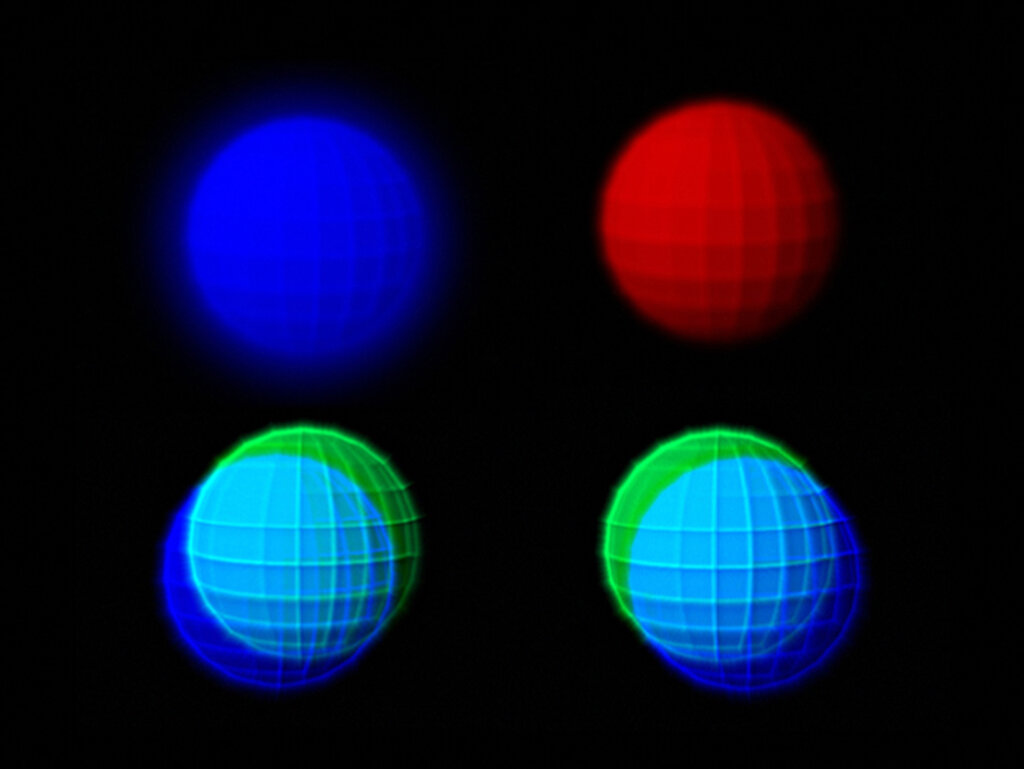
Entanglement is a special connection between two or more qubits. The state of one entangled qubit is instantly linked to the state of the other, no matter how far apart they are.
Imagine you have two special coins. You know that if one lands heads, the other is guaranteed to land tails, and vice versa. You put them in separate boxes and give one to a friend who travels to the other side of the world. The moment you open your box and see heads, you instantly know your friend's coin is tails. The coins' fates are linked.
Entangled qubits behave similarly. Measuring one qubit in an entangled pair instantly determines the state of the other. This interconnectedness allows for complex information processing that isn't possible in classical computing.
The Quantum Advantage
So, what are quantum computers good for? They won't replace your laptop for everyday tasks like sending emails or watching videos. Instead, their power lies in solving specific kinds of complex problems that would take a classical computer billions of years to crack.
Potential applications include:
- Drug Discovery: Simulating molecules with perfect accuracy to design new medicines.
- Materials Science: Creating new materials with desired properties, like more efficient batteries or solar cells.
- Financial Modeling: Optimizing investment strategies by analyzing complex market data.
- Cryptography: Breaking current encryption standards and creating new, unhackable ones.
By harnessing superposition and entanglement, quantum computers can navigate a massive landscape of possibilities to find solutions that are out of reach for even the most powerful supercomputers.
Two concepts in quantum physics that are the building blocks of quantum computing are superposition and entanglement.
Now that we've covered the basics, let's review these new concepts.
Ready to check your understanding?
What is the fundamental difference between a classical bit and a qubit?
The principle that allows a qubit to exist in multiple states (e.g., both 0 and 1) at the same time is called ________.
This new approach to computation is still in its early days, much like classical computing was in the 1950s. But by leveraging the strange rules of the quantum world, it promises to reshape science, technology, and our understanding of the universe.