Introduction to Quantum Computing
Introduction to Quantum Computing
A New Kind of Computation
Classical computers, from your smartphone to the most powerful supercomputers, work with bits. A bit is a simple switch, representing either a 0 or a 1. All the amazing things classical computers do boil down to manipulating billions of these switches very, very quickly.
Quantum computing is a fundamentally different approach. It's built on the principles of quantum mechanics, the strange and counterintuitive rules that govern the universe at the scale of atoms and subatomic particles. Instead of bits, quantum computers use qubits.
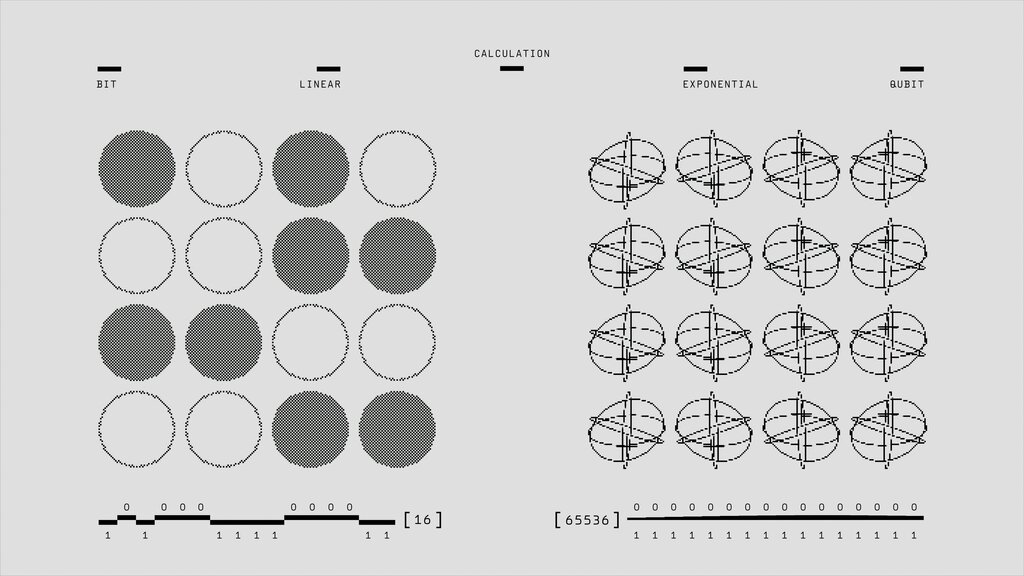
A qubit, or quantum bit, is the basic unit of quantum information. Like a classical bit, a qubit can be a 0 or a 1. But thanks to the principles of quantum mechanics, it can also be something else entirely. This is where the real power of quantum computing begins.
Superposition and Entanglement
Two key principles that make qubits so powerful are superposition and entanglement.
Superposition means a qubit can be in a combination of both 0 and 1 at the same time. Think of it like a spinning coin. While it's in the air, it's not heads or tails—it's a blend of both possibilities. Only when it lands (or when we measure it) does it settle into a definite state.
A qubit's state, represented by the Greek letter psi (), can be described as a combination of its basis states, and .
Here, and are probability amplitudes. When we measure the qubit, the probability of it collapsing to is , and the probability of it collapsing to is . The sum of these probabilities must equal 1.
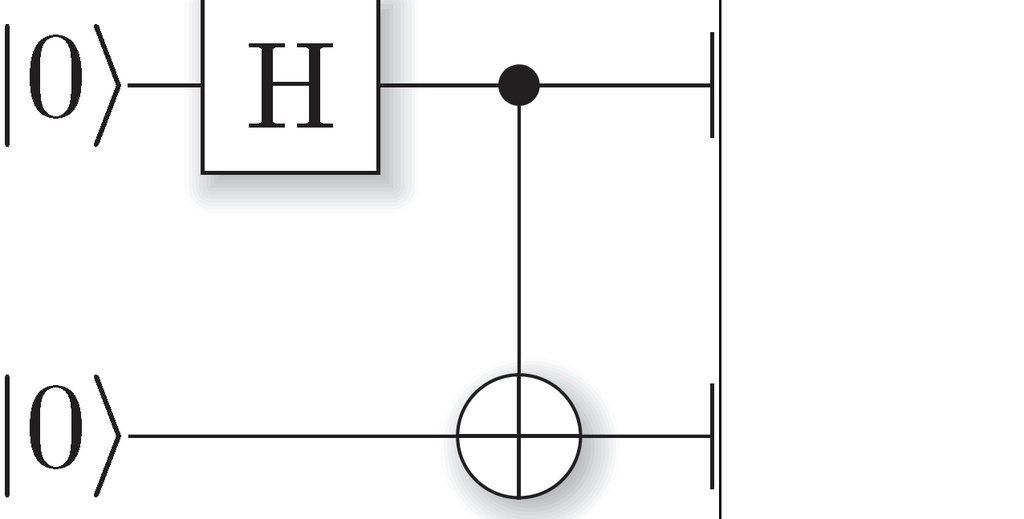
Entanglement is another strange quantum phenomenon. It's a special connection that can link two or more qubits. When qubits are entangled, their fates are intertwined, no matter how far apart they are.
If you have two entangled qubits, measuring the state of one instantly influences the state of the other. If you measure one and find it's a 0, you'll know instantly that the other is also a 0 (or a 1, depending on the type of entanglement). Albert Einstein famously called this "spooky action at a distance."
Two concepts in quantum physics that are the building blocks of quantum computing are superposition and entanglement.
The Power of Quantum Algorithms
So, how does this lead to a more powerful computer? By combining superposition and entanglement, quantum computers can explore a vast number of possibilities simultaneously. A classical computer with 3 bits can only represent one of $2^3 = 8$ possible numbers at a time. But a quantum computer with 3 qubits can represent all 8 of those numbers at once in a superposition.
With just 300 qubits, a quantum computer could represent more possible states than there are atoms in the known universe. This massive parallelism is what allows quantum algorithms to solve certain types of problems much faster than any classical computer ever could. These problems include factoring large numbers (which has implications for cryptography) and simulating complex molecular interactions (which could revolutionize drug discovery and material science).
Building and operating these machines is a monumental challenge. Qubits are incredibly fragile. The slightest disturbance from the environment, like a stray vibration or temperature fluctuation, can destroy their quantum state in a phenomenon called decoherence. This is why quantum computers are often kept in large, extremely cold dilution refrigerators.

Quantum computing isn't about replacing your laptop. It's about creating a new class of machine designed to tackle specific, complex problems that are currently beyond our reach. Let's review the core ideas.
Ready to check your understanding?
What is the fundamental unit of information in a quantum computer?
The principle that allows a qubit to exist in a combination of both 0 and 1 simultaneously is known as:
While still in its early days, quantum computing represents a major leap forward in our ability to understand and manipulate the world around us. By harnessing the strange rules of the quantum realm, we are opening the door to solving some of humanity's most challenging problems.