Introduction to Quantitative Finance
Introduction to Quantitative Finance
Finance Beyond Intuition
Imagine trying to predict the weather. You could look outside, feel the wind, and make a guess based on experience. Or, you could use complex computer models that analyze atmospheric pressure, temperature, and historical data to forecast the chance of rain down to the hour.
Quantitative finance is the second approach, but for money. It's the field of using mathematical models and statistical techniques to understand and predict financial markets. Instead of relying purely on intuition or news headlines, it uses data to make informed decisions about investments, pricing, and risk.
The core idea is to apply the scientific method to finance: form a hypothesis, test it with data, and build a model to act on the results.
This discipline is driven by quantitative analysts, often called "quants." These are the architects and engineers of the financial world. They bring a powerful toolkit of math, computer science, and financial theory to solve complex problems. Quants design the algorithms for high-frequency trading, build the models that price exotic financial products, and develop the systems that help banks manage trillions of $ in risk.

Three Pillars of Quantitative Finance
While the field is vast, much of a quant's work revolves around three key areas. These pillars form the foundation of modern financial decision-making.
derivative
noun
A financial contract whose value is derived from an underlying asset, such as a stock, bond, or commodity.
1. Derivative Pricing
Imagine you have a coupon that lets you buy a popular concert ticket for $50 next month, but only if the band's new album gets a good review. What is that coupon worth today? Its value depends on the probability of a good review, the current demand for tickets, and how much time is left. This coupon is like a derivative.
Derivatives are complex contracts whose value depends on the future performance of something else. Quants build sophisticated mathematical models to calculate a fair price for them. This is crucial for traders, who need to know if they're getting a good deal, and for companies using derivatives to hedge against future uncertainty.
2. Risk Management
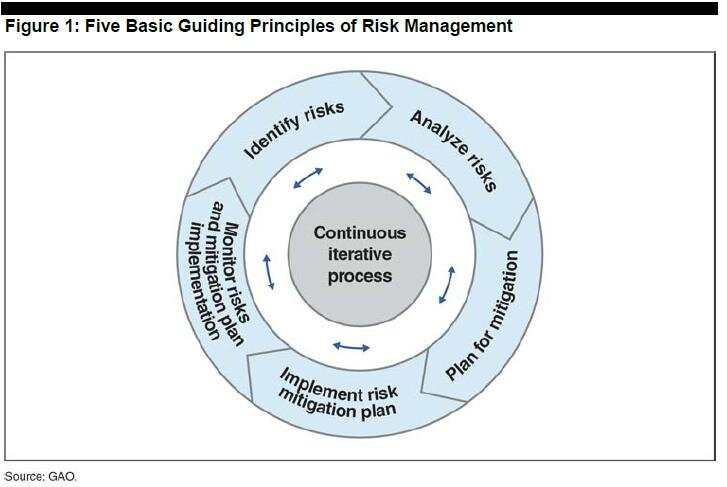
Every investment carries risk, which is just the uncertainty of its outcome. Will the stock go up or down? Will the borrower default on their loan? Risk management is the process of identifying, measuring, and mitigating these potential losses.
Quants are central to this process. They develop statistical models to answer questions like, "What's the maximum amount our firm could lose in a single day, with 99% confidence?" This is a concept known as Value at Risk (VaR). By quantifying risk, financial institutions can make smarter decisions, hold enough capital to cover potential losses, and avoid catastrophic failures.
3. Portfolio Optimization
Building an investment portfolio is like making a smoothie. You don't just throw in one ingredient; you combine several to get the right balance of flavor, sweetness, and nutrition. You might mix sweet fruits (high-return stocks) with healthy greens (stable bonds).
Portfolio optimization is the process of finding the perfect mix of assets to achieve the highest possible return for a given level of risk. A quant doesn't guess at the recipe. They use mathematical techniques to analyze how different assets move in relation to each other. The goal is to build a diversified portfolio where the assets aren't all rising or falling at the same time, smoothing out the ride and improving the overall performance.
This quantitative approach to finance has transformed the industry, moving it from a world of back-of-the-envelope calculations to one powered by immense computational power and advanced mathematics.
Ready to check your understanding? Let's see how these core concepts have settled in.
What is the fundamental approach of quantitative finance?
A quant is asked to calculate the value of a coupon that allows someone to buy a stock at a fixed price in six months. According to the concept of derivative pricing, what would they primarily use?
These foundational ideas are just the beginning. They are the building blocks used to construct the complex and fascinating world of modern finance.