Introduction to Python Programming
Introduction to Python
What is Python?
Python is a popular, high-level programming language. Think of it as a tool for giving instructions to a computer. It was created in the late 1980s by Guido van Rossum, a Dutch programmer. He wanted to create a language that was easy to read and write, something that felt more like plain English than complex code.
Interestingly, the name doesn't come from the snake. Van Rossum was a big fan of the British comedy group Monty Python, so he named his new language after them. This fun origin hints at the language's approachable and slightly unconventional spirit.
The Python Philosophy
Every programming language has a certain style or philosophy. Python's is all about simplicity and readability. The idea is that code is read more often than it's written, so it should be clean and easy to understand. This core belief is summed up in a collection of 20 guiding principles called "The Zen of Python," which includes aphorisms like "Beautiful is better than ugly" and "Simple is better than complex."
Readability counts. If your code is hard for another person to understand, it's probably not good code.
This philosophy makes Python incredibly versatile. It's used for building websites, analyzing data, creating artificial intelligence models, automating repetitive tasks, and much more. It also has a massive and supportive community, which means there are countless libraries (pre-written code) you can use to avoid starting every project from scratch.
Getting Set Up
Before you can start writing Python, you need two things: the Python interpreter and a code editor.
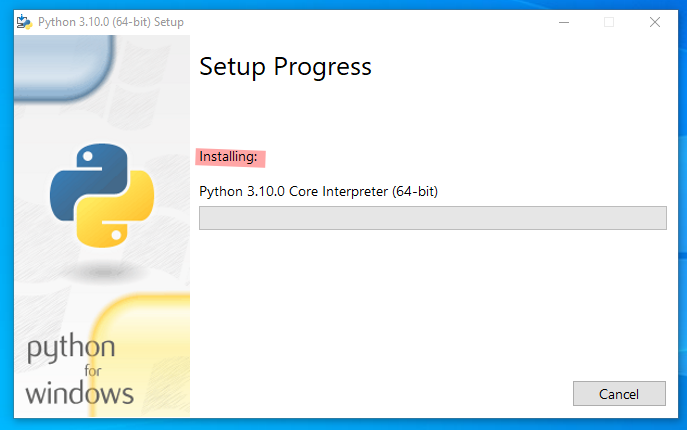
The interpreter is a program that reads your Python code and translates it into instructions the computer can execute. You can download the official interpreter for free from the official Python website, python.org. It's always a good idea to get the latest stable version.
A code editor is a text editor designed specifically for writing code. It helps you by highlighting different parts of your code in various colors, which makes it easier to read and spot mistakes. Some popular choices include Visual Studio Code, PyCharm, and Sublime Text. For now, any basic text editor will work, but a dedicated code editor will make your life much easier down the road.
Your First Program
It's a tradition for new programmers to start with a program that simply displays "Hello, World!" on the screen. It's a small victory that proves your setup is working correctly.
Open your code editor and type the following line:
print("Hello, World!")
Let's break this down. print() is a built-in Python command, called a function, that tells the computer to display whatever you put inside the parentheses. The text inside the quotation marks is called a string, which is simply a sequence of characters.
Save this file with a .py extension, for example, hello.py. The .py tells your computer that it's a Python file.
To run your program, you'll need to open a terminal or command prompt. Navigate to the directory where you saved your file and type python hello.py (or python3 hello.py on some systems) and press Enter. You should see Hello, World! printed to the screen.
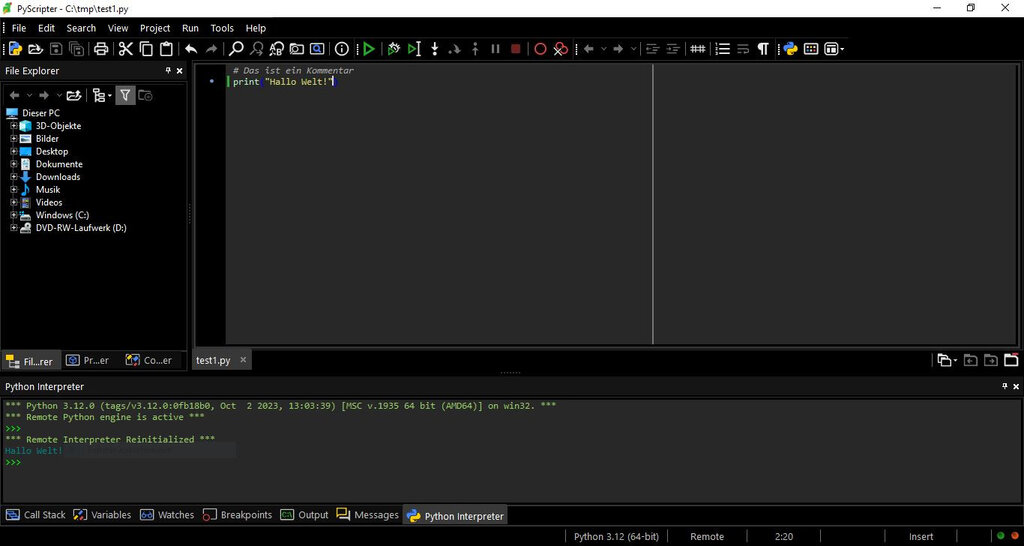
Congratulations, you've just written and run your first Python program! Now it's time to check your understanding of these core concepts.
What is the origin of the name for the Python programming language?
Which of the following best describes the role of the Python interpreter?
You've taken the first step into a larger world. You understand what Python is, why it's so popular, and how to get a simple program running.