Introduction to Python Programming
Introduction to Python
What is Python?
Python is a programming language known for its readability. Its syntax is clean and simple, making it one of the easiest languages for beginners to learn. It was created in the late 1980s by Guido van Rossum, who wanted to design a language that was both powerful and straightforward.
One of Python's biggest strengths is its versatility. You can use it for almost anything: building websites, analyzing data, creating video games, and automating repetitive tasks. Major companies like Google, Netflix, and NASA use Python extensively in their operations.
Its design philosophy emphasizes code readability with its notable use of significant indentation. This means the structure of your code is part of the language itself, which helps enforce a clean, easy-to-read style.
Setting Up Your Environment
Before you can start coding, you need to have Python installed on your computer. Many operating systems, like macOS and Linux, come with Python pre-installed. To check, you can open your terminal or command prompt and type python --version.
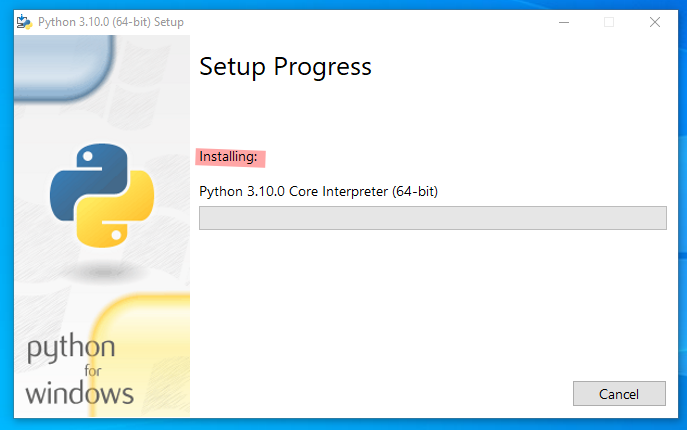
If you don't have it or want the latest version, you can download it from the official Python website, python.org. The installation process is straightforward, especially on Windows, where it works like any other software installation.
While you can write Python code in any plain text editor, most developers use an Integrated Development Environment (IDE). An IDE is a software application that provides comprehensive facilities to programmers for software development. An IDE normally consists of at least a source code editor, build automation tools, and a debugger.
Popular IDEs for Python include Visual Studio Code, PyCharm, and Spyder. Python also comes with its own basic IDE called IDLE, which is great for getting started.
Your First Lines of Code
Let's dive into the basics of Python's syntax. We'll start with variables, which are essentially containers for storing data values.
In Python, you don't need to declare a variable's type. The type is inferred when you assign a value to it.
# Assigning a value to a variable
user_name = "Alice"
age = 30
is_learning = True
Each variable holds a value of a specific data type. The most common data types you'll encounter at first are strings (text), integers (whole numbers), floats (numbers with a decimal), and booleans (True or False).
| Data Type | Description | Example |
|---|---|---|
String (str) | A sequence of characters | "Hello, Python!" |
Integer (int) | A whole number | 1024 |
Float (float) | A number with a decimal point | 3.14 |
Boolean (bool) | Represents True or False | True |
Now let's make our programs interactive. We can display information using the print() function and get information from the user with the input() function.
The classic first program is to print "Hello, World!" to the screen.
print("Hello, World!")
The input() function pauses your program and waits for the user to type something and press Enter. The text the user enters is then returned as a string, which you can store in a variable.
# Ask the user for their name
name = input("What is your name? ")

# Greet the user
print("Hello, " + name + "!")
When you run this code, it will first display "What is your name? ". After you type your name and press Enter, it will greet you personally. This simple combination of input and output is the foundation for building more complex and interactive applications.
Ready to check your understanding? Let's try a few questions.
Who is the original creator of the Python programming language?
What is a core design philosophy of Python that is directly enforced by its syntax?
You've just taken your first steps with Python. You've learned what it is, how to set it up, and how to write simple programs that use variables, data types, and user input. From here, you can start exploring more of what Python has to offer.