Introduction to Python Programming
Introduction to Python
What is Python?
Python is a programming language known for its clear, readable syntax. It’s often compared to writing in English, which makes it a popular choice for beginners. Created in the late 1980s by Guido van Rossum, its design philosophy emphasizes code readability and simplicity.
One of Python's biggest strengths is its versatility. You can find it everywhere, from building websites and mobile apps to powering data analysis and artificial intelligence. Companies like Google, Netflix, and NASA use it extensively for a wide range of tasks. This flexibility means that learning Python opens doors to many different career paths.
Setting Up Your Workspace
To start writing Python, you need two things: the Python interpreter and a place to write your code. The interpreter is what reads your Python code and translates it into instructions the computer can understand.
While you could write code in a simple text editor, most developers use an Integrated Development Environment, or IDE. An IDE is like a specialized workshop for programmers. It combines a text editor with other helpful tools, like a way to run your code and check for errors, all in one place.
IDE
noun
An Integrated Development Environment is a software application that provides comprehensive facilities to computer programmers for software development.
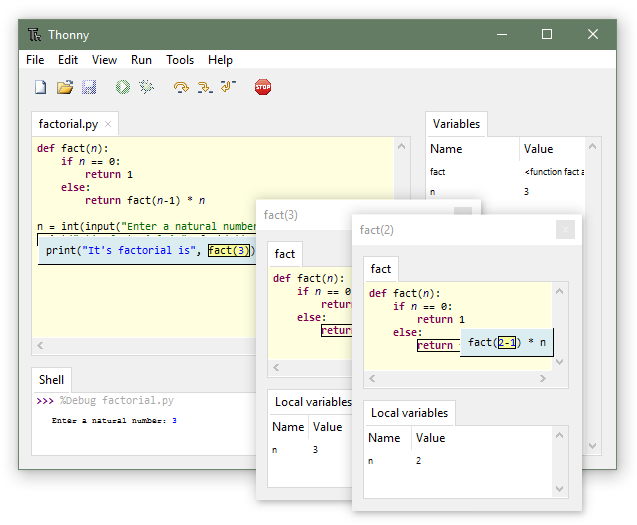
For beginners, a simple IDE called Thonny is a great choice. It comes with Python built-in and has a very user-friendly interface. Go to the official Thonny website to download and install it for your operating system. The installer will handle setting up both Python and the IDE for you.
Your First Program
In programming, there's a long-standing tradition of making your first program display the words "Hello, World!" on the screen. It's a simple way to confirm that your setup is working correctly and to get a feel for a new language's syntax.
In Python, this is incredibly straightforward. Open Thonny, and in the main editor window, type the following line of code:
print("Hello, World!")
This code uses Python's built-in print() function. A function is a reusable block of code that performs a specific action. The print() function's job is to display whatever you put inside its parentheses on the screen.
To run your program in Thonny, simply click the green 'Run' button (it looks like a play symbol) in the toolbar. The output, "Hello, World!", will appear in the 'Shell' panel at the bottom of the window.
That's it! One line of code is all it takes to write a complete program in Python.
Congratulations, you've just written and executed your first piece of Python code. This simple process of writing code in the editor and running it to see the output is the fundamental workflow you'll use as you learn to build more complex programs.
Ready to check your understanding?
What is the primary design philosophy of the Python programming language?
What is the purpose of the Python interpreter?
You've successfully taken your first step into the world of programming. Now you're ready to learn about the fundamental building blocks of Python.