Introduction to Python Programming
Introduction to Python
Meet Python
Computers need instructions to do anything, and they need those instructions written in a language they can understand. Python is one of those languages. It’s a popular, general-purpose programming language, which means you can use it to build almost anything: websites, games, data analysis tools, and even AI.
Python was created in the late 1980s by a Dutch programmer named Guido van Rossum. He wanted to create a language that was powerful but also fun and easy to read. And the name? It’s a tribute to his favorite comedy troupe, Monty Python's Flying Circus.
Designed for Humans
Python’s main goal is readability. Its syntax is clean and simple, often looking like plain English. This design philosophy makes it easier for beginners to learn and faster for experienced developers to write. The idea is that code is read far more often than it is written, so making it easy to understand is a top priority.
This focus on simplicity is captured in a set of guiding principles called the Zen of Python, which includes phrases like "Beautiful is better than ugly" and "Simple is better than complex."
How It Works
A few key features make Python especially friendly. One is dynamic typing. Imagine you have a set of storage boxes. In some languages, you have to label each box with exactly what it will hold: "apples only" or "books only." This is called static typing. With Python, your boxes are multipurpose. You can put an apple in a box, then replace it with a book later, and the language figures it out automatically. You don't have to declare the type of a variable beforehand.
# In Python, a variable can hold different types.
x = 10         # x is an integer
print(x)

x = "hello"  # Now x is a string
print(x)
Another feature is automatic memory management, often called "garbage collection." As you write and run a program, it creates and uses data that takes up memory. Python automatically cleans up the data you're no longer using, freeing up space. It's like having a helpful assistant who tidies your workspace, so you can focus on building things without worrying about the cleanup.
Python also supports multiple ways of writing code, known as programming paradigms. Whether you want to write a simple script, organize your code into objects, or use a more mathematical, function-based style, Python is flexible enough to handle it.
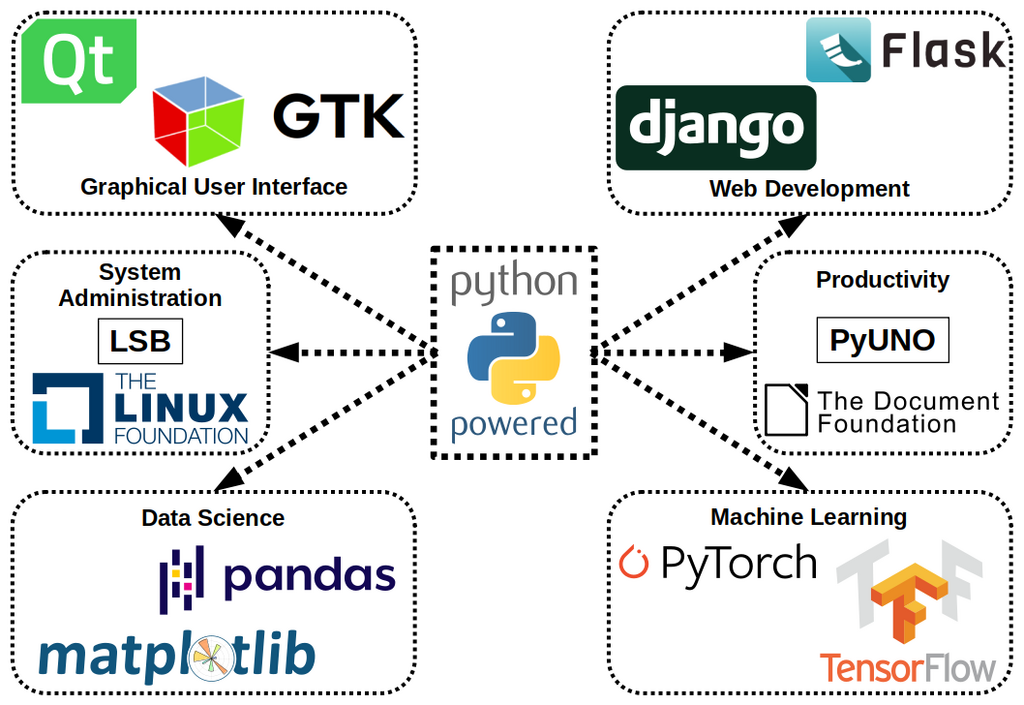
This combination of simplicity, flexibility, and power has made Python a go-to language for a huge range of applications, from web servers and scientific computing to automation and machine learning.
Ready to check your understanding?
What is the primary design philosophy of Python?
The concept of 'dynamic typing' in Python means that...
This foundation gives you a sense of what Python is and why it's designed the way it is. Next, we'll start exploring how to actually write it.