Introduction to Python Programming
Introduction to Python
Why Python?
Python is a programming language designed to be easy to read and write. Think of it less like a dense legal document and more like a clear, step-by-step recipe. This focus on simplicity means you can spend more time solving problems and less time wrestling with complicated syntax.
The language's core philosophy is often called "The Zen of Python." It values beauty, simplicity, and readability. One of the most distinct features you'll notice is its use of indentation. Instead of using brackets or keywords to group code, Python uses whitespace. This enforces a clean, organized layout that's easy for anyone to follow.
Code is read more often than it is written. Python's design prioritizes readability to make maintenance and collaboration easier.
Different Ways of Thinking
Python is a multi-paradigm language. This means it supports several different ways of structuring your programs. You don't have to choose just one; you can mix and match them as needed.
-
Procedural Programming: This is like a to-do list. You write a sequence of steps, and the computer executes them in order. It's straightforward and great for simple tasks.
-
Object-Oriented Programming (OOP): This approach involves creating "objects" that contain both data and functions. Think of a car object. It has data (color, speed) and functions (accelerate, brake). This helps organize complex programs by grouping related information and behavior together.
-
Functional Programming: This paradigm treats computation as the evaluation of mathematical functions. It avoids changing state and mutable data. You build programs by stringing together functions, where the output of one becomes the input for the next, like an assembly line.
Setting Up Your Workspace
Before you can start coding, you need to install Python and set up a development environment. Let's walk through it.
1. Install Python:
Head to the official Python website at python.org. Download the latest stable version for your operating system (Windows, macOS, or Linux). The installer is straightforward. During installation on Windows, make sure to check the box that says "Add Python to PATH." This allows you to run Python from your computer's command line.
2. Choose a Code Editor: While you can write Python in a simple text editor, most developers use an Integrated Development Environment (IDE) or a dedicated code editor. These tools provide features like syntax highlighting, code completion, and debugging, which make coding much easier.
IDE
noun
An Integrated Development Environment is a software application that provides comprehensive facilities to computer programmers for software development. An IDE normally consists of at least a source code editor, build automation tools, and a debugger.
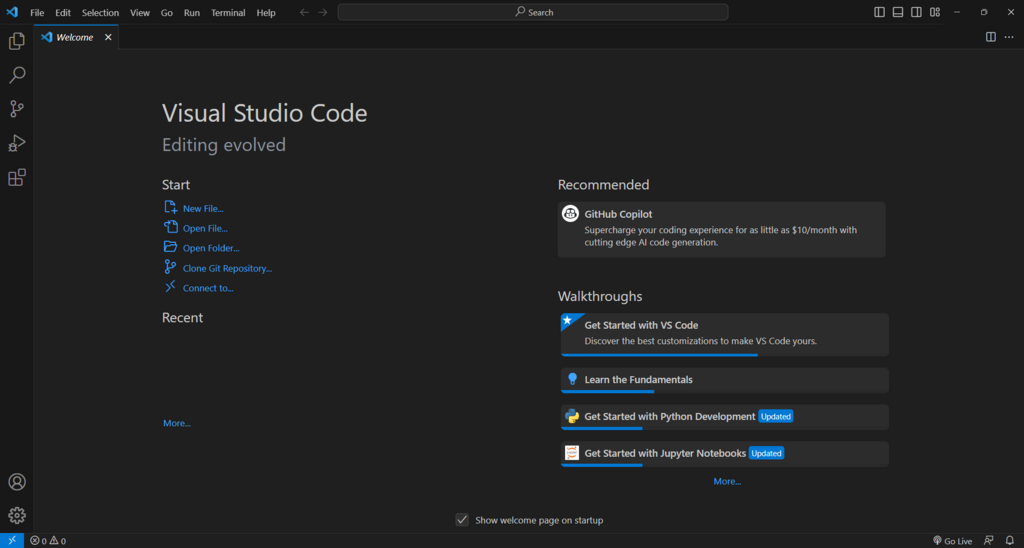
Popular choices include VS Code, PyCharm, and Sublime Text. For beginners, an editor called Thonny comes with Python built-in and is designed for learning.
3. Write Your First Program: Once you have Python installed and an editor ready, you can write your first line of code. It's a tradition to start with a program that simply displays "Hello, World!" on the screen.
# This is a comment. Python ignores lines starting with #.
print("Hello, World!")
Save this file with a .py extension (for example, hello.py). You can run it from your terminal by navigating to the file's directory and typing python hello.py. If you're using an IDE, it will usually have a "run" button that does this for you.
That's it! You've just run your first Python program.
What is the primary focus of Python's design philosophy?
In Python, how are blocks of code (like the body of a function or a loop) defined?
Now that you have Python installed, you're ready to start exploring its features and building your own applications.