Introduction to Python Programming
Introduction to Python
What Is Python?
Python is a high-level programming language, which means it's designed to be easy for humans to read and write. Its syntax is clean and straightforward, often resembling plain English. This focus on simplicity allows you to focus on solving problems rather than getting tangled up in complicated rules.
Think of it like the difference between giving a friend step-by-step instructions to make a sandwich versus engineering the toaster yourself. Python lets you give the instructions.
It was created in the late 1980s by Guido van Rossum. Fun fact: he named it after the British comedy group Monty Python, not the snake. Python is also an interpreted language. This means you can run your code line by line as soon as you write it, which makes testing and debugging much faster than with compiled languages that require an extra step before running.
Why Learn Python?
Python's popularity has exploded for a few key reasons. Its gentle learning curve makes it a great first language for beginners. But don't let its simplicity fool you; it's also incredibly powerful and used by major companies like Google, Netflix, and NASA.
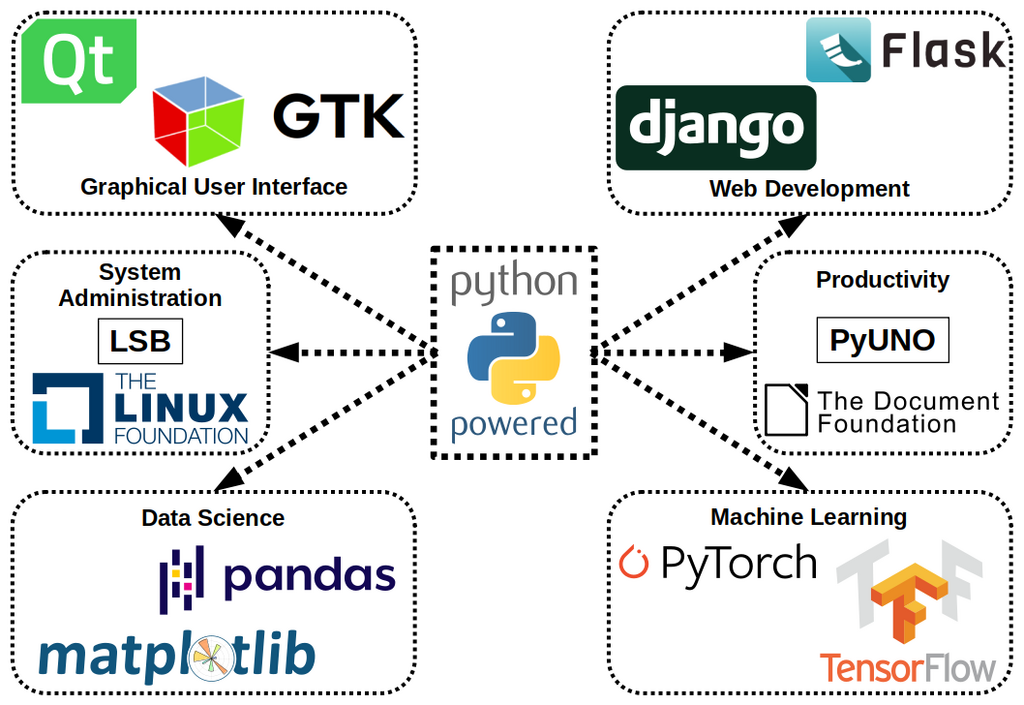
One of its biggest strengths is its versatility. Python isn't just for one thing. It has a massive collection of pre-built tools and frameworks called libraries that let you do almost anything you can imagine. This includes:
- Web Development: Building the backend of websites and web apps with frameworks like Django and Flask.
- Data Science and Machine Learning: Analyzing huge datasets, visualizing information, and building artificial intelligence models.
- Automation and Scripting: Writing simple scripts to automate repetitive tasks, like organizing files or sending emails.
- Software Development: Creating desktop applications and games.
Getting Started
First, you need to install Python on your computer. The good news is that macOS and most Linux distributions come with Python pre-installed. To check, open your terminal and type python --version.
If you're on Windows or need to update to the latest version, head over to the official Python website, python.org. The installation is straightforward; just follow the on-screen instructions. Be sure to check the box that says "Add Python to PATH" during installation on Windows. This allows you to run Python from your command prompt.
Once Python is installed, you can write your first program. It's a tradition in programming to start with a "Hello, World!" program. This is a simple piece of code that just prints the text "Hello, World!" to the screen. It's a quick way to confirm that your setup is working correctly.
Open a plain text editor (like Notepad on Windows or TextEdit on Mac) and type the following line:
print("Hello, World!")
Save the file as hello.py. The .py extension is important because it tells the computer that this is a Python file.
To run it, open your terminal or command prompt, navigate to the directory where you saved the file, and type:
python hello.py
If everything is set up correctly, you'll see Hello, World! printed on the screen. Congratulations, you've just run your first Python program!
Python syntax is known for its readability and simplicity, making it an ideal language for beginners.
Ready to check your understanding?
What is a primary advantage of Python being an interpreted language?
When installing Python on Windows, what is the recommended step to ensure you can run Python from the command prompt easily?
You've taken the first step into a larger world of programming. With a working setup, you're now ready to explore what Python can really do.