Introduction to Python Programming
Introduction to Python
What is Python?
Python is a high-level, general-purpose programming language. Let's break that down.
Think of a programming language as a way to give instructions to a computer. Some languages are "low-level," meaning you have to be extremely specific, like telling a robot to "move left arm motor 30 degrees, close gripper to 75% pressure." It's powerful, but tedious.
Python is "high-level." It's more like talking to a person. You can give simpler, more abstract commands, and Python figures out the details. This is why its syntax is known for being clean and readable. It often looks a lot like plain English.
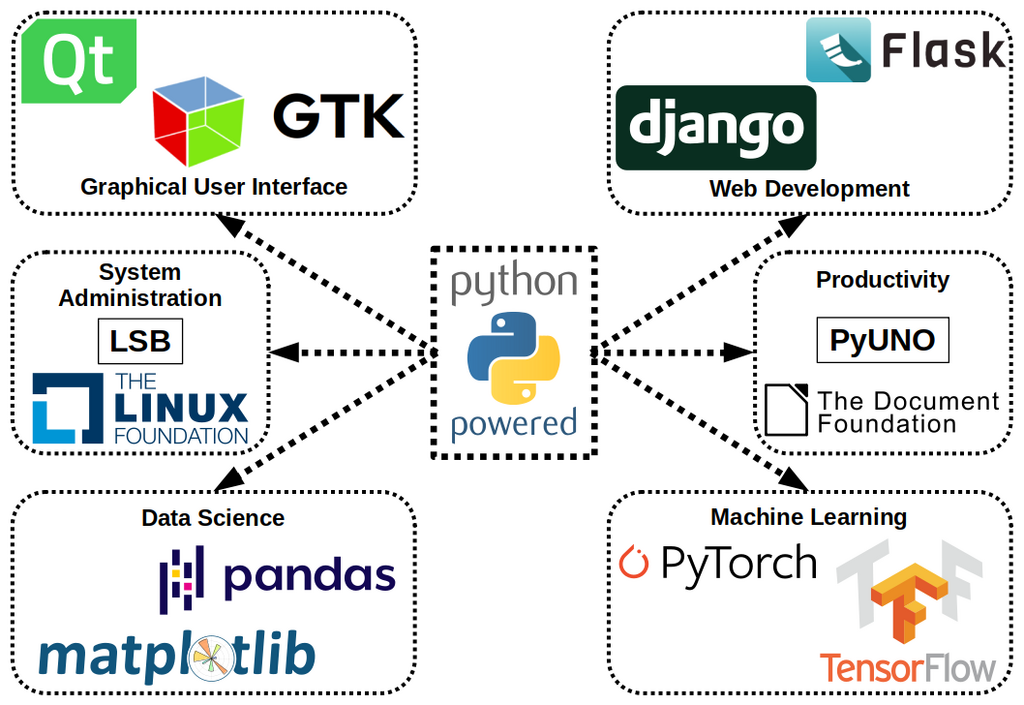
The "general-purpose" part means Python isn't a specialist. You can use it to build websites, analyze data, create games, automate tasks, and much more.
Getting Set Up
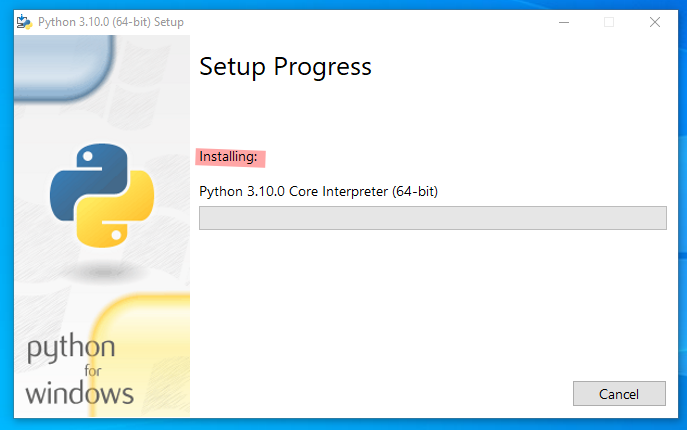
To start writing Python, you first need to install the Python interpreter on your computer. The interpreter is a program that reads your Python code and translates it into instructions the computer's hardware can understand.
- Go to the official Python website: python.org.
- Head to the "Downloads" section. The site will usually recommend the best version for your operating system (like Windows or macOS).
- Download the installer and run it. During installation on Windows, make sure to check the box that says "Add Python to PATH." This small step makes it much easier to run Python from anywhere on your computer.
Next, you need a place to write your code. While you could use a simple text editor, most programmers use an Integrated Development Environment, or IDE.
IDE
noun
An Integrated Development Environment is a software application that provides comprehensive facilities to computer programmers for software development. An IDE normally consists of at least a source code editor, build automation tools, and a debugger.
An IDE is like a specialized workshop for a programmer. It has a text editor with features like syntax highlighting (coloring your code to make it readable) and autocompletion. It also includes tools for running and debugging your code, all in one place.
Two excellent and popular choices for Python are:
- Visual Studio Code (VS Code): A free, lightweight, and highly extensible code editor from Microsoft.
- PyCharm: A powerful IDE from JetBrains specifically designed for Python. It has a free Community edition that is perfect for beginners.
Your First Program
It's a tradition in programming to make your first program display the text "Hello, World!" on the screen. It's a simple way to confirm that your setup is working correctly.
- Open your IDE (like VS Code or PyCharm).
- Create a new file and save it with a
.pyextension. Let's name ithello.py. - Type the following line of code into the file:
print("Hello, World!")
That's it. The print() function is a built-in Python command that outputs whatever you put inside the parentheses to the screen.
Now, let's run it. Most IDEs have a "Run" button (often a green triangle) that will execute the current file. You can also run it from your computer's terminal by navigating to the folder where you saved your file and typing python hello.py.
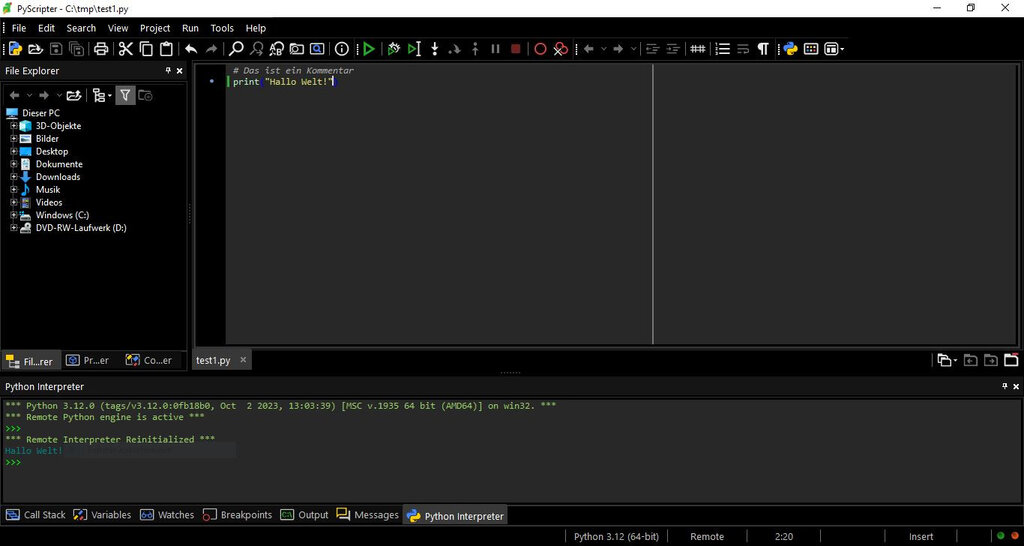
If everything is set up correctly, you should see the words Hello, World! appear in an output window or your terminal. Congratulations, you've just written and run your first Python program!
What does it mean for Python to be considered a "high-level" programming language?
What is the primary role of the Python interpreter?
You've taken the first crucial steps into the world of Python. You have an environment for writing and running code, and you know how to display information. From here, you can start exploring what makes the language so powerful.