Introduction to Python Programming
Introduction to Python
What is Python?
Python is a programming language created by Guido van Rossum and first released in 1991. Its design philosophy emphasizes code readability with its notable use of significant indentation. Think of it as a language that wants you to write clean, organized code from the very start.
It's known for being a high-level, interpreted language. "High-level" means it's closer to human language than to the computer's native binary code. You write instructions like print("Hello") instead of complex machine instructions. "Interpreted" means that you don't need to compile your code into a separate file before running it. A program called an interpreter runs your code line by line, which makes testing and debugging much faster.
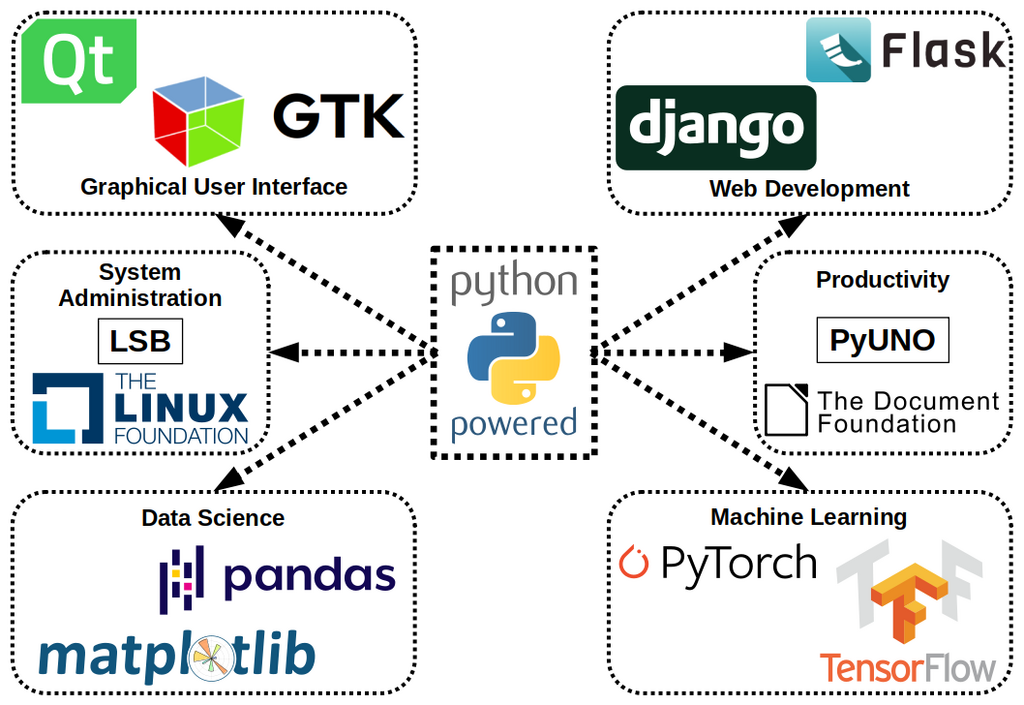
Key features of Python include its simple, easy-to-learn syntax, a large standard library with tools for many common tasks, and its versatility across different fields like web development, data science, and automation.
Getting Python Ready
Before you can write Python code, you need to install it on your computer. You can download the latest version from the official website, python.org. The site automatically detects your operating system and suggests the correct installer.
During installation on Windows, you'll see a checkbox that says "Add Python to PATH." It's very important to check this box. This allows you to run Python from your computer's command line or terminal, which is a common way to execute programs.
If you're on macOS or a Linux-based system, Python might already be installed. You can check by opening the terminal and typing
python3 --version. It's still a good idea to install the latest version from python.org to get the newest features.
When you install Python, you also get a simple program called IDLE (Integrated Development and Learning Environment). It's a basic tool for writing and running Python code, and it's great for beginners.
Your First Program
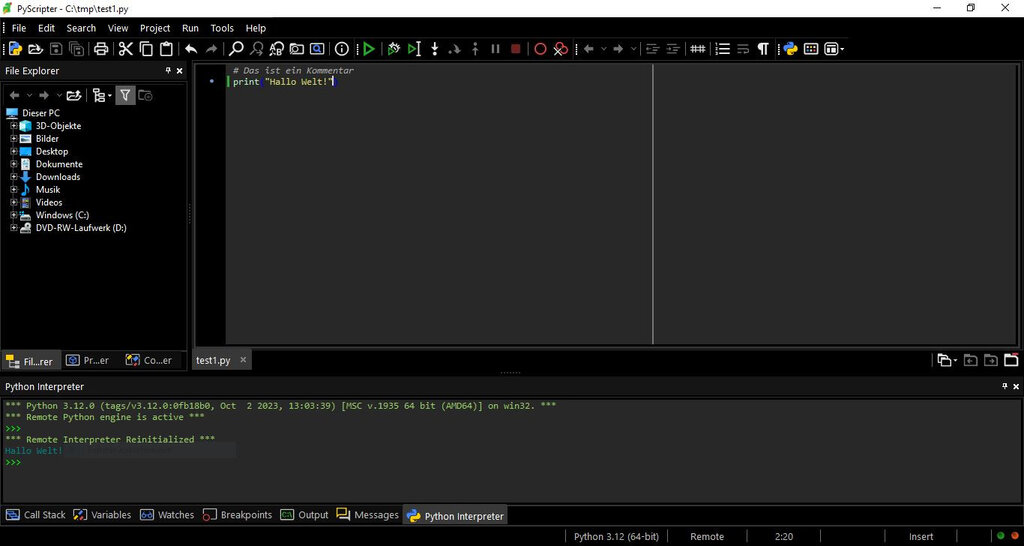
It's a tradition in programming to make your first program display the text "Hello, World!". Let's do that in Python. First, open a plain text editor (like Notepad on Windows or TextEdit on Mac) and create a new file. Save it as hello.py. The .py extension tells your computer that this is a Python file.
Now, type the following line of code into your file:
print("Hello, World!")
This code uses the built-in print() function to display text on the screen. The text you want to display, called a string, goes inside the parentheses and is wrapped in double quotes.
To run your program, open your terminal or command prompt, navigate to the directory where you saved hello.py, and type the command python3 hello.py. You should see Hello, World! printed in the terminal.
The Interactive Shell
Python also comes with an interactive shell, which is a great way to experiment with code without creating a file. It’s like a conversation with the Python interpreter. You type one line of code, press Enter, and the interpreter responds immediately.
To start the shell, just open your terminal and type python3. You'll see a prompt that looks like >>>. Now you can type Python code directly.
>>> print("This is the interactive shell!")
This is the interactive shell!
>>> 2 + 2
4
The shell is perfect for testing small snippets of code or exploring how different functions work. To exit the interactive shell, you can type exit() and press Enter.
Which of the following best describes the Python programming language?
What is the primary purpose of the Python interactive shell?
You've taken your first steps into the world of Python. You know what it is, how to install it, and how to write and run a basic program. Now you're ready to start exploring what makes this language so powerful.