Introduction to Python Programming
Introduction to Python
What is Python?
Python was created in the late 1980s by Guido van Rossum. He wanted to make a language that was easy to read and write, even for beginners. The name doesn't come from the snake, but from the British comedy troupe Monty Python's Flying Circus.
Python's design philosophy emphasizes code readability. Its syntax is clean and straightforward, which means you spend less time trying to understand what the code does and more time solving problems. It’s a versatile language used for everything from building websites and analyzing data to creating artificial intelligence.
Think of Python as a set of simple, powerful building blocks. You can combine them in endless ways to build complex applications, just like using simple Lego bricks to build an elaborate castle.
Getting Set Up
To start writing Python, you first need to install it on your computer. You can download the latest version from the official website, python.org. Be sure to install Python 3, as it's the current and actively developed version of the language.
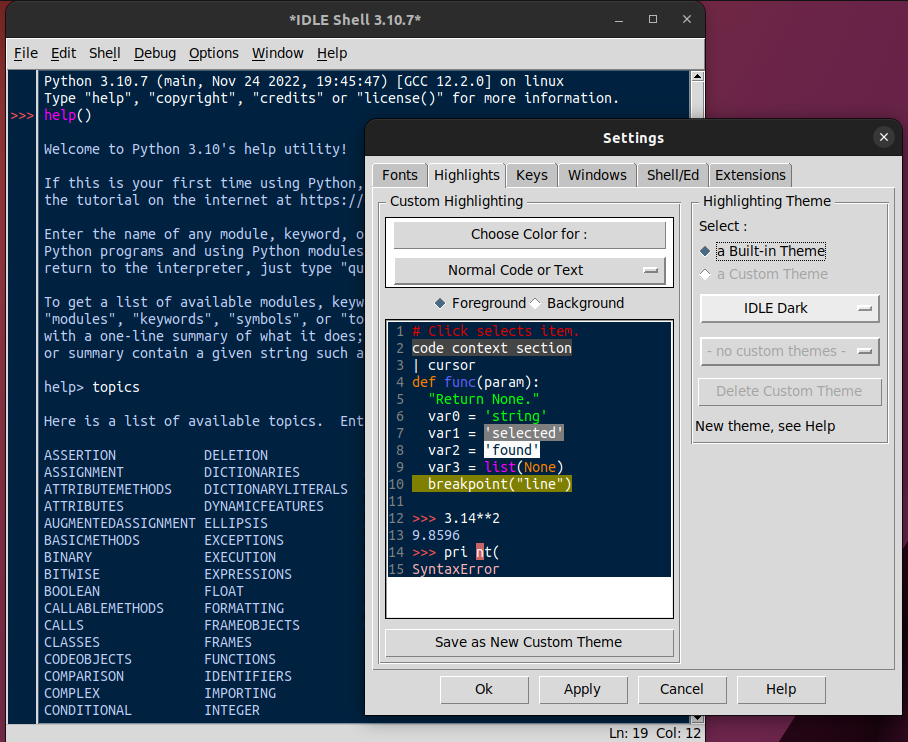
Once installed, you'll have access to Python's built-in Integrated Development and Learning Environment, or IDLE. This is a simple program that lets you write and run Python code right away. As you get more advanced, you might switch to a more powerful code editor, but IDLE is perfect for starting out.
Your First Program
It's a tradition for programmers to write a "Hello, World!" program when learning a new language. This simple program just prints the text "Hello, World!" to the screen. In Python, it's just one line.
print("Hello, World!")
Let's break that down. print() is a function, which is a reusable piece of code that performs a specific action. In this case, it tells the computer to display whatever you put inside the parentheses. The text inside the quotes is called a string, which is just a sequence of characters.
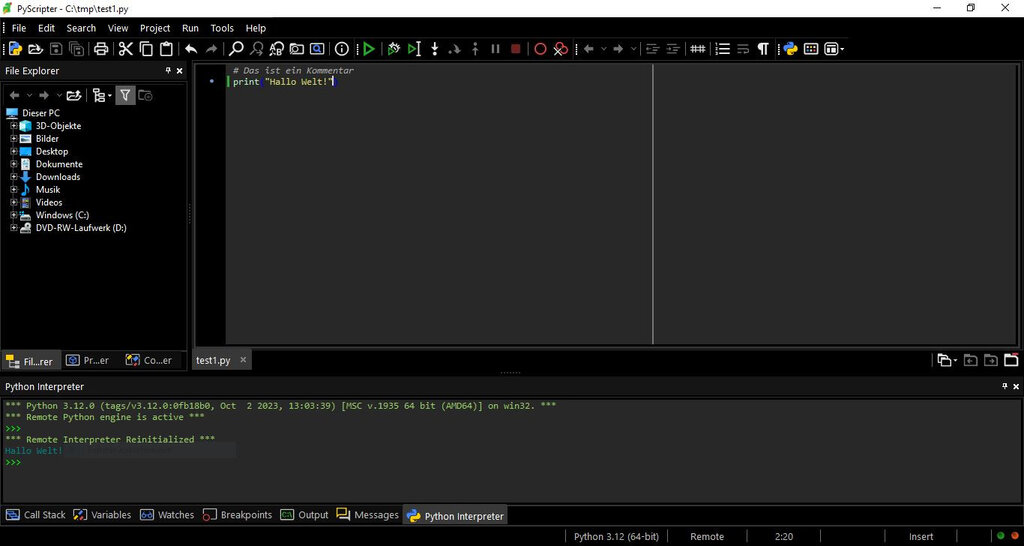
To run this, open your Python editor (like IDLE), type the code, save the file with a .py extension (like hello.py), and run it. You should see Hello, World! appear in the output window.
The Rules of the Road
Every language has rules, and Python is no different. Its most important rule is about indentation. In many other programming languages, whitespace like spaces and tabs is just for making code look neat. In Python, it's part of the syntax.
Indentation is how Python knows which lines of code belong together in a block. Think of it like an outline for a paper, where indented points are sub-topics of a main idea.
When you write code that requires grouping, like a loop or a conditional statement, you must indent the lines that belong inside that block. The standard is to use four spaces for each level of indentation. Don't worry about the if statement for now, just notice the structure.
# Correct Indentation
if 5 > 2:
    print("Five is greater than two!")
    print("This line is also part of the 'if' block.")

# Incorrect Indentation (this will cause an error)
if 5 > 2:
print("This will not work.")
This rule might seem strange at first, but it forces you to write clean, organized code that's easy for anyone to read. Most code editors will automatically handle the indentation for you, but it's crucial to understand why it's there.
Who is the creator of Python, and what was the inspiration for its name?
What is the primary role of indentation in Python syntax?
You've taken your first steps into the world of Python. You know where it came from, how to set it up, how to write a basic command, and its most important syntax rule. Now you're ready to start building.