Introduction to Python Programming
Introduction to Python
What is Python?
Python is a programming language known for its clear, readable code. It was created in the late 1980s by Guido van Rossum, who wanted a language that was easy to understand and fun to use. Its design philosophy emphasizes simplicity, making it a popular first language for beginners.
Unlike some other languages that use complex syntax with lots of brackets and semicolons, Python uses simple English keywords and indentation. This makes the code look clean and organized, which helps programmers write and maintain large programs more easily. Python is also versatile, meaning it can be used for a wide range of tasks.
Where is Python Used?
You can find Python almost everywhere. It's a go-to language for web development, powering the backend of sites like Instagram and Spotify. Data scientists use it to analyze large datasets, create visualizations, and build machine learning models. It's also used for scripting and automation, helping people automate repetitive tasks on their computers.
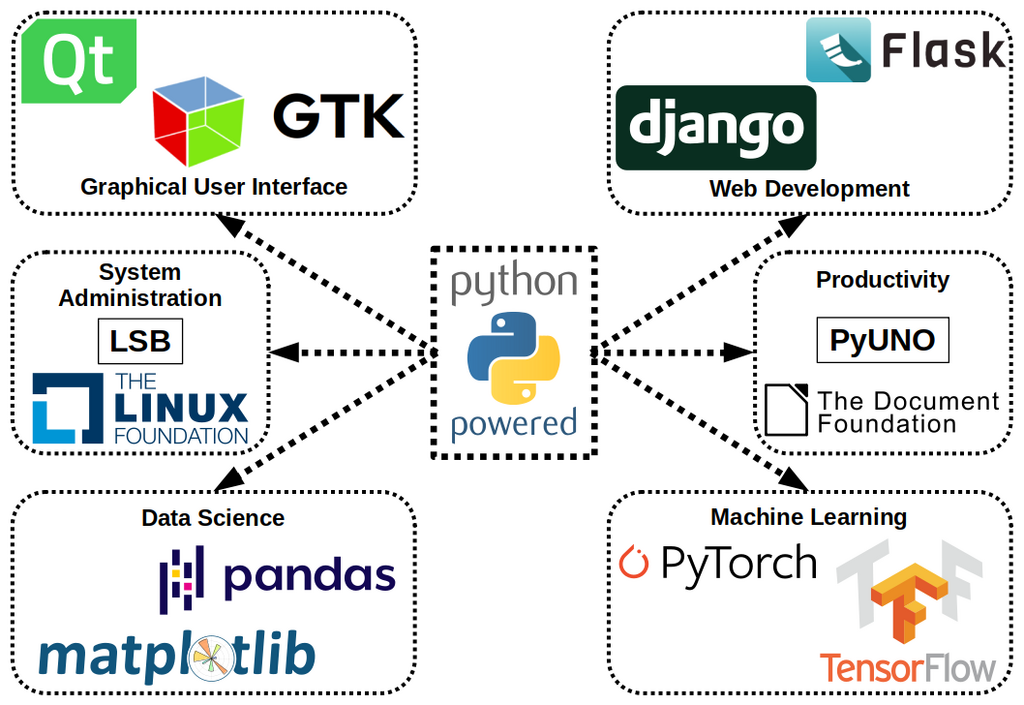
Other areas include scientific computing, game development, and creating desktop applications. Its extensive collection of libraries, which are pre-written bundles of code, makes it easy for developers to add powerful features without starting from scratch.
Setting Up Your Environment
Before you can start coding, you need to install Python on your computer. You can download the latest version for free from the official website, python.org. The installation process is straightforward for Windows, macOS, and Linux.
During installation on Windows, make sure to check the box that says "Add Python to PATH." This allows you to run Python from any command prompt or terminal window.
Once Python is installed, you need a place to write your code. You can use a simple text editor like Notepad or TextEdit, but most developers prefer using an Integrated Development Environment, or IDE. An IDE is a software application that combines a code editor, a debugger, and other helpful tools in one place. Popular IDEs for Python include Visual Studio Code, PyCharm, and Thonny.
IDE
noun
An Integrated Development Environment is a software suite that consolidates the basic tools developers need to write and test software.
Your First Python Program
It's a tradition in programming to start by making the computer say "Hello, World!". In Python, this is incredibly simple. It takes just one line of code.
# This is a comment. Python ignores anything after a #.
# The print() function displays text to the screen.

print("Hello, World!")
Let's run this program. First, open your text editor or IDE and type that line of code. Save the file with a .py extension, which tells your computer it's a Python file. A good name would be hello.py.
Next, open your computer's terminal or command prompt. Navigate to the directory where you saved your file. Then, type the following command and press Enter:
python hello.py
If everything is set up correctly, you should see the text Hello, World! appear on the next line. You've just written and executed your first Python program.
Who is the creator of the Python programming language?
What is the primary characteristic of Python's design philosophy?