Introduction to Psychometrics
Introduction to Psychometrics
What is Psychometrics?
How do you measure something you can't see? We can use a ruler to measure height and a scale to measure weight. But how do we measure intelligence, anxiety, or leadership potential? This is the central question of psychometrics.
psychometrics
noun
The science of measuring mental capacities and processes.
Psychometrics is the field dedicated to creating the tools and techniques for psychological measurement. Think of it as the science behind the tests. It provides a framework for turning abstract concepts like personality traits into numbers we can work with and understand. Without it, a diagnosis of depression or a company's hiring assessment would be based purely on subjective feelings. Psychometrics aims to make these assessments as objective and scientific as possible.
A Quick History
The idea of measuring the mind isn't new. In the late 19th century, scientists began to apply the methods of the physical sciences to psychology. Pioneers like Wilhelm Wundt established the first psychology labs to study mental processes in a controlled way.
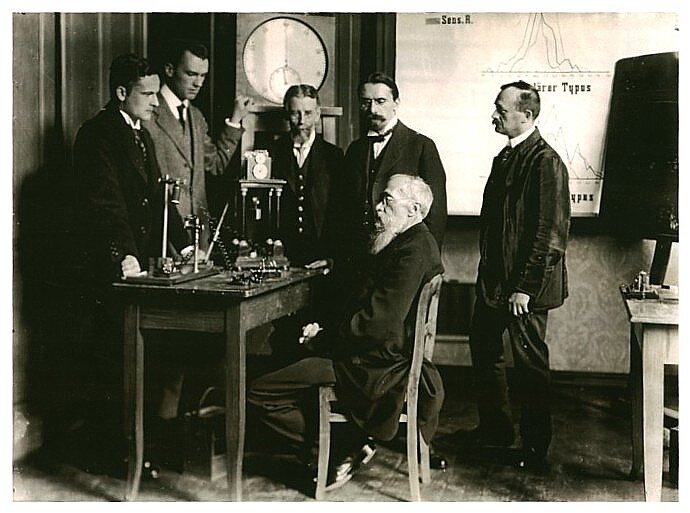
Around the same time, Sir Francis Galton was exploring how to measure individual differences in traits like intelligence. However, the first practical intelligence test was developed in the early 1900s by Alfred Binet, who was tasked by the French government to identify students needing special education. This work laid the groundwork for modern IQ tests.
The early 20th century saw a boom in test development.
Early twentieth-century highlights included the development of projective techniques like the Rorschach and several early self-report inventories, culminating in the development of the most widely used measure, the Minnesota Multiphasic Personality Inventory (MMPI).
From military selection tests during World War I to personality inventories used in workplaces, psychometrics grew rapidly, driven by the need to make important decisions about people in a fair and systematic way.
The Building Blocks of Good Measurement
To be useful, a psychological test can't just be a list of random questions. It must have three key qualities: objectivity, reliability, and validity.
Objectivity means the scoring is free from bias. A multiple-choice test where there's only one correct answer is highly objective. The score doesn't depend on the grader's mood or personal opinions.
Reliability refers to consistency. If you take a reliable test today and then again next week, your scores should be very similar (assuming what's being measured hasn't changed). It's like a bathroom scale that shows you the same weight every time you step on it in a single morning. An unreliable test would be like a scale that gives you a different number every time.
Validity is arguably the most important quality. It asks: Does the test actually measure what it claims to measure? A test of math ability that's full of complex English vocabulary might really be a test of reading comprehension, not math skills. That would make it invalid for its stated purpose.
Creating a test that is objective, reliable, and valid is the core challenge for psychometricians. It requires careful design, statistical analysis, and testing on large groups of people.
Where Psychometrics Is Used
The principles of psychometrics are applied in many different fields.
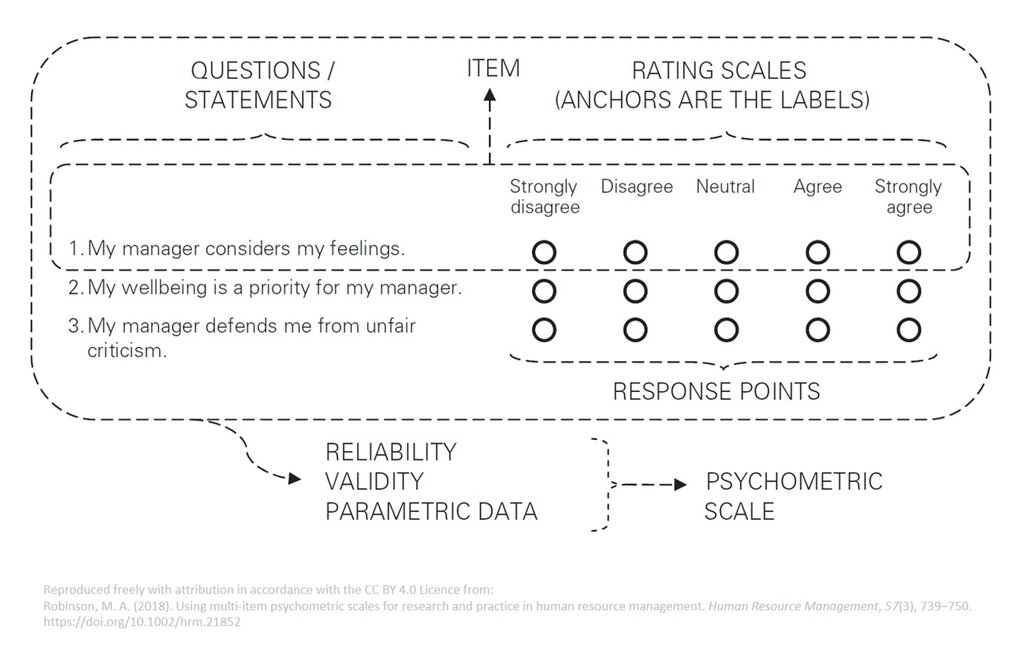
In education, standardized tests like the SAT or GRE are used to measure academic aptitude and help with college admissions. Teachers also use assessments built on psychometric principles to track student learning.
In clinical psychology, tests are crucial for diagnosing mental health conditions. A carefully designed questionnaire can help a psychologist assess the severity of a patient's depression or anxiety, guiding treatment decisions.
In organizational settings, companies use personality and cognitive tests for hiring and employee development. These tools can help predict job performance, identify leadership potential, and build effective teams.
Now let's check your understanding of these core concepts.
What is the primary goal of psychometrics?
A personality test gives you a vastly different result every time you take it within a short period. This test likely has a problem with its...
Psychometrics provides the scientific foundation for psychological assessment, ensuring that the tools used to measure our minds are trustworthy and meaningful.