Introduction to Psychology
Introduction to Psychology
What Is Psychology?
At its core, psychology is the scientific study of behavior and mental processes. It’s a field dedicated to understanding what we do, think, and feel, and why. The word itself comes from the Greek words psyche, meaning “soul” or “mind,” and logos, meaning “study.”
psychology
noun
The scientific study of the mind and behavior.
Let's break down those two key parts: behavior and mental processes.
Behavior is anything we do that can be observed and recorded. This includes obvious actions like talking, walking, or laughing, but also less obvious things like a change in heart rate or blood pressure.
Mental processes are our internal, private experiences. These are things like thoughts, beliefs, feelings, and memories. While we can't directly see a thought, we can infer it from observable behavior. For example, we might infer someone is happy (a mental process) when they smile (a behavior). Psychology aims to connect these two worlds.
A Look Back
Psychology wasn't always its own field. For centuries, questions about the mind were explored by philosophers and theologians. But in the late 19th century, things began to change. Psychology started to emerge as a distinct scientific discipline.
A pivotal moment came in 1879, when a German professor named Wilhelm Wundt opened the first-ever psychology laboratory at the University of Leipzig. This event is widely considered the birth of psychology as a formal science. Wundt wanted to study the mind in a structured, scientific way, much like a chemist studies a chemical compound.
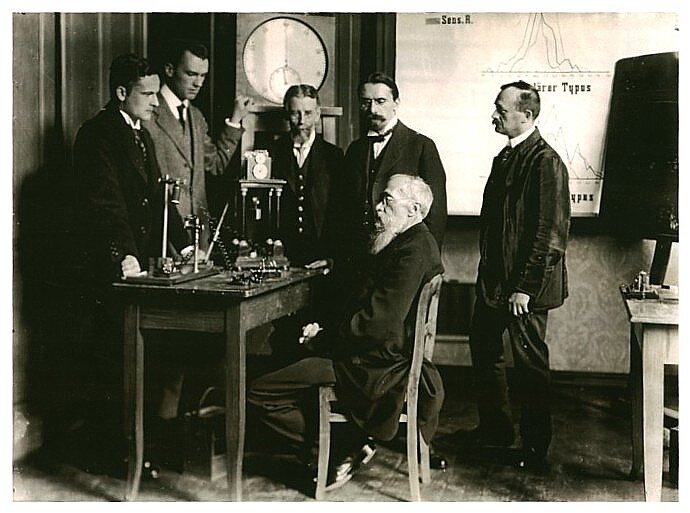
Wundt's approach was called structuralism. The goal was to break down consciousness into its most basic elements, like sensations, feelings, and images. His primary method was introspection, where trained observers would carefully describe their own mental experiences in response to a stimulus, like the sound of a bell.
Imagine trying to describe the experience of tasting a lemon by breaking it down into pure sensations: coolness, sourness, a tingling feeling. That was the essence of structuralism. It was a good start, but many found it too subjective. How could you be sure one person's experience of
sour
was the same as another's?
Soon, a new school of thought emerged, led by the American scholar William James. It was called functionalism. James wasn't so interested in the basic components of the mind. Instead, he wanted to know what the mind does—its purpose, or function. Influenced by Charles Darwin's theory of evolution, functionalists asked how our mental processes help us adapt to our environment, survive, and thrive.
So, while a structuralist might try to identify the basic elements of fear, a functionalist would ask, “What is the purpose of fear? How does it help us survive?” This shift in focus opened up psychology to a wider range of topics and methods.
Different Ways of Seeing
As psychology grew, so did the number of ways to approach its central questions. There isn't one single
right
way to explain human behavior. Instead, psychologists use several major perspectives, each offering a unique lens for understanding the mind.
Think of it like trying to understand a complex piece of art. A historian might focus on its context, an artist on its technique, and a viewer on its emotional impact. All are valid, and together they provide a richer understanding. Here are some of the key perspectives in psychology:
The Psychodynamic Perspective Championed by Sigmund Freud, this view emphasizes the role of the unconscious mind. Freud believed that our behavior is driven by powerful inner forces, hidden memories, and unresolved conflicts from childhood. Things we aren't even aware of can profoundly shape who we are and what we do.
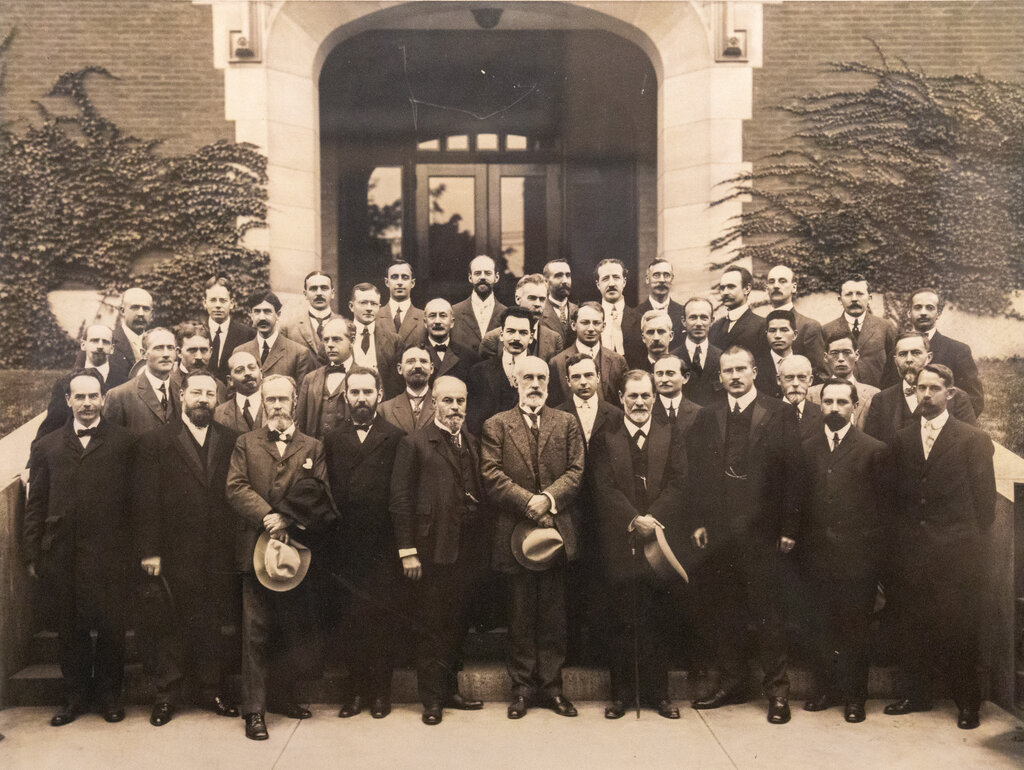
The Behavioral Perspective Behaviorists, like John B. Watson and B.F. Skinner, argued that psychology should only study what can be directly observed: behavior. They weren't interested in the
black box
of the mind. Instead, they focused on how we learn from our environment through conditioning, rewards, and punishments. For a behaviorist, our actions are shaped by our experiences.
The Humanistic Perspective Reacting against the perceived negativity of the psychodynamic view and the robotic nature of behaviorism, humanistic psychology emerged in the mid-20th century. Pioneers like Carl Rogers and Abraham Maslow emphasized our capacity for personal growth, freedom of choice, and self-actualization. This perspective sees people as inherently good and motivated to reach their full potential.
The Cognitive Perspective This approach brought the focus back to the mind, but in a new, scientific way. Cognitive psychology studies mental processes like thinking, memory, problem-solving, and language. It compares the mind to a computer, analyzing how we take in, process, store, and retrieve information to make sense of the world.
The Biological Perspective This perspective looks for the physical basis of our thoughts, feelings, and actions. It explores how our brain, nervous system, hormones, and genes influence our behavior. A biological psychologist might study how brain circuits are involved in emotion or how genetics can predispose someone to certain psychological conditions.
Each of these perspectives offers valuable insights, and today, many psychologists take an eclectic approach, drawing on multiple viewpoints to get a more complete picture of human behavior.
Psychology is formally defined as the scientific study of:
The first psychology laboratory, which marked the beginning of psychology as a formal science, was opened by: