Introduction to Programming
Introduction to Programming
What Is Programming?
Programming is the art of giving instructions to a computer. Think of it like writing a recipe. A recipe lists a series of steps you must follow in a specific order to bake a cake. If you miss a step or do them out of order, you don't get a cake. You get a mess.
Computers are incredibly fast and can perform millions of calculations in the blink of an eye, but they are not smart. They can't think for themselves or guess what you mean. They need precise, step-by-step instructions to accomplish any task, from displaying this text on your screen to launching a rocket into space. Programming is how we create those instructions.
In short, programming is the process of writing instructions that a computer can understand and execute to perform a specific task.
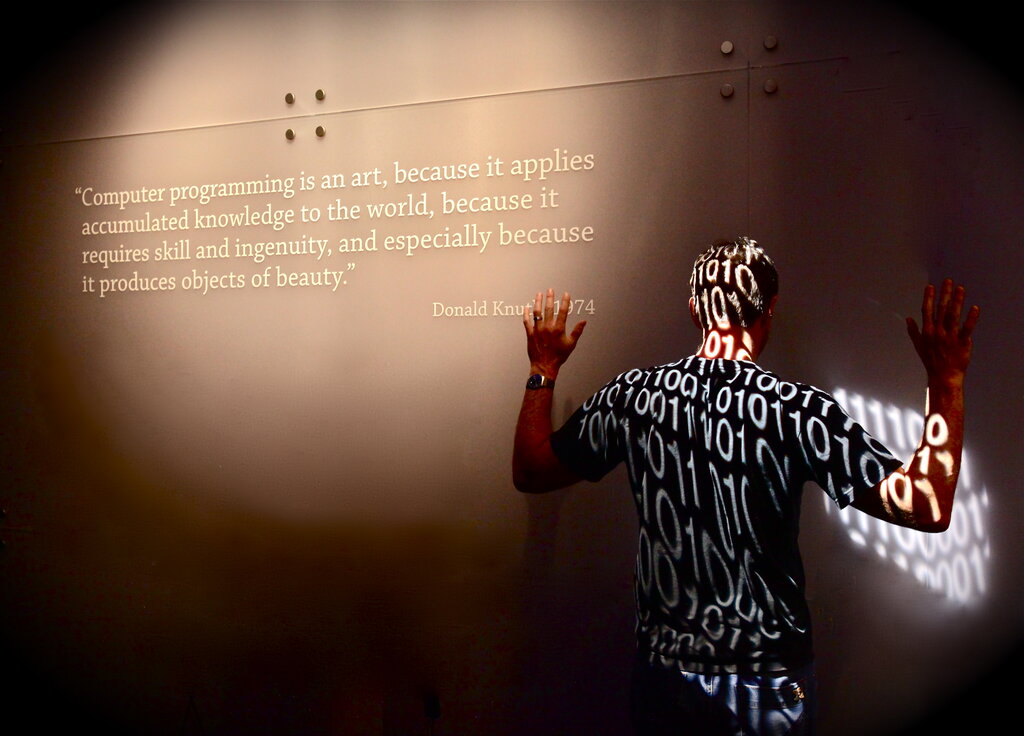
The Role of Algorithms
Before you can write instructions, you need a plan. In programming, that plan is called an algorithm. It’s the sequence of steps you design to solve a specific problem. An algorithm is not code; it's the logic behind the code. It’s the recipe itself, written in a way that a human can understand, before it's translated into a language a computer can understand.
Let's say your problem is making a cup of tea. What's your algorithm?
This is a simple algorithm. Each step is clear and unambiguous. The order matters. You can't pour water before boiling it. Good algorithms are the foundation of good programs. Before writing a single line of code, programmers often spend time thinking about and refining their algorithms to make sure they are correct, efficient, and cover all possible scenarios.
Syntax and Semantics
Once you have an algorithm, you need to translate it into a language the computer can understand. This is where programming languages like Python, Java, or C++ come in. Just like human languages, programming languages have their own rules for grammar and vocabulary. These rules are divided into two categories: syntax and semantics.
syntax
noun
The set of rules that defines the combinations of symbols that are considered to be correctly structured statements in a language.
Syntax is the grammar of a programming language. It dictates exactly how you must write your statements. For example, a language might require that every instruction ends with a semicolon (;). If you forget it, the computer won't understand what you're trying to say. It’s like forgetting the period at the end of a sentence. The idea might be there, but the structure is wrong.
If syntax is the grammar, semantics is the meaning.
semantics
noun
The meaning of a piece of code. It concerns the logical sense and intended outcome of a program's statements.
Semantics refers to the actual meaning of your instructions. It's possible to write a program that is syntactically perfect but semantically wrong. This means the computer understands your instructions, but the instructions themselves don't accomplish what you intended.
Imagine you wrote a syntactically correct instruction to add two numbers, but you accidentally used a subtraction sign instead of an addition sign. The computer would happily subtract the numbers without any errors, but the result would be wrong. The grammar was perfect, but the meaning was not what you wanted.
| Concept | Analogy | In Programming |
|---|---|---|
| Syntax | Grammar rules of a sentence. | Rules for structuring code correctly. |
| Semantics | Meaning of the words in a sentence. | The logical outcome of the code's execution. |
Becoming a good programmer involves mastering both. You need to learn the specific syntax of a programming language while also developing the logical thinking skills to create algorithms with the correct semantics to solve problems effectively.
What is the best analogy for programming, as described in the text?
In programming, what is an algorithm?
Understanding these core ideas—what programming is, how algorithms form the plan, and how syntax and semantics define the language—is the first step on your journey.