Introduction to Programming
Introduction to Programming
What Is Programming?
At its core, programming is the act of giving a computer a set of instructions to perform a specific task. Think of it like writing a recipe. A recipe lists ingredients and provides step-by-step instructions for a cook to follow. If the steps are clear and precise, you end up with a delicious cake. If they're vague, you might get a mess.
Computers are like extremely literal-minded cooks. They don't understand context or make assumptions. They do exactly what you tell them, in the exact order you tell them to. Programming, then, is the craft of writing those perfectly clear, unambiguous instructions that a computer can follow to achieve a goal, whether it's displaying a button on a website, calculating a budget, or flying a rocket to Mars.
Programming Languages
We can't write our instructions in plain English or Spanish. Computers have their own language, which is fundamentally based on electrical signals representing ones and zeros. This is called machine code, and it's incredibly tedious for humans to work with.
To bridge this gap, we use programming languages. These are specially designed languages that are more readable for humans but can be translated into machine code for the computer to understand. There are hundreds of programming languages, each with its own strengths and weaknesses, much like how a mechanic uses different tools for different jobs.
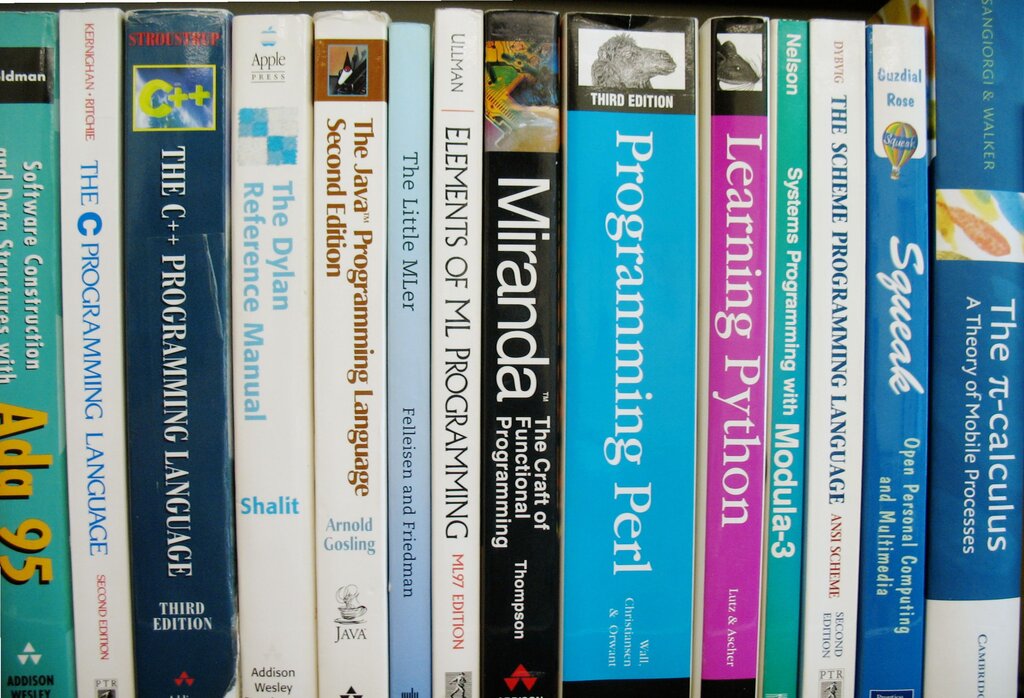
You might use Python for data science, JavaScript for websites, or C++ for high-performance games. While their syntax and rules differ, they all share fundamental concepts that allow you to express your logic and instructions.
Anatomy of a Program
A program has a specific structure and syntax, just like a human language has grammar. Let's look at a classic first program, known as "Hello, World!" It's a simple tradition for programmers to write a program that does nothing more than display the phrase "Hello, World!" on the screen. This example is written in a language called C.
#include <stdio.h>

int main() {
    // This line prints the text to the screen
    printf("Hello, World!\n");
    return 0;
}
Even if this looks cryptic, it has a clear structure:
#include <stdio.h>: This is like grabbing a pre-made toolkit. Here, we're including a standard library that contains tools for input and output, like printing text to the screen.int main(): This is the main entry point of the program. When the computer runs your code, it starts looking formainand begins executing the instructions inside its curly braces{}.printf("Hello, World!\n");: This is the core instruction.printf(short for "print formatted") is a function from our toolkit that displays text. The text we want to display is inside the parentheses and quotation marks. The\nis a special character that means "start a new line."return 0;: This line tells the computer that the program has finished running successfully. A return value of 0 is the standard signal for success.
From Code to Action
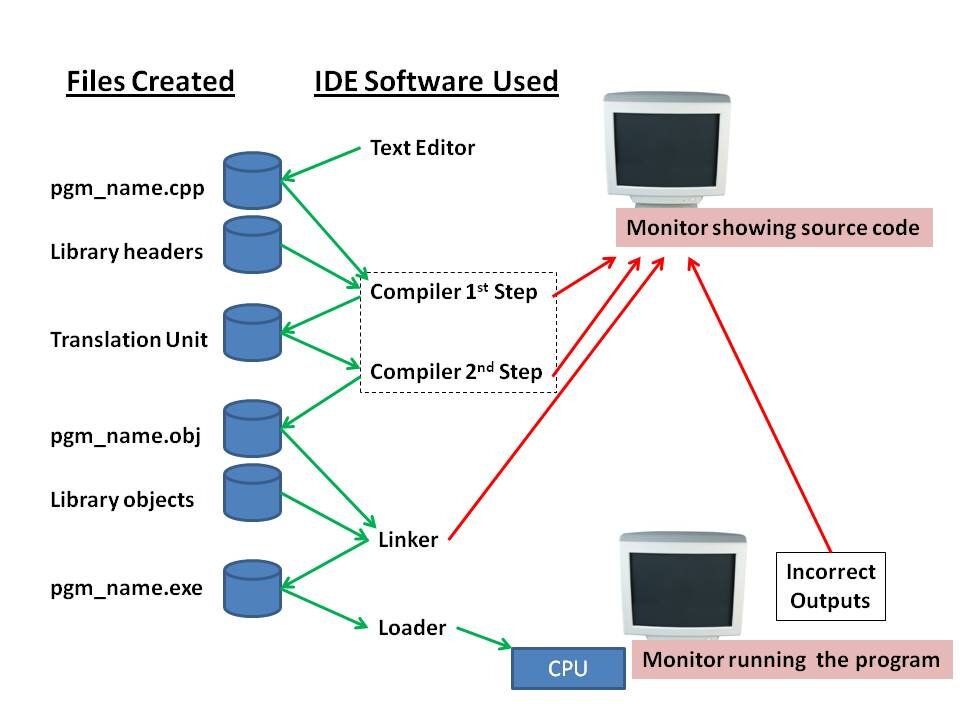
Writing code is just the first step. To actually run it, the computer needs to translate the human-readable programming language into machine code. This translation process is handled by a special program called a compiler or an interpreter.
A compiler translates the entire program into machine code all at once, creating an executable file that you can run. A language like C uses a compiler.
An interpreter reads through the code line by line, translating and running each instruction as it goes. A language like Python often uses an interpreter.
This whole process, from writing code to compiling it and running the final program, is the fundamental workflow of a programmer.
Now, let's test your understanding of these foundational ideas.
Based on the recipe analogy, why must programming instructions be so precise?
A programming language acts as a bridge between human-readable instructions and ______, which is the language the computer's hardware understands directly.
Understanding these basics—what programming is, the role of languages, and the structure of a simple program—is the first step on your journey. Everything else builds on these core concepts.