Introduction to Programming Concepts
Introduction to Programming
What Is Programming?
At its heart, programming is simply the act of giving a computer a set of instructions to carry out a specific task. Think of it like writing a recipe. A recipe lists ingredients (the data) and provides step-by-step directions (the instructions) to turn them into a cake (the result).
A computer can't understand English or any other human language directly. It needs instructions written in a special language it can interpret. These are called programming languages. A set of these instructions is called a program.
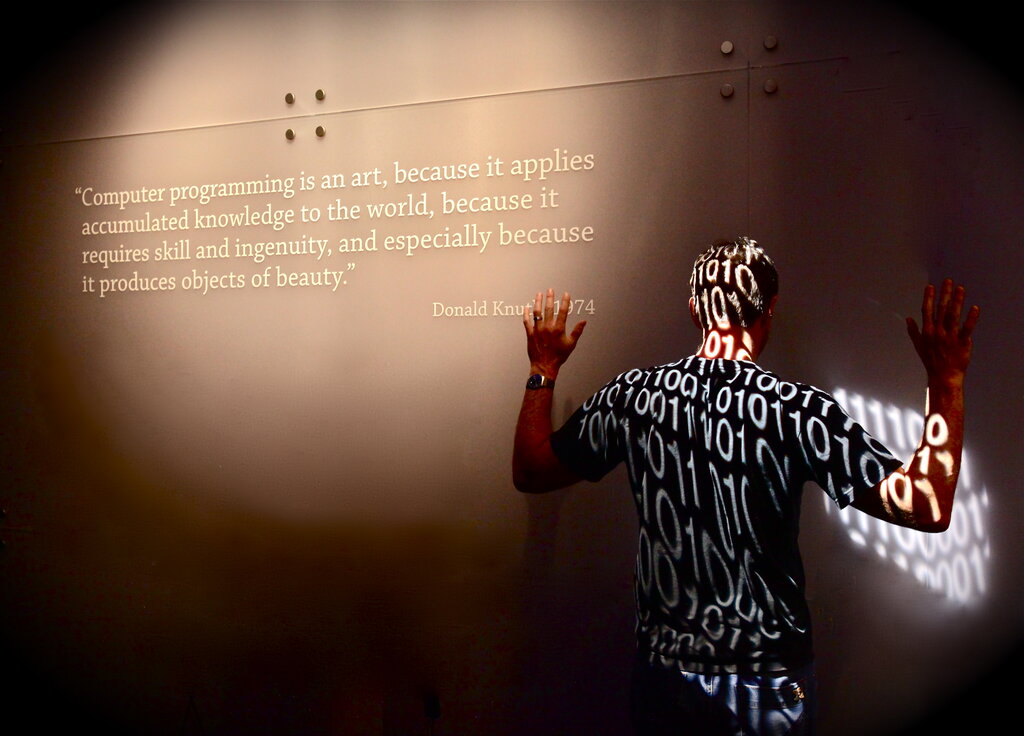
By writing programs, we can make computers perform tasks incredibly quickly and accurately, from calculating a restaurant bill to guiding a spacecraft to another planet. It's the fundamental way we communicate our intentions to machines.
Why Programming Matters
Look around you. The smartphone in your pocket, the web browser you're using, the traffic lights on your street, and the checkout system at the grocery store all run on programs. Programming is the invisible force behind much of modern life.
Learning to program isn't just about building websites or apps. It teaches you how to think logically and break down large, complex problems into smaller, manageable steps. This skill, often called computational thinking, is valuable in any field, whether you're a scientist, an artist, or an entrepreneur.
The Anatomy of a Program
While programs can be vastly different, most follow a basic structure. They take some information, work with it, and then produce a result. This can be broken down into three main stages: input, processing, and output.
- Input: This is the data a program receives to work with. It could be text you type into a search box, a click of a mouse, or data from a sensor.
- Processing: This is the core of the program. It's where the instructions are executed. The program takes the input and performs actions based on its logic, like calculating numbers, sorting names, or changing a colour on the screen.
- Output: This is the result the program produces after processing the data. It could be text displayed on a screen, a saved file, or a sound played through speakers.
The Programmer's Role
A programmer is a problem-solver. Their job is to understand a problem or a goal and then design and write a program that provides a solution. They are architects and builders in a digital world.
This involves more than just writing code. A programmer must think critically, plan the program's structure, test for errors, and refine the instructions until they work perfectly. They act as a translator, converting human ideas and requirements into the logical, precise language that a computer can execute.
In essence, a programmer's role is to bridge the gap between human intention and computer action.
Now, let's check your understanding of these core concepts.
At its heart, what is programming?
A set of instructions written in a language a computer can understand is called a program.
Understanding these fundamentals is the first step on the journey into programming. You've now got the foundational knowledge needed to explore how these ideas are put into practice.