Introduction to Programming Concepts
Introduction to Programming
Telling Computers What to Do
At its heart, programming is simply the act of giving a computer a set of instructions to follow. Think of it like a recipe. A recipe lists ingredients and provides step-by-step directions to turn those ingredients into a delicious meal. If you follow the steps precisely, you get the result you want. If you miss a step or do it out of order, you might end up with something else entirely.
A computer is similar, but it can't guess your intentions. It needs every single step to be spelled out perfectly. Programming is the language we use to write that recipe. These instructions, written in a special language the computer can understand, are called code.
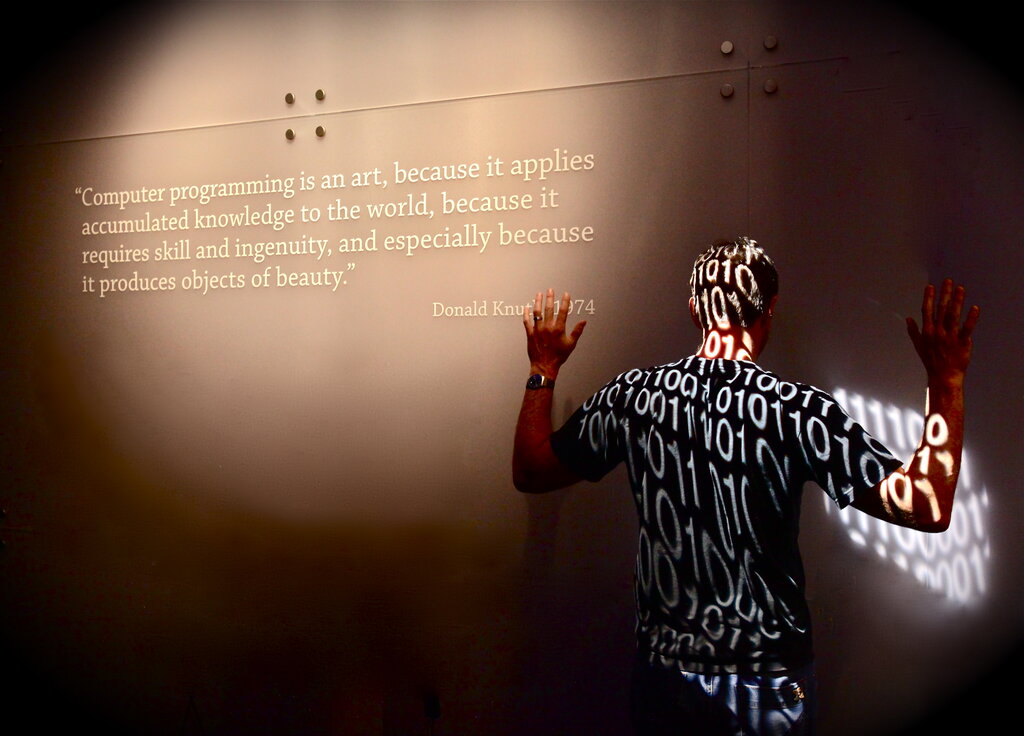
This code tells the computer how to perform a task, whether it's displaying a button on a website, calculating a budget in a spreadsheet, or landing a rover on Mars. Without programming, our computers, phones, and smart devices would just be pieces of plastic and metal. They wouldn't know how to do anything.
A Tool for Solving Problems
Programming isn't just about writing lines of code. It's fundamentally about problem-solving. A programmer’s main job is to look at a challenge and figure out how a computer can help solve it. This involves breaking a large, complex problem down into smaller, simpler steps that a computer can execute one by one.
Imagine you want an app that reminds you to water your plants. A programmer would break that down: How does the app know what plants you have? How will it know when they were last watered? How will it send you a notification? Each question is a small problem to solve with code.
This process of breaking down problems and designing a logical path to a solution is the true skill of programming. The code is just the final step in expressing that solution.
Programming Is Everywhere
Once you start looking, you'll see that programming is the invisible force behind much of our modern world. It runs the apps on your phone, the websites you visit, and the video games you play. But it goes much further than that.
Programming is crucial in almost every field. In medicine, it helps doctors analyze patient data and powers life-saving medical equipment. In finance, it runs the stock market and secures online banking. In science, it simulates complex systems, from climate change to the formation of galaxies. Artists use code to create stunning visual art, and car manufacturers use it to make vehicles safer and more efficient.
So, what does a programmer do? A programmer, also called a developer or software engineer, is a creative problem-solver who uses programming languages to build things with computers. They might work alone on a small project or as part of a large team building a complex application. Their work involves planning, writing, testing, and maintaining code to ensure it works correctly and efficiently.
Programmer
noun
A person who writes computer software. Their job involves designing, writing, testing, and maintaining the instructions that computers follow to perform tasks.
Learning to program isn't just about becoming a professional developer. It teaches you how to think logically, break down challenges, and approach problems with a structured mindset—skills that are valuable in any career.
What is the most fundamental definition of programming?
The provided text compares programming to following a recipe. What does this analogy primarily highlight?