Introduction to Programming Concepts
Introduction to Programming
What Is Programming?
Think about following a recipe to bake a cake. You have a list of ingredients and a set of step-by-step instructions. If you follow them correctly, you get a delicious cake. If you miss a step or use the wrong ingredient, you might end up with a mess.
Programming is a lot like writing that recipe, but for a computer. It’s the process of creating a set of precise instructions that tell a computer exactly what to do. These instructions, written in a special language, are called code.
At its core, programming is simply giving a computer a list of commands to execute in a specific order to achieve a desired outcome.
Computers are powerful, but they aren't smart on their own. They can't think or make decisions without being told how. Every app on your phone, every website you visit, and every video game you play is powered by code written by a programmer.
Why Programming Matters
Programming is the backbone of the modern world. It's the skill that allows us to create software, which solves problems, entertains us, and connects us with others. From the operating system on your laptop to the system that manages traffic lights, code is running behind the scenes.
Learning to program is more than just learning to write code. It teaches you how to think logically and break down complex problems into smaller, manageable parts. This skill, often called computational thinking, is valuable in almost any field, not just technology.
Talking to Computers
We can't just tell a computer what to do in English or Spanish. Computers operate on a much more basic level, understanding only electrical signals that represent ones and zeros. This is called machine code or binary.
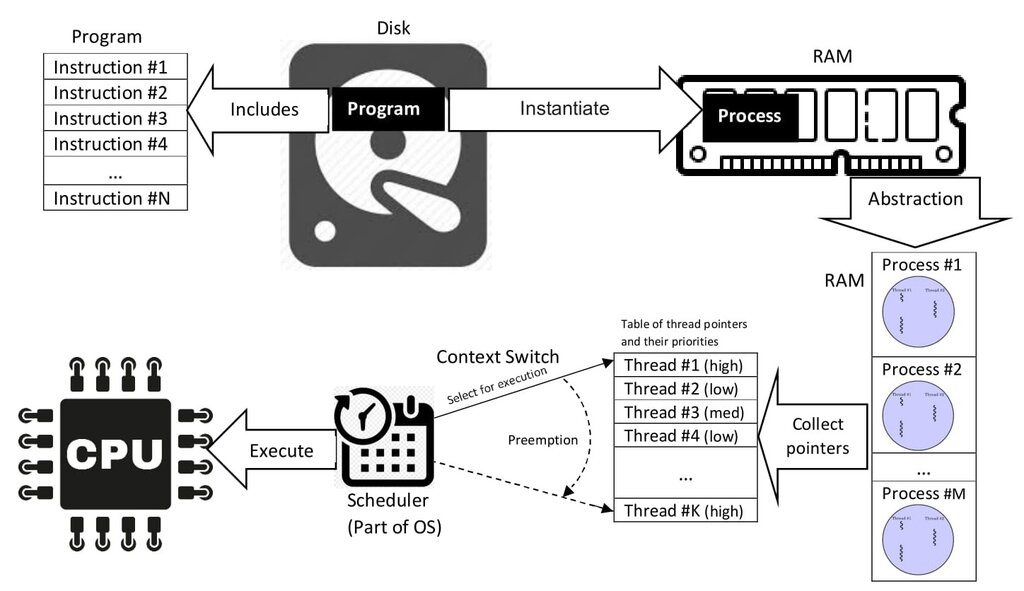
Writing instructions directly in binary would be incredibly difficult for humans. That's where programming languages come in. They act as a bridge, allowing us to write commands in a way that is closer to human language. A special program, called a compiler or interpreter, then translates our code into the binary instructions the computer can understand.
There are hundreds of programming languages, each designed for different purposes. Some are great for building websites, others are used for scientific computing, and some are perfect for creating mobile apps. It's like having a toolbox full of different tools—you pick the right one for the job at hand.
The Basic Structure of a Program
While every programming language has its own unique rules and syntax, most programs share a common structure. They take some data as input, perform a series of operations on it, and then produce some output.
Think of a calculator app. Your input is the numbers and the operation you select (like '2 + 2'). The program processes this input. The output is the result displayed on the screen ('4').
A simple program is often just a sequence of statements. The computer executes these statements one after another, from top to bottom, just like reading a book. As programs become more complex, they use structures like loops (to repeat actions) and conditionals (to make decisions) to control the flow of execution. These are the fundamental building blocks you'll use to create powerful software.
The provided text compares programming to which common activity?
What is the primary role of a compiler or an interpreter?