Introduction to Programming
Introduction to Programming
Telling Computers What to Do
At its heart, programming is simply the act of giving instructions to a computer. Think of it like writing a very detailed recipe. If you want a computer to bake a cake, you can't just tell it, "Bake a cake." Computers are incredibly powerful, but they don't understand context or ambiguity. They need a precise, step-by-step list of what to do.
You have to tell it to get the flour, measure exactly two cups, get the sugar, measure one cup, crack two eggs, and so on. Every single action must be spelled out in order. This set of instructions is what we call a program.
Programming is the process of creating a set of instructions that tell a computer how to perform a task.
These instructions, written by a person called a programmer, allow us to create everything from websites and mobile apps to video games and operating systems. The core idea is always the same: breaking a large task down into small, logical steps that a computer can execute.
Speaking the Language
We can't write these instructions in English or Spanish. Computers have their own language, a fundamental language of ones and zeros called binary. Trying to write a complex program in binary would be incredibly difficult and slow for humans.
This is where programming languages come in. They act as a bridge. A programming language is a formal language with its own vocabulary and set of grammatical rules, or syntax, that programmers use to write instructions. These instructions are then translated into the binary that the computer's processor can understand and execute.
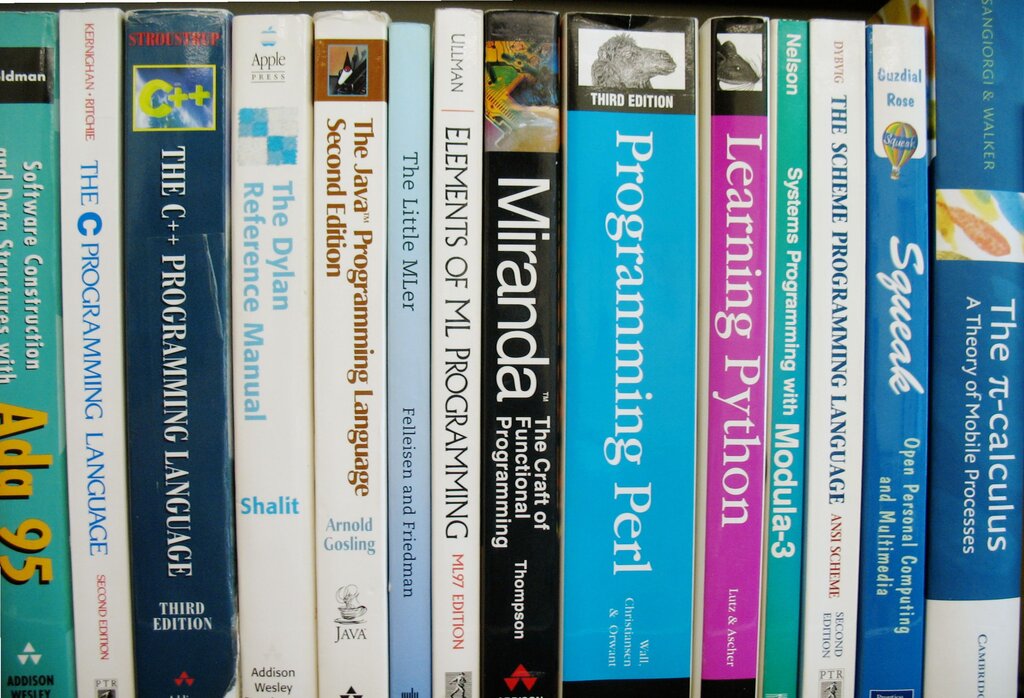
There are hundreds of programming languages, such as Python, JavaScript, and C++. Each was designed for different types of tasks. Some are great for building websites, others for analyzing data, and still others for creating video games. The choice of language depends on the problem you're trying to solve.
The Anatomy of a Program
While every program is different, most follow a fundamental structure. You can think of it as a simple, three-part flow.
-
Input: The program receives data. This could be anything from a user clicking a mouse, typing their name into a form, or receiving information from a sensor.
-
Processing: The program takes the input and performs actions on it. It might do a calculation, sort a list of names, or change the color of a button on the screen. This is where the core logic of the program lives.
-
Output: After processing, the program shows a result. This could be displaying a message, saving a file, or playing a sound.
Consider a simple calculator app. You type in 5 + 3 (input). The app calculates the sum (processing). It then displays 8 on the screen (output). Nearly every piece of software you use follows this basic pattern, from the simplest tool to the most complex system.
Now, let's test your understanding of these core concepts.
At its core, programming is most similar to which of the following activities?
What is the primary function of a programming language like Python or JavaScript?
Understanding these fundamentals—what programming is, why we use languages, and the basic structure of a program—is the first step on the journey to creating with code.