Introduction to Programming
Introduction to Programming
What is Programming?
At its heart, programming is simply giving a computer a set of instructions to follow. Think of it like writing a very detailed recipe. The computer is your cook, but it can't think for itself. It will only do exactly what you tell it, in the exact order you tell it to.
These instructions, written in a language the computer understands, are called code. A person who writes this code is a programmer. Programmers use their skills to solve problems, automate repetitive tasks, and create all the software you use every day, from the apps on your phone to the websites you visit.
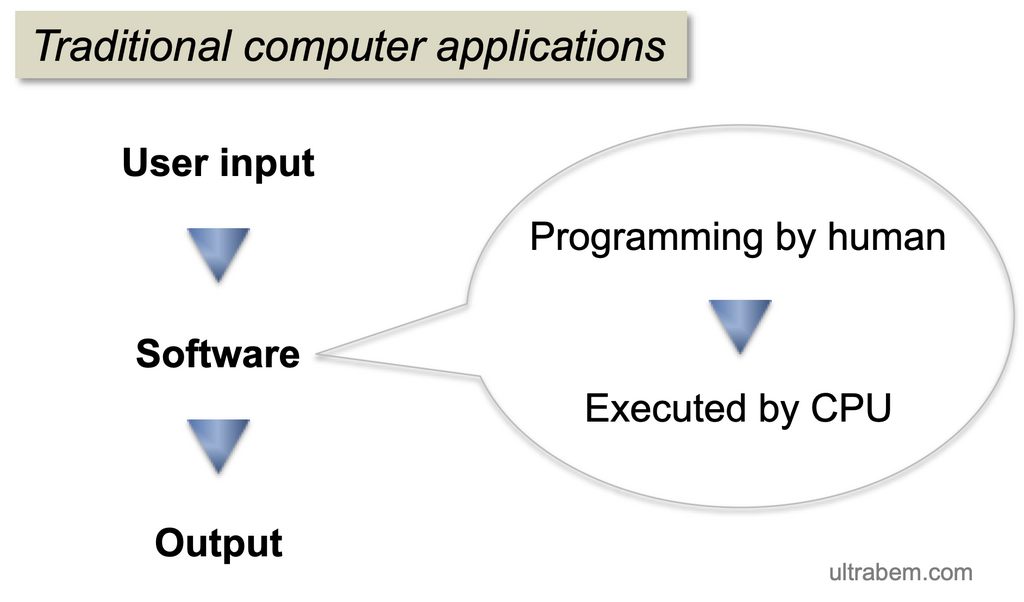
The goal isn't just to make things work, but to write instructions that are clear, efficient, and easy for other programmers to understand. Just like a well-written recipe is easier to follow, well-written code is easier to manage and improve over time.
The Building Blocks
Every program, no matter how complex, is built from a few fundamental concepts. The most basic of these is the variable.
variable
noun
A container in a program's memory for storing a piece of information. It has a name and holds a value that can change.
Imagine a labeled box. The label is the variable's name (like score or username), and what you put inside is its value. You can look inside the box to see the value, or you can replace it with something new.
But you can't just put anything in any box. Variables have specific data types that determine what kind of information they can hold. Here are a few of the most common ones:
| Data Type | Description | Example(s) |
|---|---|---|
| String | A sequence of text characters. | "Hello, world!", "Alice" |
| Integer | A whole number. | 7, -150, 0 |
| Float | A number with a decimal point. | 98.6, 3.14159 |
| Boolean | A value that can only be true or false. | true, false |
Choosing the right data type is crucial. You can't do math on a string of text, and you can't store your name in a variable meant for a number.
Controlling the Flow
A program doesn't just run from the first line of code to the last. It needs to make decisions and repeat actions. This is handled by control structures.
Conditionals are branches in the road. They use if, else if, and else statements to check if a condition is true and then execute specific code based on the outcome.
For example: IF the traffic light is red, THEN stop the car. ELSE IF the light is yellow, THEN slow down. ELSE, go.
This allows a program to react differently to different situations.
Loops are for repetition. When you need to perform the same action multiple times, a loop saves you from writing the same code over and over. A while loop, for instance, repeats a block of code as long as a certain condition remains true.
// A simple loop to count to 3
SET count = 1

WHILE count is less than or equal to 3:
  PRINT count
  ADD 1 to count

// Output:
// 1
// 2
// 3
Loops are essential for tasks like processing every item in a list or running a game until the player decides to quit.
Packaging Code with Functions
As programs grow, you'll find yourself needing to perform the same sequence of steps in multiple places. Instead of copying and pasting code, you can package it into a reusable block called a function.
A function is a named section of code that performs a specific task. You can "call" a function by its name whenever you need that task done.
Imagine you have a set of instructions for making a peanut butter sandwich. You could write those instructions out every single time you want a sandwich. Or, you could define a function called makeSandwich.
Now, anytime you need a sandwich, you just call makeSandwich(). Functions can also take inputs (like the type of bread or jelly) and produce an output (the finished sandwich). This makes code much more organized, readable, and easier to fix if something goes wrong. Instead of fixing the same mistake in ten different places, you only have to fix it once inside the function.
At its most fundamental level, programming is the act of...
In programming, a variable is best described as:
These concepts—variables, data types, conditionals, loops, and functions—are the absolute bedrock of programming. They appear in nearly every programming language and are the tools you'll use to build any piece of software, simple or complex.