Introduction to Programming
Introduction to Programming
What Is Programming?
Imagine teaching a dog a new trick. You use simple, clear commands in a specific order: "Sit," then "Stay," then "Roll over." Programming is a lot like that, but your student is a computer, and your commands are much more powerful.
Computers are incredibly fast calculators, but they don't understand ambiguity. They need precise, step-by-step instructions to perform any task, from displaying a button on a website to launching a rocket into space. Programming is the process of writing those instructions.
These instructions, known as code, are written in a special language that the computer can understand. A set of these instructions that accomplishes a task is called a program.
Speaking the Computer's Language
We can't write instructions for a computer in plain English. Instead, we use programming languages. Just like human languages, there are many different programming languages, each with its own strengths. Python is popular for its simplicity and power in data science, while JavaScript is the workhorse of the web. C++ is often used for high-performance applications like video games.
No matter which language you choose, your code doesn't get run directly by the computer's hardware. The words and symbols you write are first translated into a language the computer's processor understands: machine code. This is the most basic level of instruction, represented by patterns of ones and zeros.
This translation is handled by a special program called a compiler or an interpreter. It acts as a go-between, converting your human-readable thoughts into machine-executable commands.
This process turns your abstract ideas into concrete actions performed by the machine.
Getting Ready to Code
Before you can start writing code, you need to set up your workshop. This is called a development environment. It consists of two key components: the programming language itself and a place to write and run your code.
First, you need to install the language. We'll be using Python, a language famous for being easy to learn yet powerful enough for professionals at Google, NASA, and Netflix. Installing Python puts the necessary translator (the interpreter) on your computer so it can understand the Python code you write.
Next, you need a good code editor. While you could technically write code in a simple program like Notepad, it would be like trying to build a house with only a hammer. Most programmers use an Integrated Development Environment, or IDE.
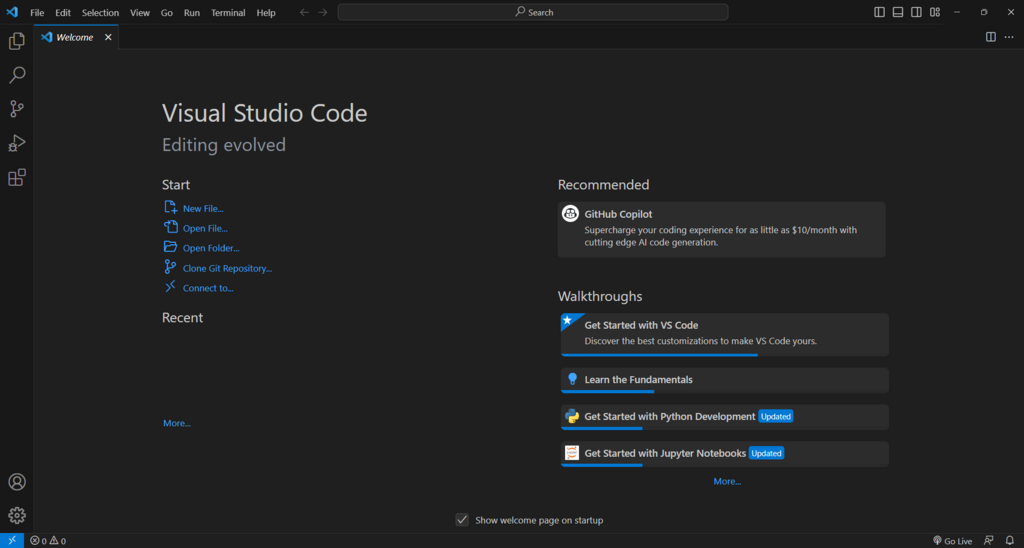
An IDE is a software application that bundles all the essential tools for programming into one place. It includes a text editor designed for code, tools for running and testing your programs, and a debugger to help you find and fix mistakes. It's your complete workbench, designed to make your life as a programmer easier.
With a language installed and an IDE ready, you have everything you need to start programming.
What is the primary purpose of programming?
A set of instructions written in a programming language is called ______, and a complete set that accomplishes a specific task is known as a ______.
Now that you understand the basic concepts, you're ready to move on and write your very first program.