Introduction to Programmable Logic Controllers
Introduction to PLCs
The Brain of the Factory
At the heart of almost every modern factory, power plant, or automated warehouse is a small, rugged computer called a Programmable Logic Controller, or PLC. Think of it as the industrial-grade brain in charge of running a physical process. Its job is to automate tasks that would otherwise require a person to stand there flipping switches, pressing buttons, and watching gauges all day.
A PLC takes in information from sensors and switches, makes decisions based on a program written by an engineer, and then sends out commands to control machines like motors, lights, and valves. From bottling drinks to sorting packages or managing a city's traffic light system, PLCs are the unseen workhorses that keep things running smoothly, reliably, and automatically.
PLCs are specialized computers designed to control and automate various electromechanical processes.
From Relays to Microchips
Before PLCs, automation was a noisy, clunky affair. Control systems were built from vast cabinets packed with electromechanical relays. A relay is essentially a switch that's opened and closed by an electromagnet. To create logic—like "if sensor A and sensor B are on, then turn on motor C"—engineers would physically wire hundreds or even thousands of these relays together.
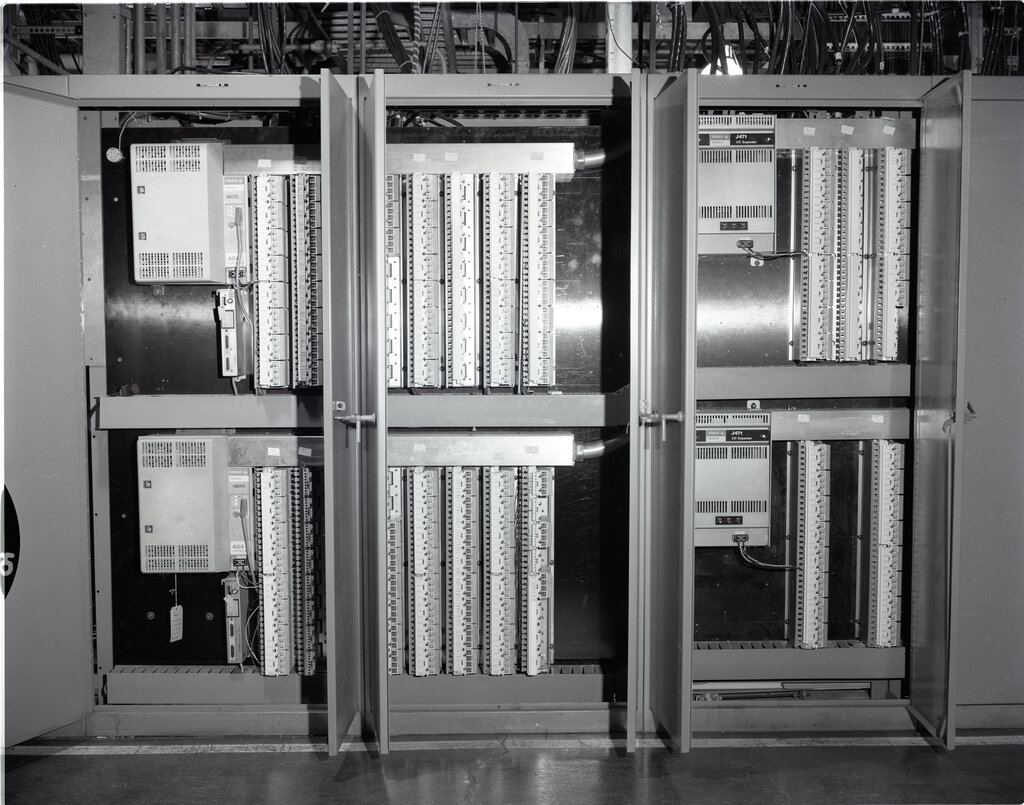
These systems worked, but they had major drawbacks. They were bulky, consumed a lot of power, and were a nightmare to modify. If a factory wanted to change its production process, electricians had to spend days or weeks painstakingly rewiring the entire control panel. The mechanical nature of relays also meant they would eventually wear out and fail.
The PLC changed everything. Instead of physical wires, the logic was stored in a computer program. Changing the process was now as simple as rewriting the code. PLCs were smaller, faster, more reliable, and far more flexible than their relay-based ancestors.
Inside the Box
While they come in many shapes and sizes, all PLCs share the same fundamental components. They work together as a team: the brain, the senses, and the hands of the automation system.
Central Processing Unit (CPU): This is the PLC's brain. It's a microprocessor that executes the control program stored in its memory. It continuously scans the inputs, applies the program's logic, and updates the outputs accordingly. It's the decision-maker of the entire system.
Memory: This is where the PLC's operating system and the user-created control program are stored. It also holds the status of all the inputs and outputs. The CPU constantly reads from and writes to memory as it runs.
Input/Output (I/O) Modules: These modules are the PLC's connection to the physical world.
- Input modules act like the system's senses. They take electrical signals from devices like push-buttons, temperature sensors, or pressure switches and convert them into digital signals the CPU can understand.
- Output modules are the system's hands. They take digital commands from the CPU and convert them into electrical signals that can power devices like motors, solenoids, or indicator lights.
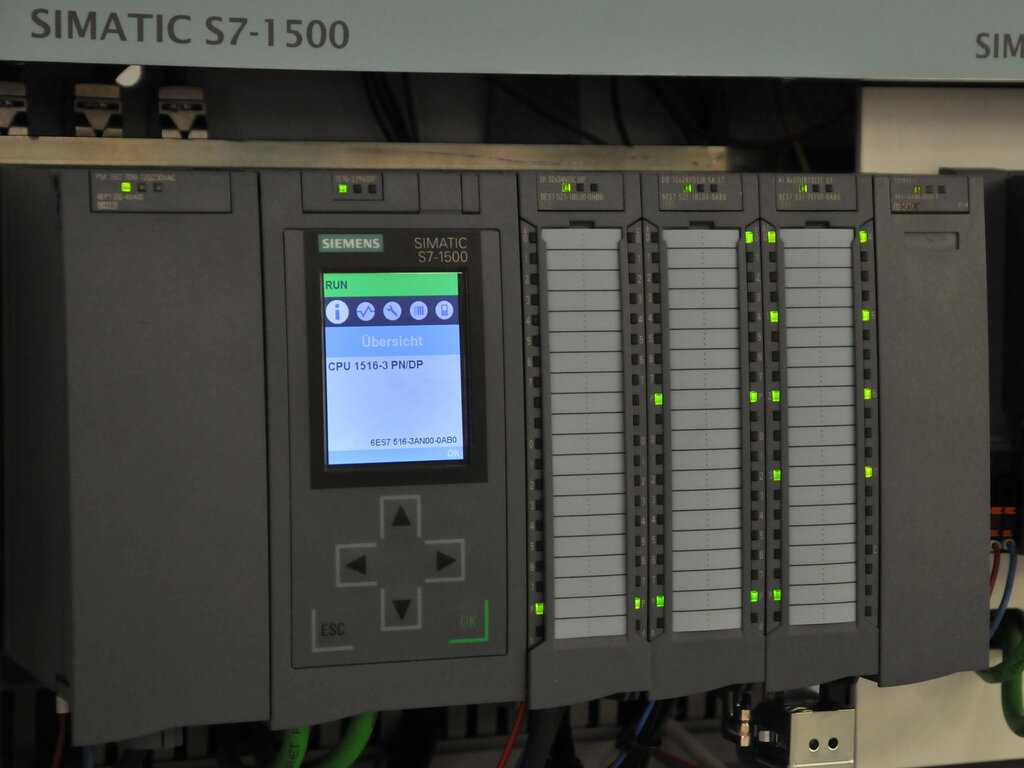
Together, these components form a robust loop: the inputs sense the state of the machine, the CPU thinks about what to do next based on the program, and the outputs act to change the state of the machine.
What is the primary function of a Programmable Logic Controller (PLC)?
Before PLCs, automation systems were built with electromechanical relays. What was a major drawback of these relay-based systems?