Introduction to Product Management
Introduction to Product Management
What is a Product Manager?
A product manager is like the captain of a ship. They don't row the oars, hoist the sails, or cook the meals. Instead, they chart the course, ensuring the ship reaches its destination. Their job is to decide what to build and, just as importantly, why.
They are the voice of the customer within the company. A product manager spends a lot of time talking to users, understanding their problems, and identifying their needs. They take these insights and translate them into a vision for the product.
Product Manager
noun
The person responsible for defining the 'why', 'what', and 'when' of a product. They lead cross-functional teams from a product's conception through to its launch.
This vision becomes a product strategy and a roadmap, which is a plan for what features to build and in what order. A key part of the job is making tough decisions about what not to build, focusing the team's limited time and resources on what matters most.
Product managers work at the intersection of business, technology, and user experience. They collaborate daily with engineers, designers, marketers, and sales teams to bring the product to life.
A product manager's core role is to align everyone—from engineers to executives—on a shared vision and ensure the team is building the right thing for the right people.
The Product Lifecycle
Products have a life of their own. They are introduced, they grow, they mature, and eventually, they decline. Understanding this lifecycle is crucial for making smart decisions about where to invest resources.
Each stage presents unique challenges and opportunities.
Here’s a breakdown of the four main stages:
- Introduction: The product is launched into the market. The main goal is to build awareness and encourage trial. The team is small, and the focus is on getting feedback from early adopters.
- Growth: The product starts to gain traction, and the user base grows rapidly. The focus shifts to scaling the product, adding new features to serve a broader audience, and staying ahead of new competitors.
- Maturity: Sales and user growth slow down as the market becomes saturated. The product is well-established. Here, the focus is on optimizing existing features, increasing efficiency, and defending market share.
- Decline: The product becomes outdated due to new technology or changing customer tastes. The company must decide whether to pivot, redesign the product, or retire it completely.
Strategy Meets Objectives
A successful product doesn't exist in a vacuum. It must support the broader goals of the business. This is where product strategy comes in.
Business objectives are the high-level goals for the company. They answer the question, "What do we want to achieve as a business?"
Product strategy is the plan for how the product will help the company meet those objectives. It answers the question, "How will our product help us win?"
Think of it this way: The business objective is the destination (e.g., become the market leader), and the product strategy is the route you plan to take to get there (e.g., by building the most user-friendly product for beginners).
Let's look at an example. A company's business objective might be to increase annual recurring revenue by 30%. The product team can't work with that directly. They need a product strategy to bridge the gap.
The product manager might translate that business objective into a product strategy focused on moving free users to a paid plan. This strategy would then lead to specific product initiatives, like building new premium features or improving the upgrade experience. This ensures the day-to-day work of the product team is directly contributing to the company's success.
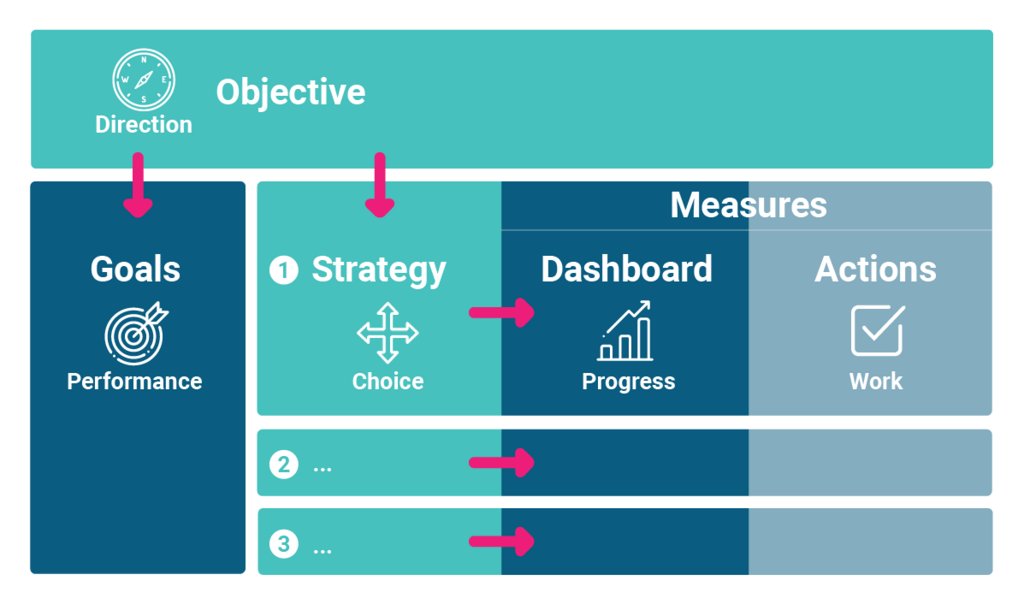
By clearly aligning product strategy with business objectives, product managers ensure that their teams aren't just building features, but are building a product that drives real, measurable value for the organization.
Ready to check your understanding of these core concepts?
According to the 'captain of the ship' analogy, what is the primary role of a product manager?
A product's user base is growing rapidly and new competitors are entering the market. What stage of the product lifecycle is it most likely in?
This introduction covers the essential role of a product manager, the lifecycle products follow, and the critical link between product strategy and business goals. These are the foundational ideas every successful product is built on.