Introduction to Process Control Systems
Introduction to Process Control
What Is Process Control?
At its core, process control is about making a system do what you want it to do. Think about adjusting the water temperature in a shower. You turn the knob, feel the water, and adjust again until it's just right. You are the controller, the water temperature is the process, and your goal is to maintain a comfortable temperature. That's process control in a nutshell.
More formally, it's a discipline that uses mechanisms and algorithms to maintain the output of a specific process within a desired range. The main goals are to keep the process stable, predictable, and efficient. Whether it's brewing the perfect cup of coffee or manufacturing a complex chemical, the aim is consistency and reliability.
Key Objectives of Process Control:
- Stability: Preventing wild fluctuations in the system.
- Performance: Achieving the desired output quickly and accurately.
- Safety: Keeping the process within safe operating limits.
Two Ways to Control a System
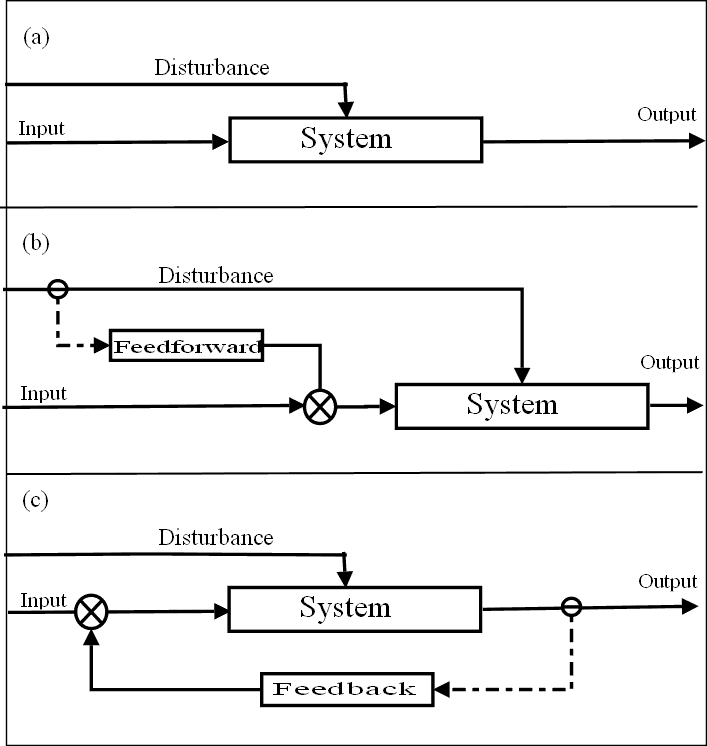
There are two fundamental approaches to controlling a process: open-loop and closed-loop. The difference between them comes down to one simple question: does the system use feedback?
An open-loop system operates without any feedback. It follows a pre-set series of commands and hopes for the best. A microwave is a classic example. You set it to run for two minutes, and it runs for two minutes, regardless of whether your food is frozen solid or burning to a crisp. The controller (the timer) doesn't measure the output (the food's temperature) to make adjustments.
A closed-loop system, on the other hand, actively measures its output and uses that information—the feedback—to adjust its actions. This is how a thermostat in your home works. You set a desired temperature (the setpoint). The thermostat measures the actual room temperature and compares it to the setpoint. If it's too cold, it turns on the furnace. Once the room reaches the setpoint, it turns the furnace off. This continuous loop of measuring, comparing, and adjusting is the hallmark of a closed-loop system.
Process Control in Action
Process control is everywhere, often working quietly in the background. It's the hidden engine of modern industry and technology.
| Industry | Application | System Type |
|---|---|---|
| Automotive | Cruise Control | Closed-Loop |
| Food & Beverage | Pasteurization Temperature | Closed-Loop |
| Chemical | Reactor Pressure & Temperature | Closed-Loop |
| Home Appliances | Clothes Dryer (on timer) | Open-Loop |
| Pharmaceuticals | Drug Formulation Consistency | Closed-Loop |
In a car's cruise control, a sensor measures the vehicle's speed. The controller compares this to your set speed and adjusts the throttle to maintain it, even when going up or down hills. In manufacturing, precise control ensures everything from the thickness of paper to the purity of a chemical is exactly right, batch after batch.
Now, let's test your understanding of these core concepts.
What is the primary goal of process control?
The key difference between an open-loop and a closed-loop control system is the use of feedback.
Understanding these fundamentals—the what, why, and how of process control—is the first step toward designing, analyzing, and improving the automated systems that shape our world.