Introduction to Poker
Poker Basics
The Tools of the Trade
Poker is played with a standard 52-card deck. This deck is probably familiar to you, but let's quickly break it down. It contains four suits: hearts (), diamonds (), clubs (), and spades ().
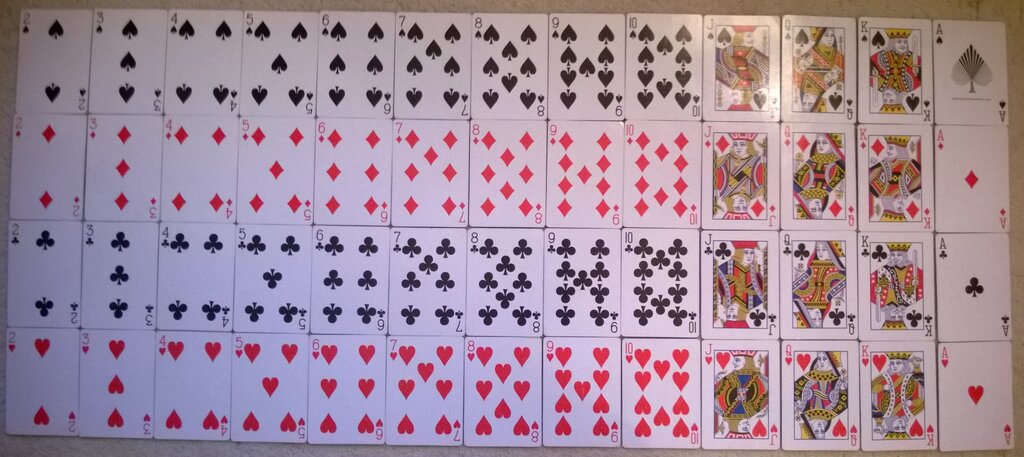
Each suit has 13 cards, or ranks. From highest to lowest, they are: Ace, King, Queen, Jack, 10, 9, 8, 7, 6, 5, 4, 3, and 2.
In most poker games, the suits themselves have no ranking. A heart is not better than a spade, and a club is not weaker than a diamond. The value comes from the combination of cards you hold.
What Makes a Good Hand?
The goal in poker is to make the best five-card hand. The rarer the hand, the higher it ranks. Understanding this hierarchy is the single most important part of learning the game. The hand rankings are standard across almost all forms of poker.
From best to worst, here are the standard poker hand rankings. Commit these to memory!
| Hand | Description | Example |
|---|---|---|
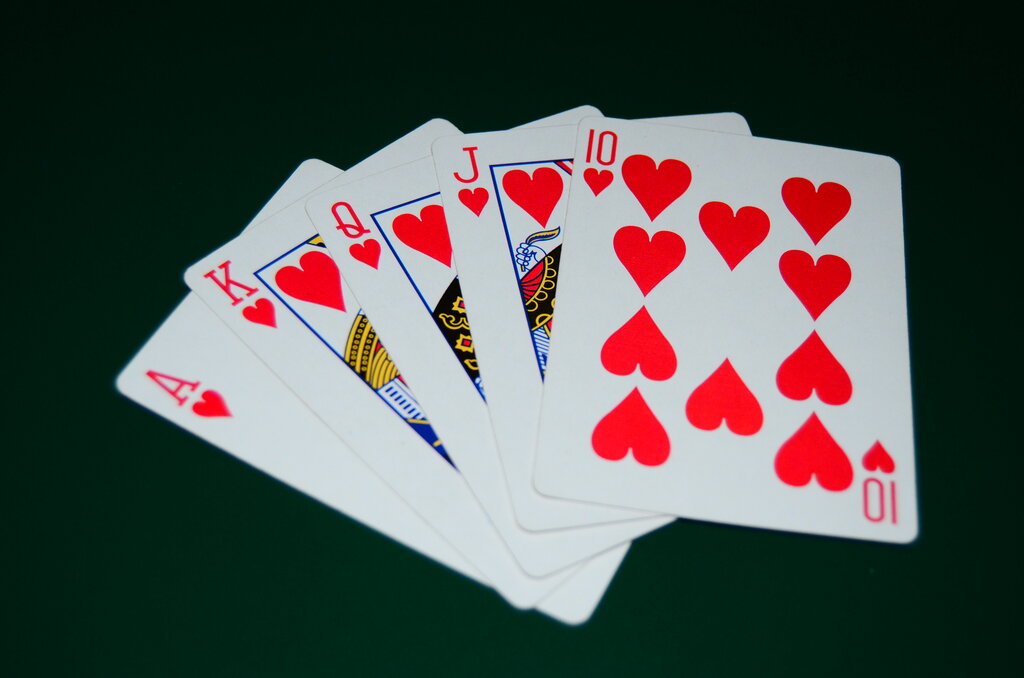
| Royal Flush | A, K, Q, J, 10, all of the same suit. | A♥ K♥ Q♥ J♥ 10♥ |
| Straight Flush | Five cards in sequence, all of the same suit. | 9♠ 8♠ 7♠ 6♠ 5♠ |
| Four of a Kind | Four cards of the same rank. | Q♥ Q♦ Q♣ Q♠ 5♦ |
| Full House | Three of a kind with a pair. | J♣ J♠ J♥ 8♦ 8♥ |
| Flush | Any five cards of the same suit, not in sequence. | K♠ 10♠ 8♠ 4♠ 2♠ |
| Straight | Five cards in sequence, but not of the same suit. | 7♥ 6♦ 5♣ 4♠ 3♥ |
| Three of a Kind | Three cards of the same rank. | 9♣ 9♠ 9♦ K♠ 4♥ |
| Two Pair | Two different pairs. | A♥ A♦ 6♣ 6♠ Q♠ |
| One Pair | Two cards of the same rank. | 10♣ 10♠ K♦ 7♥ 2♣ |
| High Card | When you haven't made any of the hands above. | A♣ K♦ 9♥ 7♠ 3♣ |
Let's look at an example. A Royal Flush is the best possible hand in poker. There are only four ways to make one (one for each suit), making it incredibly rare.
If two players have the same type of hand, like a pair, the winner is determined by the rank of the cards. For example, a pair of Kings beats a pair of Jacks. If the pairs are the same, you look at the highest other card in the hand, called a "kicker." A hand of A-A-K-5-2 would beat A-A-Q-10-9 because the King kicker is higher than the Queen kicker.
The Flow of a Hand
While specific rules vary between poker games like Texas Hold'em or Stud, the basic structure of a betting round is consistent. Players take turns acting in a clockwise direction.
During your turn, you have a few options:
- Check: If no one has bet yet in the current round, you can pass the action to the next person without betting anything. You stay in the hand.
- Bet: You can be the first to put money into the pot in a given round.
- Call: If another player has bet, you can match their bet to stay in the hand.
- Raise: You can increase the size of the current bet, forcing other players to either put in more money or fold.
- Fold: You can give up your hand and forfeit any money you've already put into the pot. You're out until the next hand is dealt.
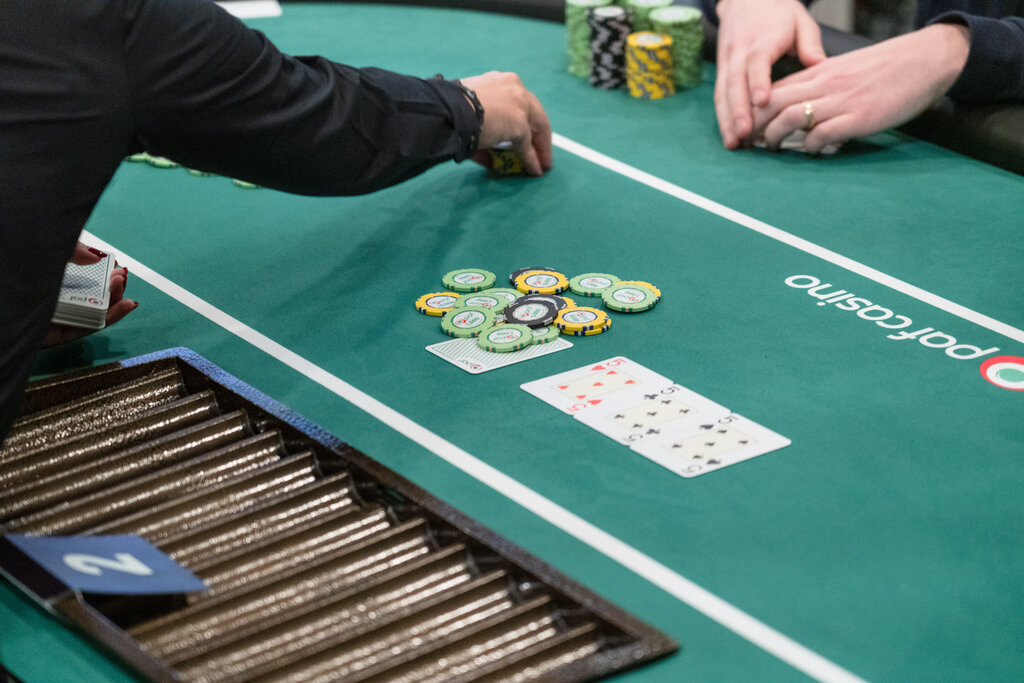
Betting rounds continue until every player has either matched the total amount bet or folded their hand. The ultimate goal is to win the pot, which contains all the bets made during the hand. You can win in two ways: by having the best hand at the end (the "showdown"), or by getting every other player to fold.
This dynamic is the heart of poker. You're not just playing the cards you're dealt; you're playing against your opponents.
Ready to test your knowledge of the basics?
How many cards are in a standard deck, and how many suits does it contain?
In most forms of poker, which suit is considered the most valuable?
Now that you have a grasp of the deck, the hand rankings, and the flow of the game, you're ready to explore specific poker variations. Everything you learn from here will build on these core concepts.