Introduction to Planet Earth
Earth's Position in the Solar System
Our Place in the Sun
Earth is the third planet from the Sun, traveling in a path called an orbit. Think of an orbit as a giant, stretched-out circle, technically known as an ellipse. This means our distance from the Sun isn't constant throughout the year.
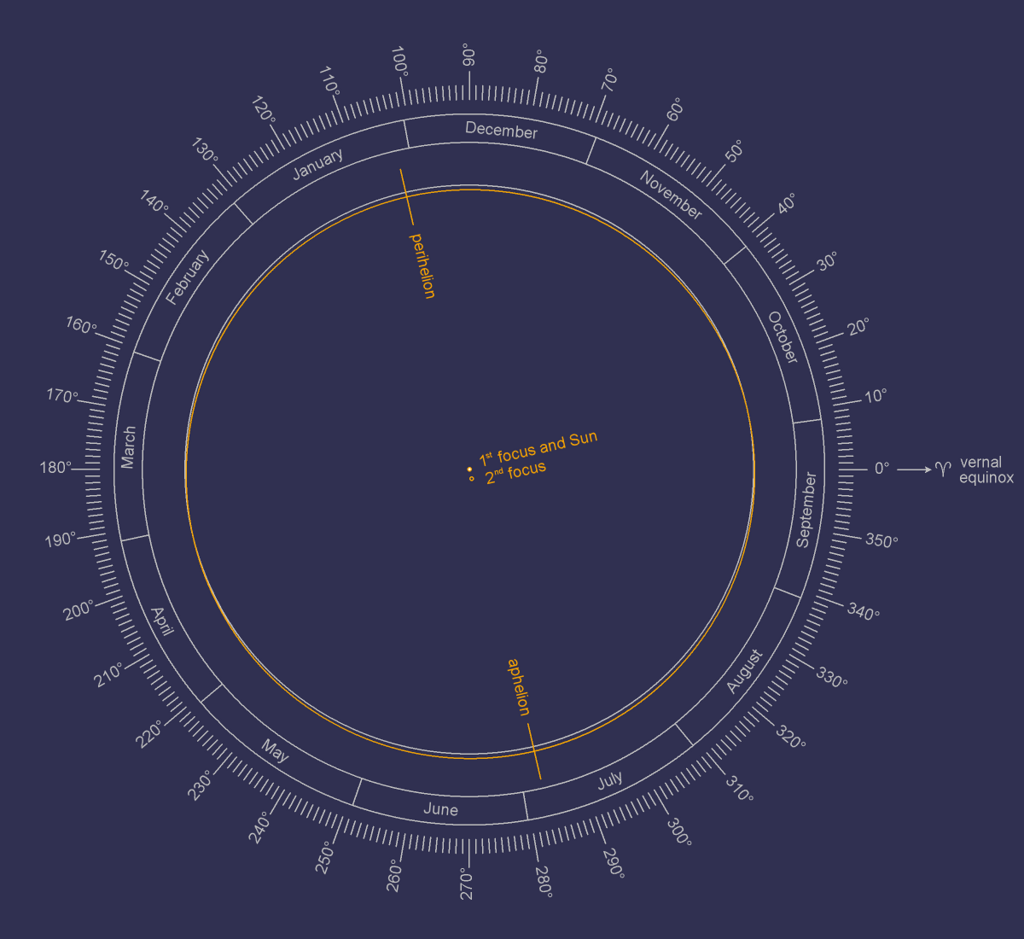
When Earth is closest to the Sun, we call it the perihelion. This happens in early January. When it's farthest away, it's called the aphelion, which occurs in early July. You might think this change in distance would cause our seasons, but the difference is actually quite small and isn't the main driver of winter or summer.
The Lean That Gives Us Seasons
The real reason for the seasons is Earth's axial tilt. Our planet doesn't sit straight up and down as it orbits; it's tilted on its axis by about 23.5 degrees. Imagine a spinning top that's leaning to one side as it spins—that's a bit like Earth.
The phenomenon of opposite seasons in the Northern and Southern Hemispheres is a fascinating display of Earth’s intricate positioning in relation to the sun.
This tilt means that for part of the year, the Northern Hemisphere is angled toward the Sun, receiving more direct sunlight and experiencing summer. At the same time, the Southern Hemisphere is angled away, getting less direct, more spread-out sunlight, which brings winter.
Six months later, the situation is reversed. The Southern Hemisphere is tilted toward the Sun, enjoying its summer, while the Northern Hemisphere cools down for winter.
The points in our orbit that mark the official start of summer and winter are called solstices. The moments when both hemispheres receive roughly equal sunlight are the equinoxes, which kick off spring and autumn.
The Goldilocks Distance
Earth orbits the Sun at an average distance of about 93 million miles (150 million kilometers). This location is special. It's within a region astronomers call the "habitable zone," or sometimes the "Goldilocks zone."
It's not too hot, not too cold, but just right for liquid water to exist on the surface. Liquid water is a key ingredient for life as we know it.
Our distance from the Sun determines how much solar energy, or radiation, we receive. This energy warms our planet, drives our weather patterns, and powers photosynthesis in plants, which forms the foundation of most of Earth's food chains. Without this steady supply of energy from the Sun, Earth would be a frozen, lifeless world.
Now, let's test your understanding of our planet's place in space.
What is the primary reason for Earth's seasons?
When the Northern Hemisphere is experiencing summer, the Southern Hemisphere is experiencing winter.
Our unique position and tilt make Earth the dynamic, living planet it is. Understanding this cosmic arrangement helps explain everything from our daily weather to the long-term history of our climate.