Introduction to Piano Playing
Keyboard Layout
The Keyboard's Pattern
A piano keyboard might seem like a long, random stretch of keys at first, but it's built on a simple, repeating pattern. You have the long white keys and, raised slightly above them, the shorter black keys.
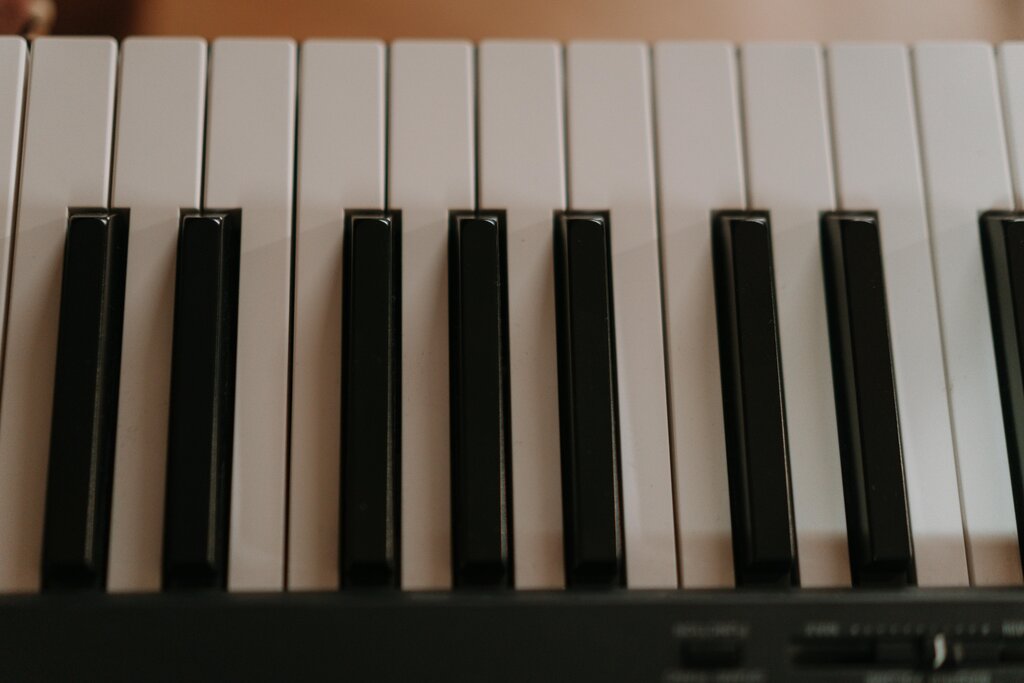
The black keys aren't spaced out evenly. They always appear in groups of two, then three, then two, then three, all the way up the instrument. This grouping is your map. Once you see this pattern, you'll never be lost on the keyboard again.
The entire keyboard is built from this repeating 12-key sequence: 7 white keys and 5 black keys.
Notes and Octaves
The groups of black keys are landmarks that help you identify the white keys. The musical alphabet uses just seven letters: A, B, C, D, E, F, and G. Every white key is one of these notes.
To find any note, start with the black keys. For example, the white key immediately to the left of any group of two black keys is always a C.
Similarly, the white key to the left of any group of three black keys is always an F. With these two reference points, you can easily find any other white key just by counting up the musical alphabet.
This entire pattern of 12 keys (7 white, 5 black) is called an octave. The note names repeat in each octave, but the pitch gets higher as you move to the right and lower as you move to the left. A standard piano has just over seven octaves.
Finding Middle C
The most important landmark on the entire piano is Middle C. It’s a starting point for learning songs and navigating the keyboard. As the name suggests, it’s the C that is closest to the middle of the instrument. On an 88-key piano, it’s the fourth C from the left.
It’s important to know where middle C is so that you can come to understand the position of the rest of the keys.
To find it, sit right in the center of the piano bench. You'll often find the piano's brand name (like Yamaha or Steinway) centered on the panel just above the keys. Middle C is usually the C right around that logo.
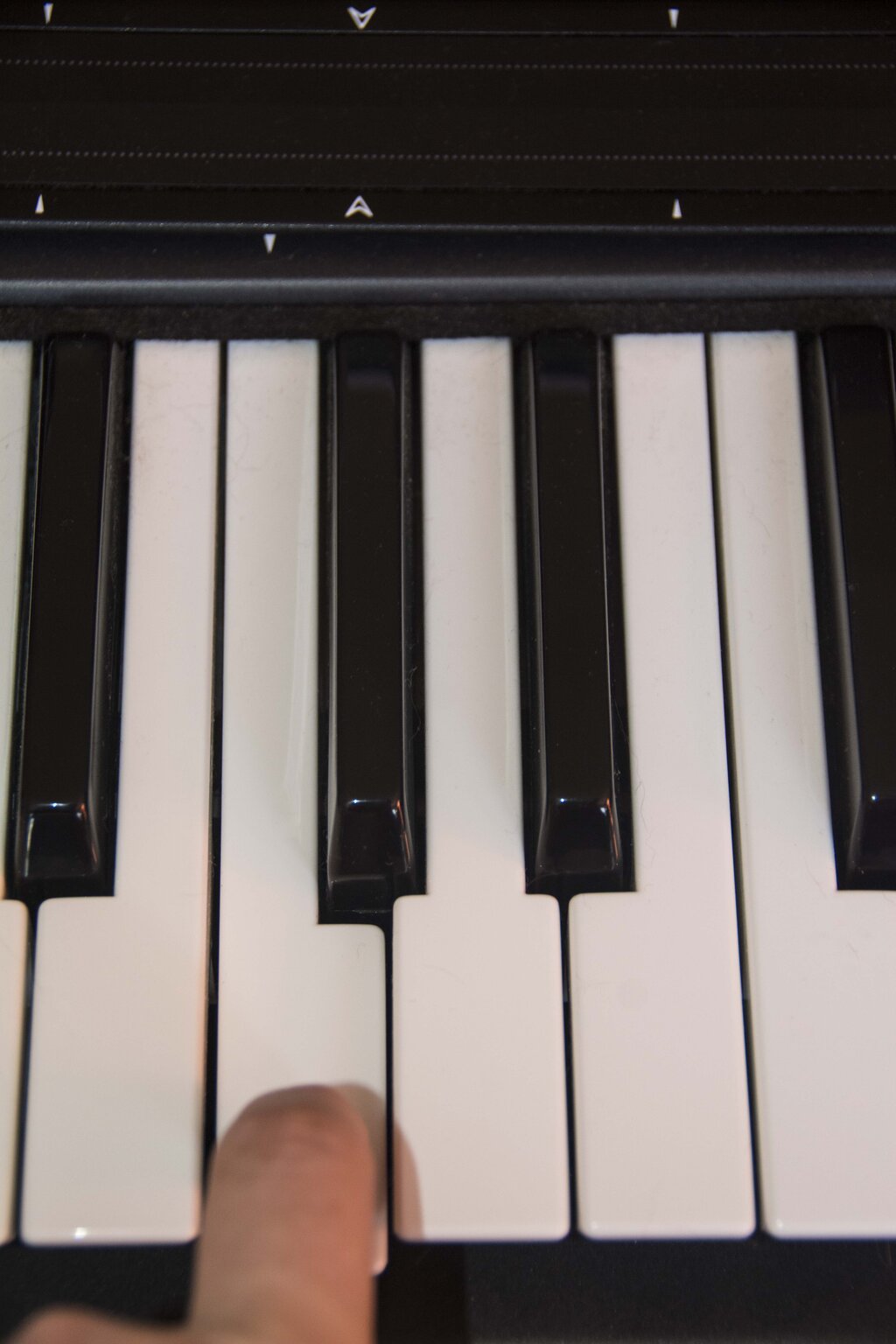
Once you can find Middle C without hesitation, you have a solid anchor point. From there, you can find any other note on the keyboard by moving up or down through the octaves.
How are the black keys on a piano keyboard typically arranged?
Where can you always find the note 'C' on a piano?
Understanding the layout is the first big step. Now you have a map of the keyboard based on its repeating patterns.