Introduction to Piano Playing
Piano Basics
Finding Your Way Around
Look at a piano keyboard. You'll see a repeating pattern of white and black keys. The black keys are grouped in sets of two, then three, then two, then three, all the way up and down.
This pattern is your map. To find your first note, look for a group of two black keys. The white key just to the left of that group is called C. There are many Cs on the piano, but the one closest to the middle is called Middle C. It’s your home base.
Once you find C, the rest of the white keys follow the musical alphabet: D, E, F, G, A, B. After B, the pattern starts over with the next C. The distance from one C to the next is called an octave.
An octave is a series of eight notes that occupy the interval between (and including) two notes with the same name.
The entire keyboard is just this same pattern repeated over and over. If you can find the notes in one octave, you can find them anywhere on the piano.
Setting Up for Success
How you sit at the piano matters more than you might think. Good posture helps you play more comfortably, prevents strain, and allows your hands and arms to move freely. It's a habit worth building from day one.
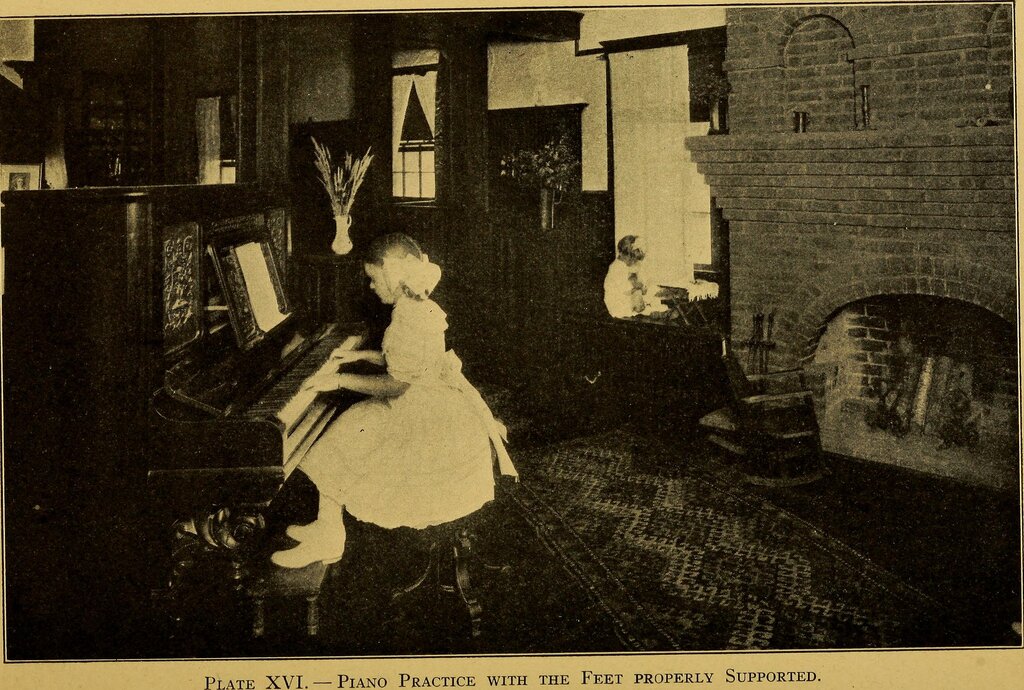
Sit on the front half of the bench, centered on Middle C. Your back should be straight but not stiff. Adjust the bench so your forearms are parallel to the floor when your hands are on the keys. Your elbows should be slightly in front of your body, not tucked into your sides. Finally, relax your shoulders. Let them drop naturally.
Hands and Fingers
Now for your hands. They should be relaxed and curved, as if you're gently holding a ball. Your fingers should curve down naturally to touch the keys, and your wrists should be level with your hands, not bent up or down. Think of your arm, wrist, and hand as one connected, fluid line.
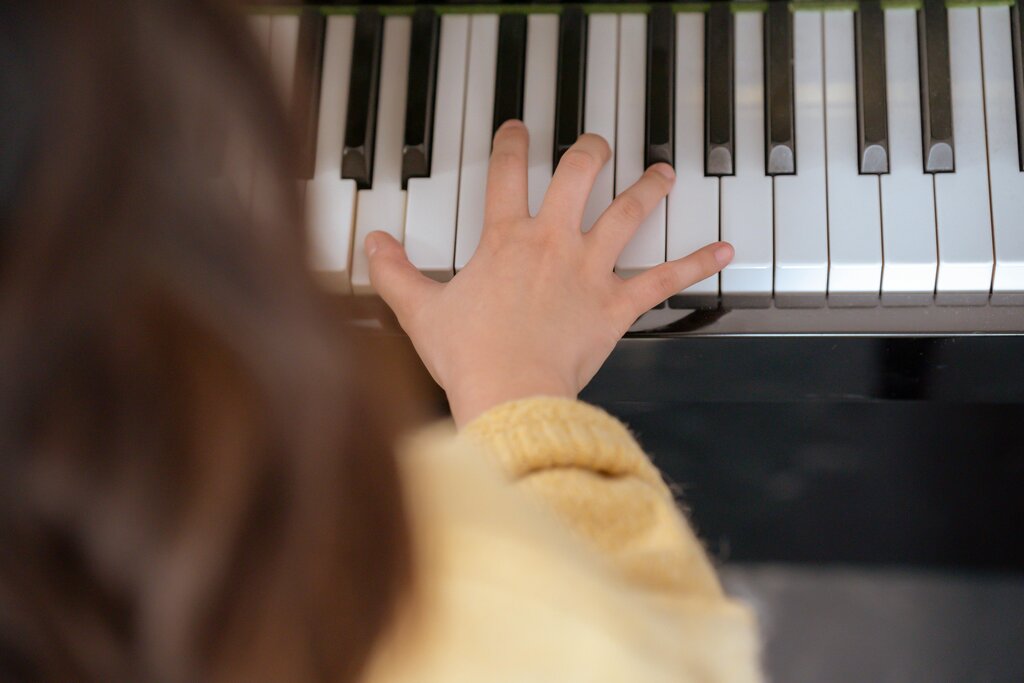
To make learning easier, pianists number the fingers on each hand. It's the same for both your left and right hand:
- Your thumb is 1
- Your index finger is 2
- Your middle finger is 3
- Your ring finger is 4
- Your pinky finger is 5
This numbering system is universal in piano music. It helps you know exactly which finger to place on which key. We'll be using these numbers in all future lessons.
Let's check your understanding of these foundational ideas.
How do you locate the note 'C' on a piano keyboard?
What note comes immediately after G in the musical alphabet?
Getting comfortable with the keyboard layout, your posture, and your hand position is the first big step. With this foundation, you're ready to start making music.