Introduction to Piano Playing
Piano Posture
Your Seat at the Piano
How you sit at the piano is the foundation for everything you play. It's not about looking formal; it’s about giving your body the support and freedom it needs to move easily. Bad posture can lead to tension, mistakes, and even injury down the line. Getting it right from the start makes learning faster and more comfortable.
First, let's adjust your piano bench. You shouldn't sit too close or too far. A good rule of thumb is to sit far enough back that your elbows are slightly in front of your body when your hands are on the keys. Sit on the front half of the bench, which gives you stability while allowing your upper body to move freely.
When seated, piano students should be able to reach the keys while keeping their forearms parallel to the ground.
The height of the bench is critical. Your forearms should be level with the keyboard, or even slightly above it. If you're too low, your wrists will bend upwards. Too high, and they'll drop down. Neither is good. If your bench isn't adjustable, use firm cushions or books to raise your height.
Keep your back straight but not rigid. Your shoulders should be relaxed and down, not hunched up by your ears. Finally, place your feet flat on the floor, about shoulder-width apart. They are your anchors. If your feet don't reach, use a small footstool. This solid base prevents you from fidgeting and keeps you balanced.
Shaping Your Hands
Once your body is positioned correctly, it's time to focus on your hands. The right hand shape allows for precision, speed, and control, all while staying relaxed.
The easiest way to find the correct shape is to let your hands hang loosely at your sides. Notice how your fingers naturally curve. That's the shape you want at the keyboard. You can also imagine holding a small ball or an orange in your palm. Your fingers should be curved, with your knuckles forming a gentle arch. Your thumb should also be slightly curved and relaxed, ready to tuck under your fingers when needed.
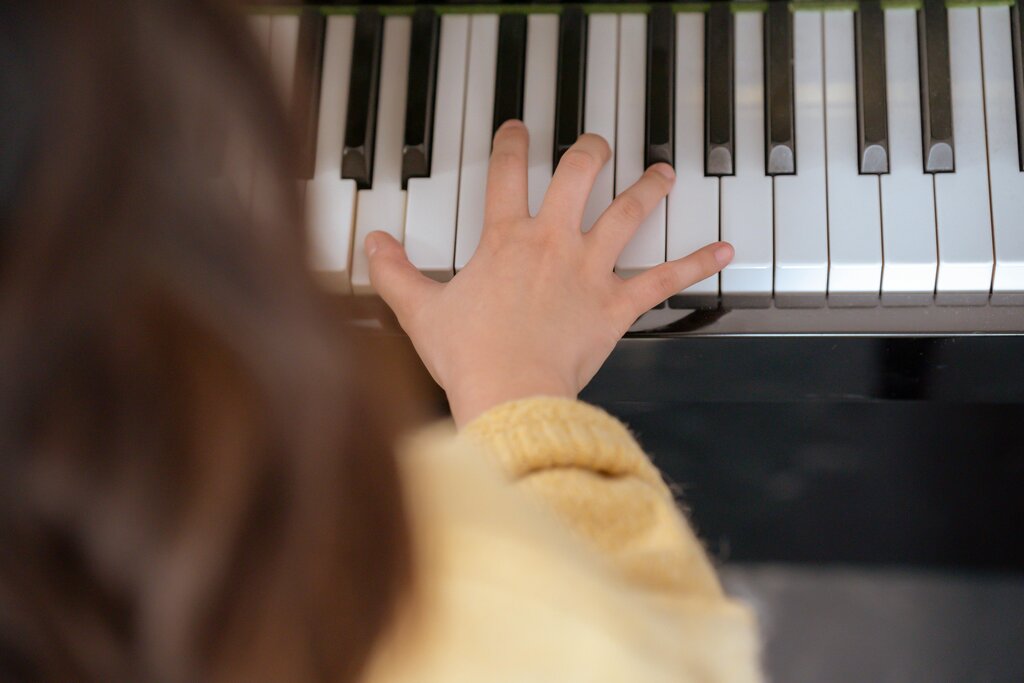
Your wrists are just as important. They should be level and flexible, forming a straight line from your elbow to your knuckles. Avoid letting them sag below the keys or bend too high. Think of your wrist as a shock absorber, allowing your arm's weight to transfer smoothly into your fingers.
You'll play with the fleshy tips of your fingers, not the flat pads and not your fingernails. This gives you the best control and produces a clear, warm tone. Keep your nails trimmed to make this possible.
Stay Loose
Tension is the single biggest obstacle to fluid playing. It can creep into your shoulders, arms, wrists, and fingers, making everything feel stiff and difficult. The goal is to remain relaxed while maintaining control.
Your arms should feel heavy and loose, hanging from your shoulders. Think of them as extensions of your back, not separate limbs you have to hold up. All the power in your playing comes from the weight of your arm, channeled through your fingertips. You are not meant to poke or press the keys with finger strength alone.
Before you play, try a simple relaxation exercise. Lift one arm in front of you and then let it drop completely into your lap, like a wet noodle. Do this a few times with each arm. That feeling of release is what you should aim for while playing. If you feel tension building up in your shoulders or forearms, stop, shake your hands out, and reset.
Remember, playing the piano is a full-body activity. A relaxed posture and correct hand shape are not just suggestions—they are the tools that let you play beautifully and without strain.
Now that you have the fundamentals of posture down, let's test your understanding.
What is the primary reason for maintaining good posture at the piano?
When adjusting your piano bench height, what should be the position of your forearms?
Good posture isn't something you master once; it's something you practice every time you sit down to play.