Introduction to Piano Playing
Piano Basics
Finding Your Way Around
Look at a piano keyboard and you'll see a repeating pattern of white and black keys. This pattern is your map. The white keys are named after the first seven letters of the alphabet: A, B, C, D, E, F, and G. This sequence repeats all the way up and down the piano.
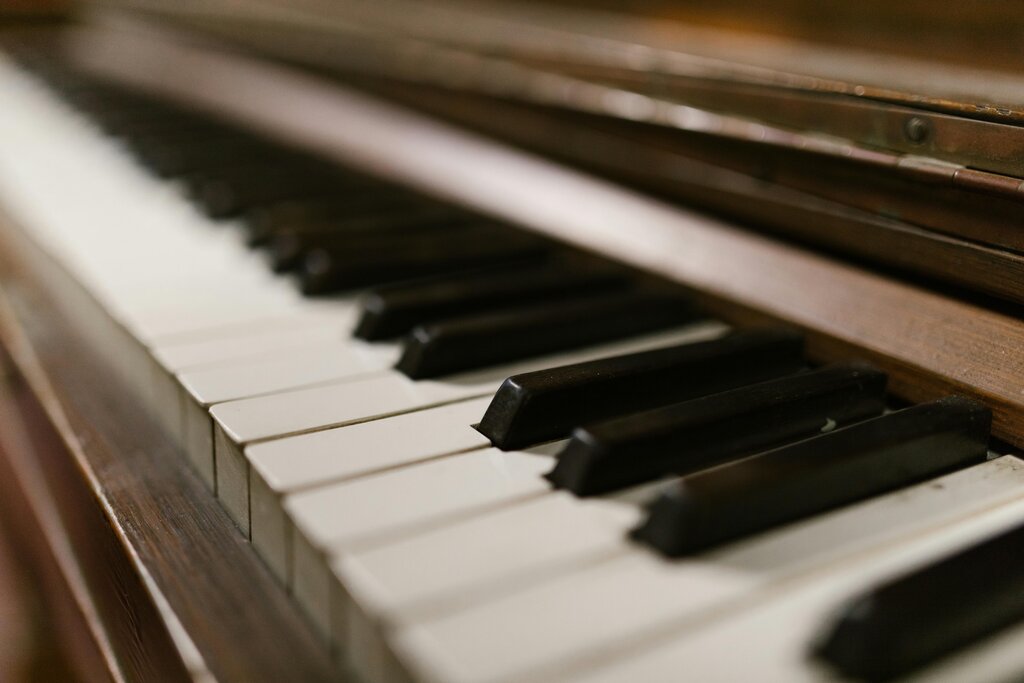
To find your bearings, look for the black keys. They come in groups of two and three. The white key just to the left of any group of two black keys is always a C. This is one of the most important notes to be able to find quickly.
Find a group of two black keys. The white key immediately to the left is C. From there, you can name the rest of the white keys in order: C, D, E, F, G, A, B.
Once you find one C, you've found them all. The distance between one C and the very next C is called an octave. An octave spans eight white keys and includes all the notes in between. The entire keyboard is made up of repeating octaves.
Your Posture and Hands
One of the most important fundamental ideas when playing the piano is posture.
How you sit at the piano affects everything. Good posture prevents you from getting tired or sore and allows your arms and hands to move freely.
Start by sitting on the front half of your piano bench, centered in front of the middle of the keyboard. Your feet should be flat on the floor, one slightly in front of the other. Adjust the bench height so your forearms are level with the keyboard when your fingers are resting on the white keys. Your elbows should be slightly in front of your body, not tucked into your sides.
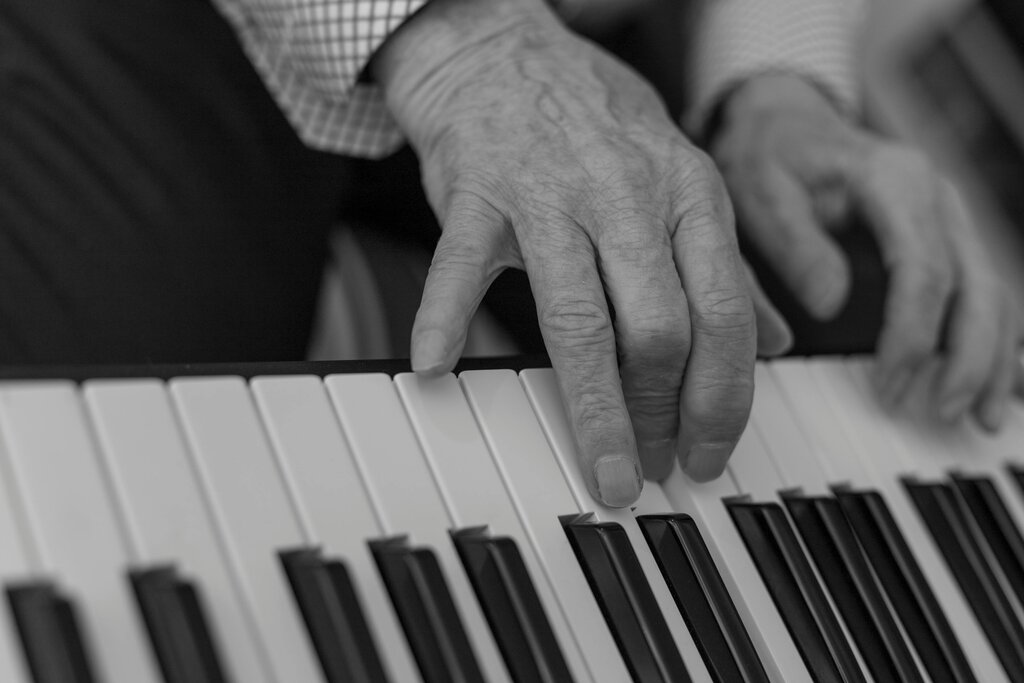
Now, let's look at your hands. For piano, we number the fingers on each hand from 1 to 5. Your thumb is always 1, your index finger is 2, middle is 3, ring is 4, and pinky is 5. This numbering is universal in piano music, so it's essential to learn.
When you place your hands on the keys, they should be relaxed and curved, as if you're holding a ball. Your fingers should be gently curved, and you should play with your fingertips, not flat fingers. Your wrists should be flexible and level with your hands, not bent up or down. A relaxed hand is key to playing smoothly and without strain.
Let's check your understanding of these first steps.
How can you consistently find the note 'C' on a piano keyboard?
What is the definition of an octave?
Getting these fundamentals right from the start makes learning everything else much easier. Take a moment to sit at a piano or keyboard, find the notes, and check your posture and hand position.