Introduction to Piano Playing
Piano Basics
Getting to Know the Keyboard
Look at a piano keyboard. You'll see a repeating pattern of white and black keys. The black keys are grouped into sets of two and three. This pattern is your map to finding any note.
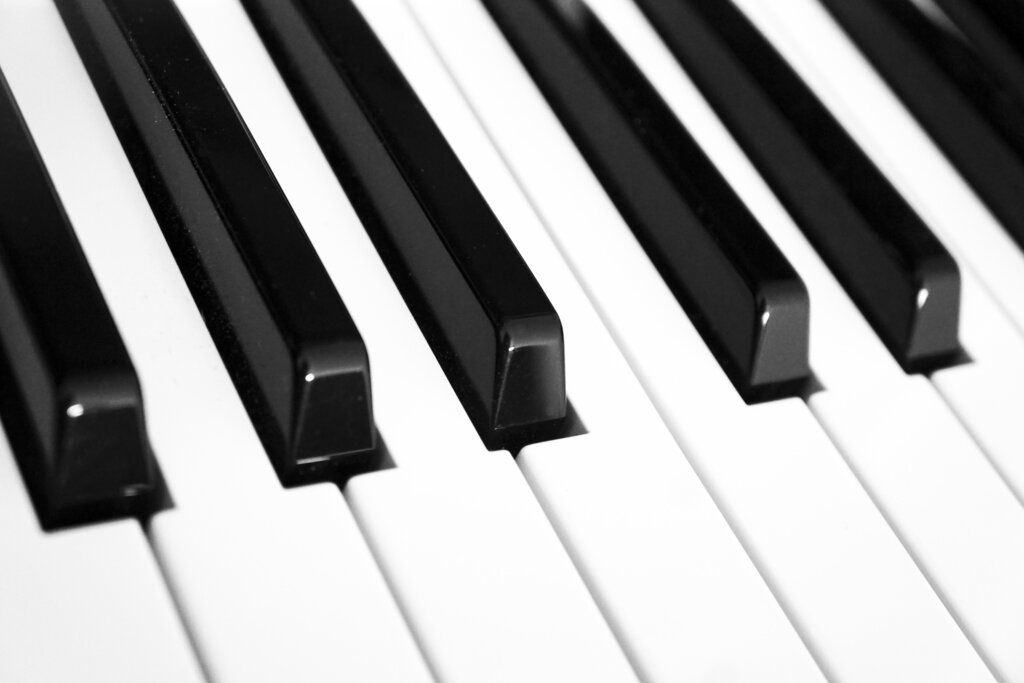
Let's find the most famous key: Middle C. Find a group of two black keys near the center of your piano. The white key immediately to the left of that group is C. This specific one is called Middle C, and it's a central landmark for pianists.
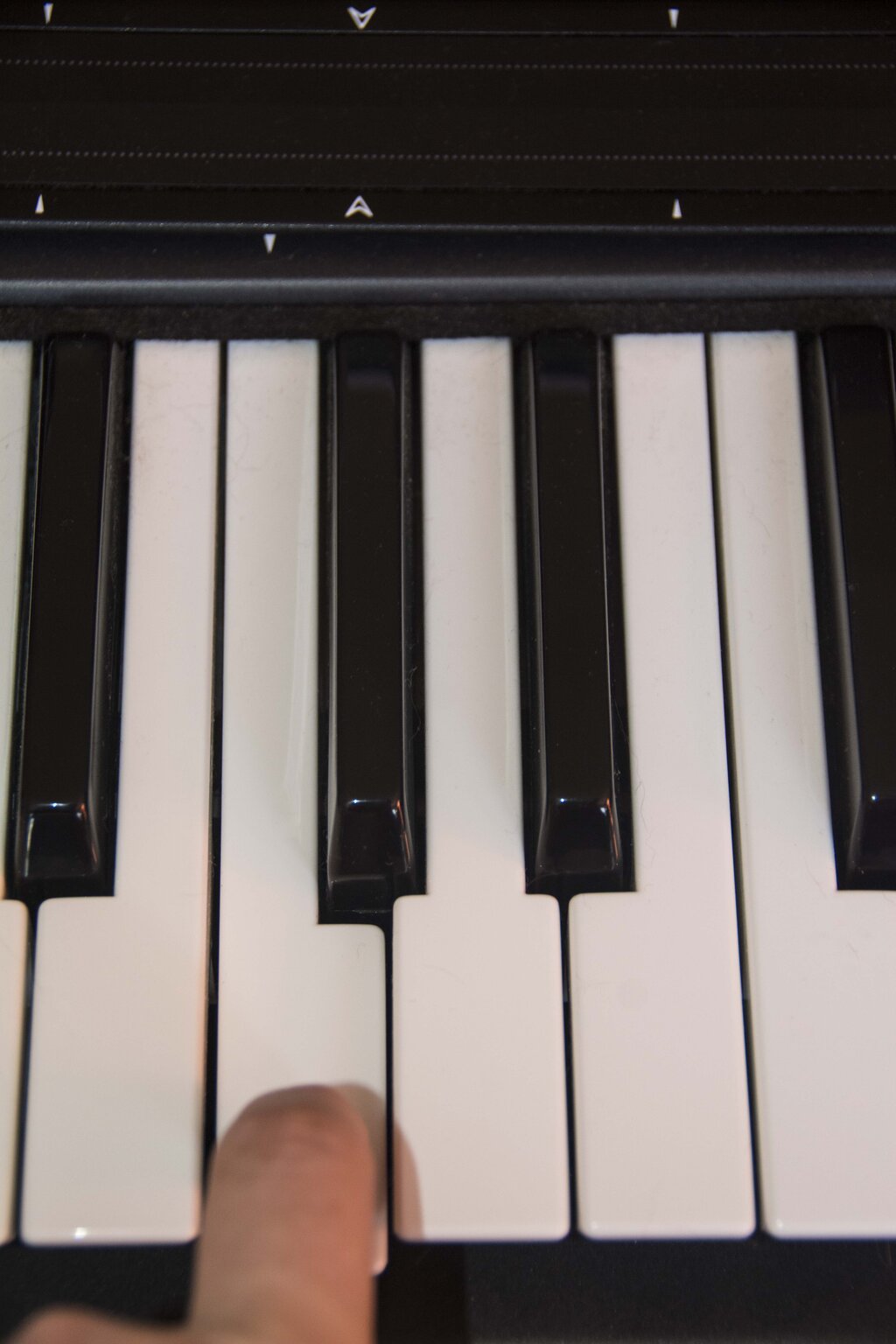
Once you've found C, the other white keys are easy. The notes follow the musical alphabet: A, B, C, D, E, F, G. After G, the pattern repeats. Starting from any C and moving to the right, the white keys are D, E, F, G, A, B, and then the next C.
Setting Up for Success
How you sit at the piano matters more than you might think. Good posture helps you play more comfortably, prevents strain, and allows your hands and arms to move freely. It's the foundation of good technique.
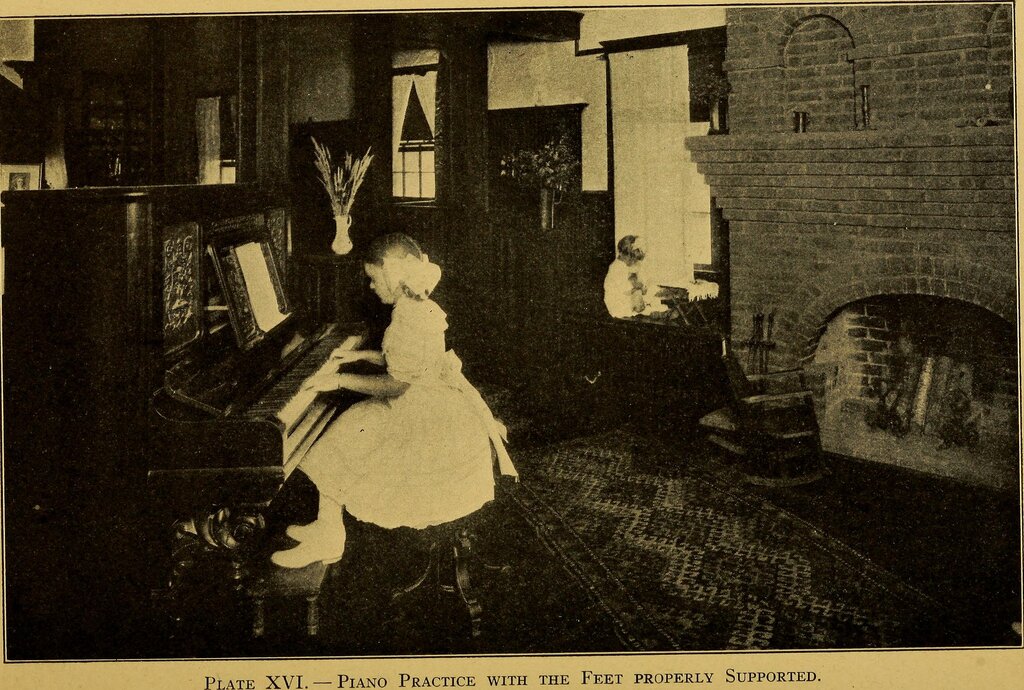
Sit on the front half of the bench, centered in front of Middle C. Your back should be straight but relaxed. Your feet should be flat on the floor—if they don't reach, use a small stool for support. Your forearms should be roughly parallel to the floor when your hands are on the keys.
Your hand position is just as important. Let your arms hang loosely at your sides, and notice the natural curve of your fingers. That's the shape you want to maintain at the keyboard. Imagine you're holding a small ball. Your wrists should be level and relaxed, not bent up or down.
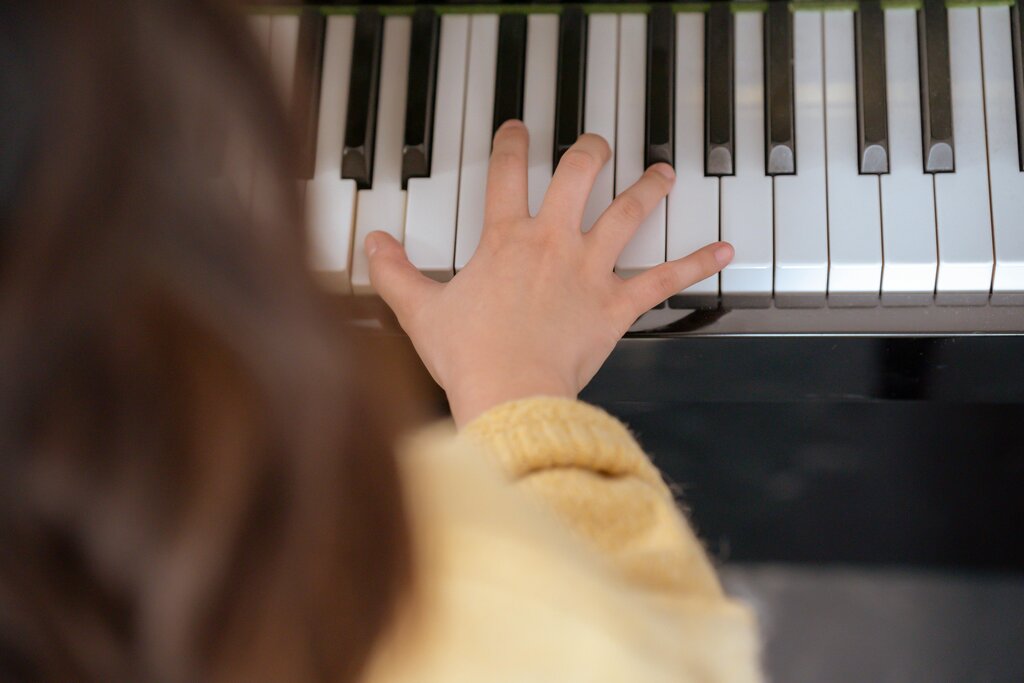
To talk about which finger plays which note, musicians use a numbering system. It's simple: your thumb is 1, index finger is 2, middle is 3, ring finger is 4, and your pinky is 5. This is the same for both the left and right hands.
Your First Scale
A scale is a series of notes played in order. The first one every pianist learns is the C major scale. It's special because it uses only the white keys, making it a great place to start.
The C major scale starts on C and goes up to the next C: C, D, E, F, G, A, B, C.
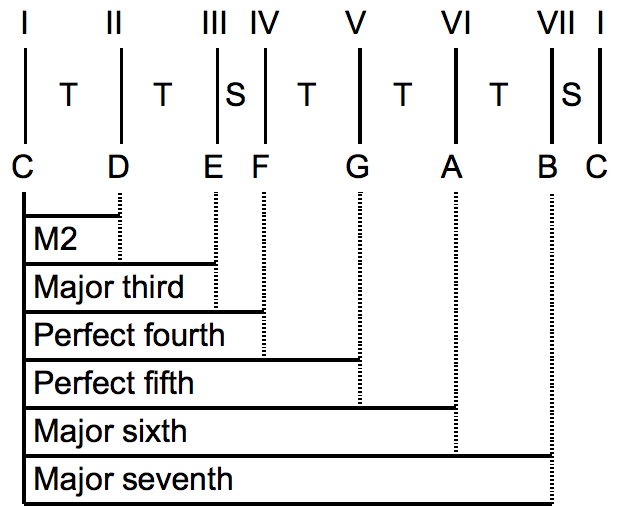
Let's play it with your right hand. Place your thumb (1) on Middle C. Then play each note up the scale, one finger per key:
- C: Thumb (1)
- D: Index finger (2)
- E: Middle finger (3)
Now for a small trick. To keep going, you need to tuck your thumb under your middle finger to get ready for the next note.
- Tuck your thumb under to F.
- F: Thumb (1)
- G: Index finger (2)
- A: Middle finger (3)
- B: Ring finger (4)
- C: Pinky finger (5)
Try this a few times, slowly. The thumb tuck is a fundamental move in piano playing. Coming back down is the reverse. Play the C with your pinky, then walk your fingers back down. When your thumb plays F, cross your middle finger (3) over your thumb to land on E, then continue down to C.
Building Finger Strength
Just like any other physical skill, playing the piano requires some muscle training. Simple exercises can build dexterity, coordination, and strength in your fingers. We'll start with a basic five-finger pattern, sometimes called a pentascale.
Place your right-hand fingers on five notes in a row: C, D, E, F, G. Your thumb (1) will be on C, and your pinky (5) will be on G.
Now, play each note up and down, slowly and evenly. Focus on making each note sound for the same length of time and at the same volume. Press the keys with your fingertips, keeping your hand relaxed and your fingers curved. Once you're comfortable, try it with your left hand. Your left pinky (5) will start on a C, and your thumb (1) will be on G.
The goal is control, not speed. A slow, steady exercise is much more valuable than a fast, sloppy one.
Here's another simple exercise. With your right hand in the same C-G position, try playing notes in a different order. For example, play C, E, D, F, E, G. Create your own simple patterns. This challenges your brain and fingers to work together in new ways.
These first steps are about building a solid foundation. Getting comfortable with the keyboard layout, your posture, and these basic movements will make everything that comes next much easier.
How can you locate the note 'C' on a piano keyboard?
When playing piano, your thumb is assigned which number?
You've taken your first steps into the world of piano. Keep practicing these fundamentals, and they'll soon become second nature.