Introduction to Phytosociology
Introduction to Phytosociology
The Society of Plants
When you walk through a forest or a meadow, you're not just seeing a random collection of plants. You're walking through a community, a complex society with its own rules, structures, and relationships. The study of these plant communities is called phytosociology.
Phytosociology
noun
The branch of ecology that deals with plant communities, their composition and development, and the relationships between the species within them. It's essentially the sociology of the plant world.
Instead of focusing on a single plant, phytosociology zooms out to look at the entire plant landscape. It asks questions like: Why do these particular species grow together here? How does this community interact with its environment? How can we classify different types of vegetation, from a tiny patch of moss on a rock to the vast expanse of a rainforest?
From Catalog to Community
For a long time, botany was mainly about collecting, naming, and classifying individual plant species. But in the late 19th and early 20th centuries, scientists started to recognize that plants don't live in isolation. They form predictable groups, or communities, that can be studied as a whole.
A key figure in this shift was the Swiss botanist Josias Braun-Blanquet. He developed a systematic way to survey, classify, and name plant communities, much like how individual species are classified. This approach helped transform the field into a more rigorous science, allowing ecologists to compare vegetation across different regions and understand the underlying environmental factors.
The Building Blocks of Vegetation
To talk about plant communities, we need some specific terms. While they might sound similar, they describe different scales of organization in the plant world.
| Term | Definition | Example |
|---|---|---|
| Plant Community | A general term for all the plants living together in a particular area or habitat. | The plants in a specific neighborhood park. |
| Plant Association | A specific type of community that has a consistent species composition and occurs in similar environmental conditions. This is a formal classification unit. | An oak-hickory forest association found on dry, upland slopes. |
| Formation | A very large-scale community defined by its dominant vegetation structure, or life form. | A temperate deciduous forest, a tropical savanna, or a desert. |
So, a formation is the broadest category. Within a single forest formation, you might find many different communities, and within those communities, several specific, recurring associations.
Why Study Plant Societies?
Understanding plant communities is crucial for many reasons. It helps us map ecosystems, manage natural resources, and track the effects of climate change. If we know what a healthy forest community in a certain region looks like, we can more easily spot when something is wrong, like when an invasive species begins to take over.
This knowledge is vital for conservation and restoration. To restore a wetland, you can't just plant random species. You need to know which plants form a stable, functioning community in that specific type of environment.
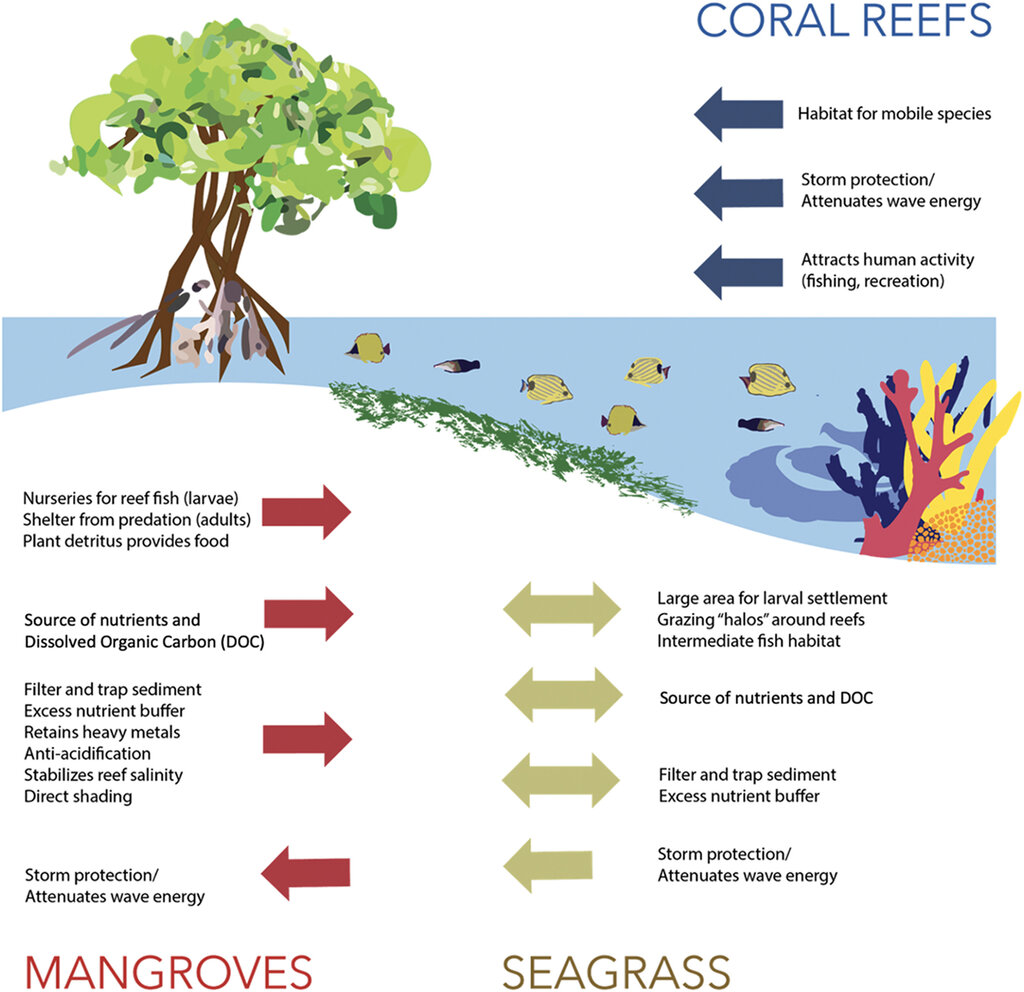
The patterns of plant communities are also shaped by a variety of environmental factors. Climate is the most important on a large scale. It determines whether a region can support a forest, grassland, or desert. Think about temperature, rainfall, and sunlight.
On a more local scale, soil type, topography, and water availability play a huge role. Even on a single hillside, you might find one plant community on the cool, shady north-facing slope and a completely different one on the hot, dry south-facing slope. These factors filter which species can survive and thrive, acting as the architects of the plant world.
Every plant community is a direct response to its physical environment.
What is the primary focus of phytosociology?
Which scientist developed a systematic method for surveying and classifying plant communities, helping to establish phytosociology as a rigorous science?