Introduction to Photography
Introduction to Photography
Capturing Light
At its core, photography is the art of capturing light. This idea isn't new. For centuries, people have understood the basic principle through a device called the camera obscura, which is Latin for “dark room.” If you poke a tiny hole in the wall of a completely dark room, an upside-down image of the outside world will project onto the opposite wall. Artists used this trick to trace realistic scenes long before cameras were invented.
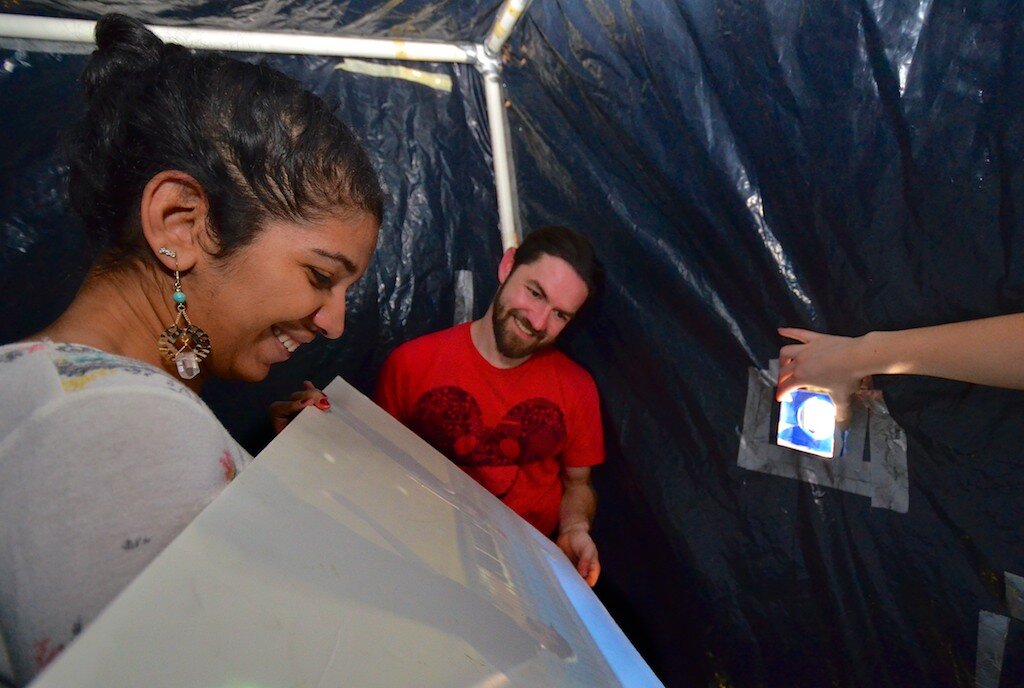
The challenge was figuring out how to make that projected image permanent. In the 1820s, a French inventor named Nicéphore Niépce finally succeeded. He coated a pewter plate with a light-sensitive substance and exposed it for several days in a camera obscura. The result was the world's first photograph, a blurry view from his workshop window.
The Camera's Evolution
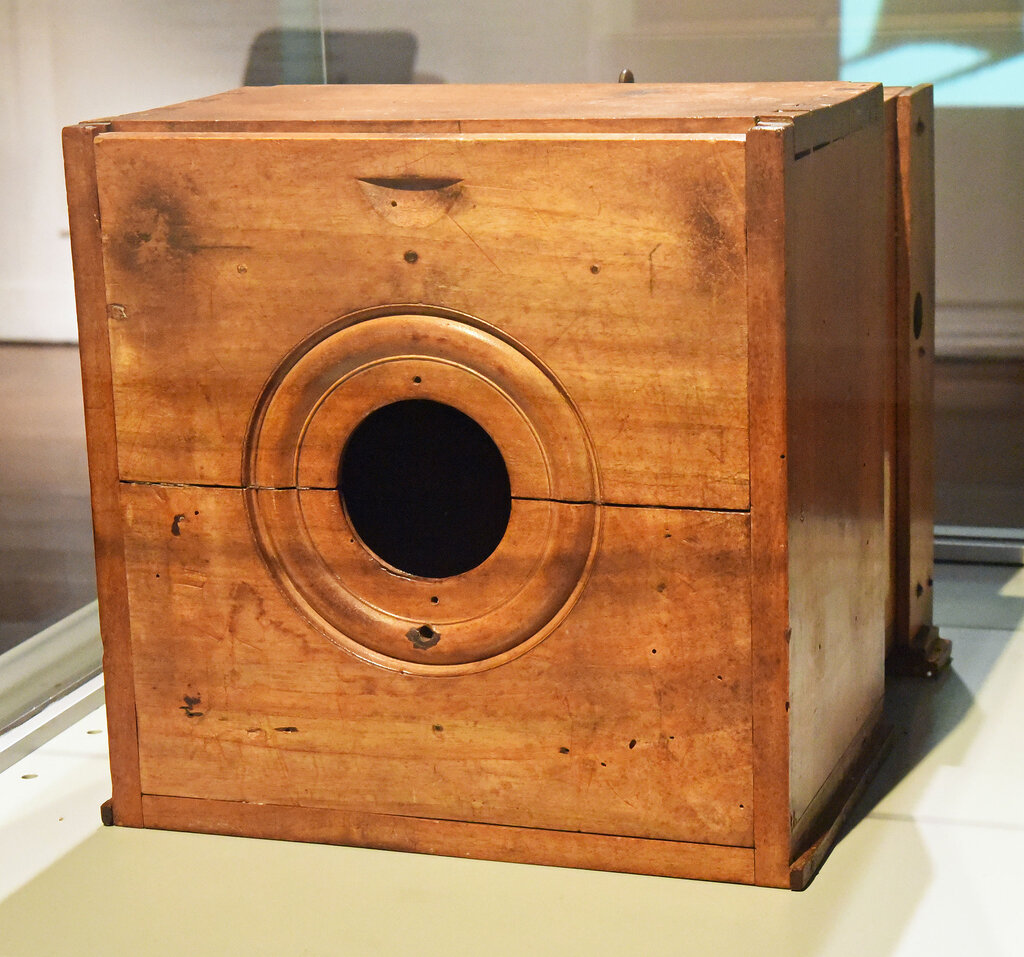
Niépce's camera was little more than a simple wooden box. Early photography was a slow, complicated process. The daguerreotype, introduced in 1839, created stunningly detailed images on polished silver plates, but each one was a unique, fragile object. To make photography more accessible, the technology needed to evolve.
A major breakthrough came with the invention of photographic film. Now, multiple prints could be made from a single negative. In 1888, Kodak introduced the Brownie camera with the slogan, "You press the button, we do the rest." Suddenly, anyone could be a photographer. Cameras became smaller, faster, and easier to use over the next century.
The next giant leap was the shift from film to digital. Instead of using chemicals to capture an image, digital cameras use an electronic sensor. This change in the late 20th century revolutionized photography, making it instant and seemingly limitless. Today, powerful cameras fit right in our pockets.
Inside the Box
Whether it's a vintage film camera or the latest smartphone, all cameras work on the same basic principles and share a few key components. They are all essentially a dark box designed to control how light reaches a light-sensitive surface.
Here’s a quick rundown of the essential parts:
- Lens: A piece of curved glass (or several pieces together) that gathers light from a scene and focuses it onto the sensor.
- Aperture: An adjustable opening inside the lens, much like the pupil of your eye. It can get wider to let in more light or narrower to let in less.
- Shutter: A tiny curtain that sits in front of the sensor. It opens for a specific amount of time to let light hit the sensor and then closes.
- Sensor (or Film): This is the light-sensitive surface at the back of the camera that actually records the image.
- Viewfinder: The small window you look through to see what the lens sees and frame your shot.
The Principle of Exposure
Every photograph you take is an exercise in controlling light. The final brightness of your image is called its exposure. A photo that is too dark is underexposed, and one that is too bright is overexposed.
Getting the exposure just right involves balancing two of the components we just discussed: aperture and shutter.
The aperture controls how much light enters the camera, while the shutter speed controls how long that light is allowed to hit the sensor.
Think of it like filling a bucket with water. You can open the tap just a little (a narrow aperture) and leave it on for a long time (a slow shutter speed). Or, you can open the tap all the way (a wide aperture) and turn it off quickly (a fast shutter speed). Both methods can result in a perfectly full bucket.
A third factor, ISO, refers to the sensor's sensitivity to light. A higher ISO makes the sensor more sensitive, allowing you to take pictures in darker conditions. Together, these three elements work together to create a well-exposed photograph.
Understanding these fundamentals is the first step on your journey. By knowing how a camera captures light, you've built the foundation for learning how to do it creatively and intentionally.