Introduction to Philosophy
Introduction to Philosophy
What is Philosophy?
Philosophy is the art of asking big questions. It's the kind of deep wonder you might have felt as a child, but channeled into a careful, systematic way of thinking. Instead of outgrowing questions like “Why are we here?” or “What is fairness?”, philosophers dive into them.
The word itself comes from Greek words meaning “love of wisdom.” At its core, philosophy isn't about having all the answers. It’s about the journey of seeking them. The goal is to understand ourselves and the world around us more clearly, to examine the beliefs we often take for granted.
Philosophy is a disciplined attempt to think carefully about the most general features of human life and the world.
By thinking through these fundamental problems, we learn to reason better, spot flawed arguments, and build a more coherent worldview. It's a practical skill that sharpens the mind and helps us live more deliberately.
The Five Main Branches
To tackle its vast questions, philosophy is often broken down into major branches. Each focuses on a different set of fundamental problems. Think of them as different lenses for looking at the world.
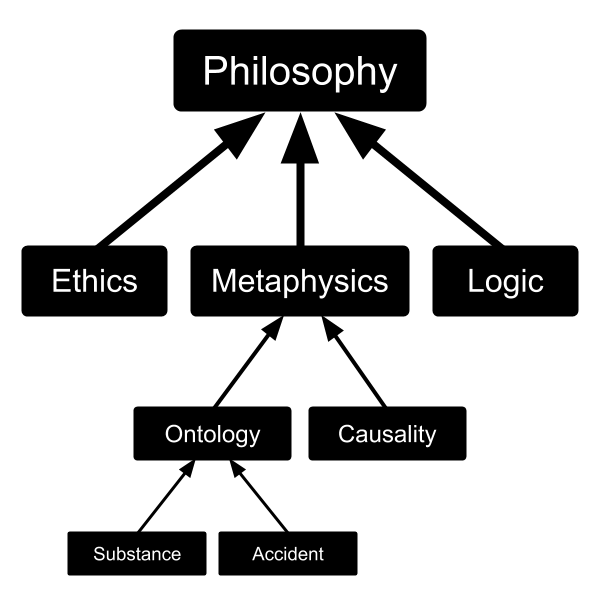
Here are five of the most important branches you'll encounter.
Metaphysics
noun
Examines the fundamental nature of reality, being, and the world. It asks questions about existence, time, and the relationship between mind and matter.
Metaphysics tackles the biggest question of all: What is real? It explores concepts beyond the physical world, such as whether there is a soul, what it means for something to exist, and why there is something rather than nothing.
Epistemology
noun
The theory of knowledge. It investigates what distinguishes justified belief from opinion, and explores the origin, nature, and limits of human knowledge.
This branch asks, how do we know what we know? Is knowledge gained through our senses, through pure reason, or some other way? Epistemology helps us evaluate how we acquire knowledge and how reliable it is.
Ethics
noun
Also known as moral philosophy, this branch involves systematizing, defending, and recommending concepts of right and wrong conduct.
Ethics focuses on how we should live and act. It explores questions of morality, virtue, duty, and justice. What makes an action right or wrong? What is a good life? These are the core concerns of ethics.
Logic
noun
The study of reasoning and argumentation. Logic analyzes the structure of arguments to distinguish valid reasoning from fallacious reasoning.
Logic is the toolbox of philosophy. It's the systematic study of how to reason correctly. It doesn't tell you what to think, but it gives you the principles to think clearly and construct sound arguments.
Aesthetics
noun
The branch of philosophy concerned with the nature of beauty, art, and taste. It explores the creation and appreciation of beauty.
Finally, aesthetics delves into our experience of beauty and art. What makes something beautiful? Is beauty objective, or is it just in the eye of the beholder? This branch connects philosophy to our sensory and emotional experiences.
Ready to check your understanding?
The word 'philosophy' comes from Greek words that mean...
Which of the following questions is a primary concern of metaphysics?
These five branches form the foundation of most philosophical inquiry. By exploring them, you begin a journey into some of the most profound and challenging questions humanity has ever asked.