Introduction to Odoo Software
Introduction to Odoo
What is Odoo?
Odoo is a suite of open-source business management applications. Think of it as an all-in-one toolbox for running a company. Instead of using separate software for sales, accounting, and inventory, Odoo brings all these functions together under one roof.
It started in 2005, originally named Tiny ERP. As it grew, it became OpenERP, and finally, Odoo. The name change reflected its expanded scope beyond traditional Enterprise Resource Planning (ERP). Today, it offers a vast collection of apps to manage nearly every aspect of a business.
The core idea is simple: provide a single, integrated system to streamline a company's operations, from the first customer contact to the final financial report.
A Modular Approach
Odoo's power comes from its modular architecture. Imagine a smartphone. You start with the basic functions, then you download apps for specific needs like social media, navigation, or banking. Odoo works the same way.
A business can start with a few fundamental modules, like Sales and Accounting. As the company grows, it can add more modules for things like Manufacturing, Project Management, or Human Resources. This flexibility allows businesses to build a custom system that fits their exact needs without paying for features they don't use.
Each module is designed to work seamlessly with the others because they all share the same central database. This interconnectedness is what makes the system so efficient.
Key Applications
While Odoo offers thousands of community-developed apps, a set of core applications covers the essential needs of most businesses. These apps are the building blocks of your management system.
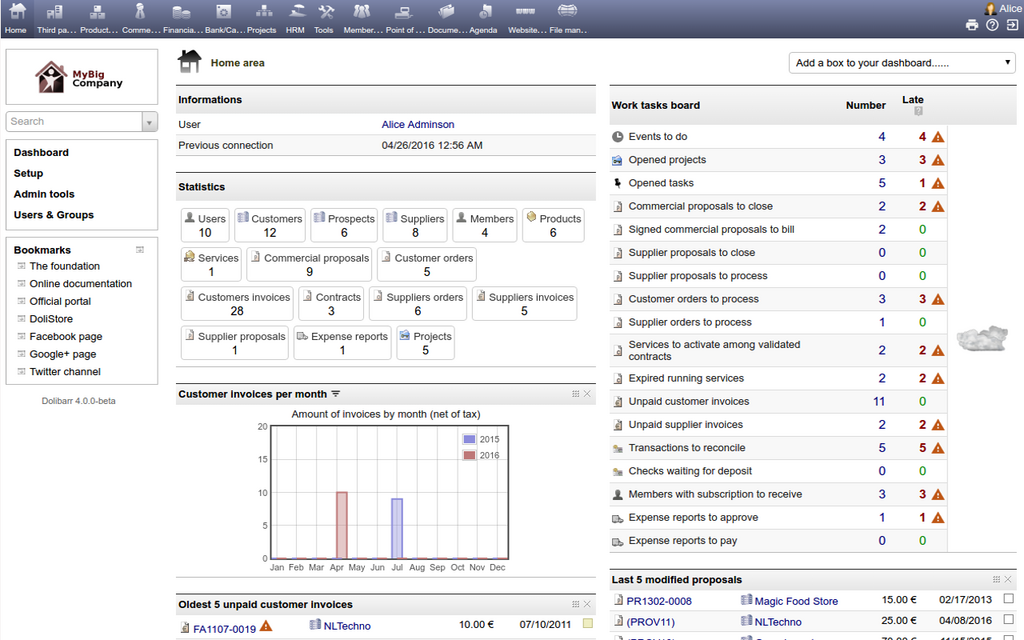
Here are a few of the most common applications and what they do.
| Module | Purpose |
|---|---|
| CRM | Track leads and manage customer relationships. |
| Sales | Create quotes, manage sales orders, and handle invoicing. |
| Accounting | Handle bookkeeping, payments, and financial reporting. |
| Inventory | Manage stock levels, track shipments, and run warehouse operations. |
| Manufacturing | Plan production orders and manage bills of materials. |
| Project | Organize tasks, track time, and manage project progress. |
The Power of Integration
The true benefit of Odoo isn't just the individual apps, but how they work together. This integration eliminates the need for manual data entry between different systems, which saves time and reduces errors.
Consider a simple sales process. When a salesperson confirms a quote in the Sales app, the system can automatically:
- Create a delivery order in the Inventory app.
- Generate an invoice in the Accounting app.
- Update the customer's record in the CRM app.
This seamless flow of information ensures that every department has access to the most up-to-date data without any extra work.
This level of integration gives business owners a clear, real-time view of their entire operation, allowing for better decision-making.
Now, let's test your understanding of Odoo's core concepts.
What is the primary benefit of Odoo's integrated suite of applications?
What is the best analogy for Odoo's modular architecture?
By combining a modular structure with powerful integration, Odoo provides a flexible and efficient solution for businesses of all sizes.