Introduction to Neuroscience
Neurons and Glia
The Brain's Building Blocks
Your nervous system is a bustling city of trillions of specialized cells. While we often focus on the most famous residents, the neurons, they can't function without their crucial support system, the glial cells. Think of neurons as the rock stars of the brain, sending all the important messages. Glia, on the other hand, are the tireless road crew, making sure the stage is set, the equipment works, and the venue is clean and safe.
Neurons The Messengers
Neurons are the information couriers of your body. Their job is to transmit electrical and chemical signals, allowing different parts of your nervous system to communicate with each other and with the rest of your body. To do this, they have a unique structure perfectly suited for the task.
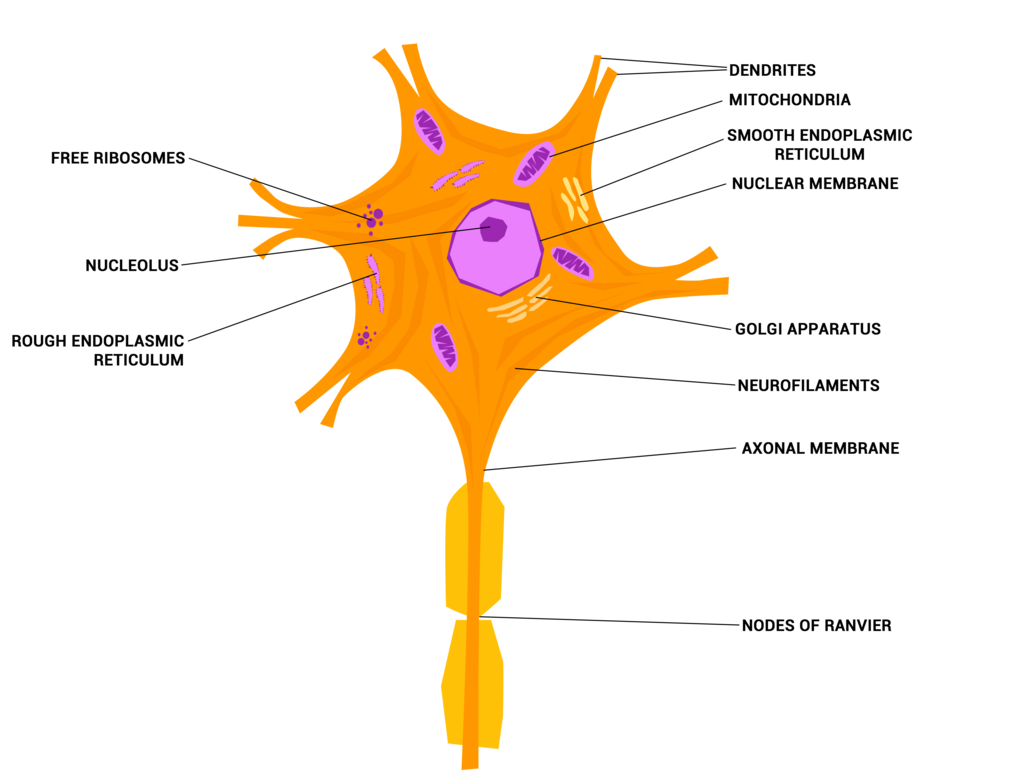
Nearly every neuron has three main parts:
-
Soma (Cell Body): This is the neuron's headquarters. It contains the nucleus and other machinery needed to keep the cell alive and functioning.
-
Dendrites: These branch-like extensions reach out from the soma to receive signals from other neurons. You can think of them as the cell's antennas, constantly listening for incoming messages.
-
Axon: This is a long, cable-like projection that carries signals away from the soma to other neurons, muscles, or glands. It's the transmission wire of the cell.
neuron
noun
A specialized cell that transmits nerve impulses; a nerve cell.
Many axons are wrapped in a fatty substance called the myelin sheath. This sheath acts like the insulation on an electrical wire, preventing the signal from leaking out and allowing it to travel much faster. The signal, called an action potential, is an electrical impulse that zips down the axon. When it reaches the end, at a spot called the axon terminal, it triggers the release of chemical messengers.
These chemical messengers are called neurotransmitters. They travel across a tiny gap—the synapse—to the dendrites of the next neuron, passing the message along.
Glia The Unsung Heroes
For every neuron, there are several glial cells working behind the scenes. The name "glia" comes from the Greek word for "glue," because early scientists thought they simply held the neurons together. We now know they do much more. They are essential partners in everything the nervous system does.
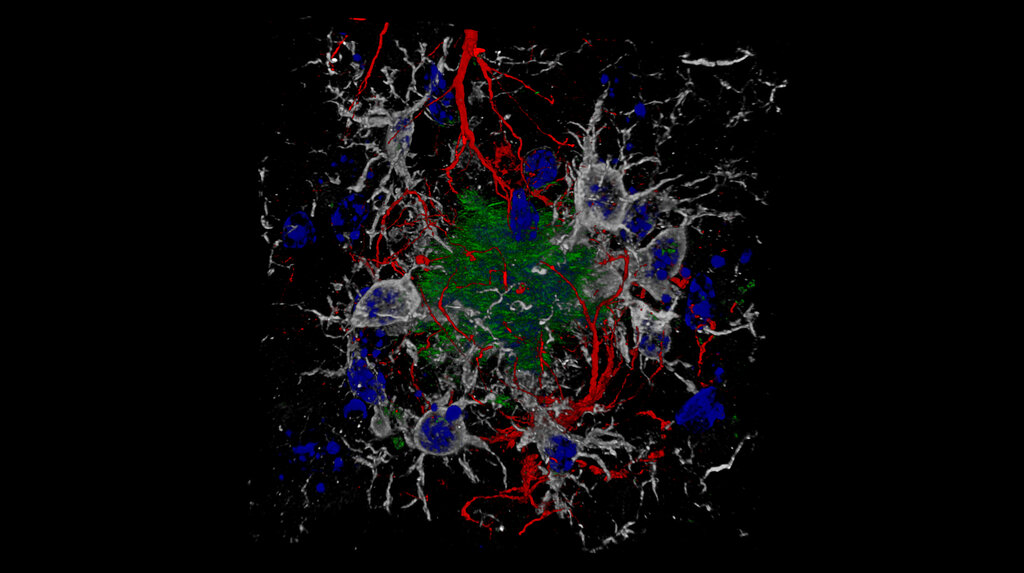
There are a few main types of glial cells, each with a specific job:
-
Astrocytes: These are star-shaped cells and the most abundant type of glia. They are the ultimate multitaskers. Astrocytes provide nutrients to neurons, maintain the chemical balance of the fluid surrounding them, and help form the blood-brain barrier, a protective shield that keeps harmful substances out of the brain.
-
Oligodendrocytes: These are the cells that create the myelin sheath around axons in the brain and spinal cord. By wrapping axons in layers of myelin, they ensure that neural signals travel quickly and efficiently.
-
Microglia: These are the brain's dedicated immune cells. They act like tiny janitors and bodyguards, constantly patrolling for signs of injury or disease. They clean up cellular debris, destroy invading pathogens, and help manage inflammation.
Together, neurons and glia form a complex and interdependent network. The fast-flying messages of neurons are only possible because of the constant, diligent support of their glial partners.
What is the primary function of neurons in the nervous system?
Which part of a neuron is primarily responsible for receiving signals from other neurons?