Introduction to Neuroscience
Neurons and Glial Cells
The Nervous System's Building Blocks
Your nervous system is a vast, complex network responsible for everything you think, feel, and do. At its core, this network is built from two fundamental types of cells: neurons and glial cells. Think of neurons as the wiring that carries messages, and glial cells as the essential support crew that keeps the whole system running smoothly.
Neurons The Messengers
Neurons are the stars of the show. They are specialized cells that transmit information using a combination of electrical and chemical signals. Each neuron is a tiny information processor, receiving signals, deciding whether to pass them on, and then sending them to the next cell in the line.
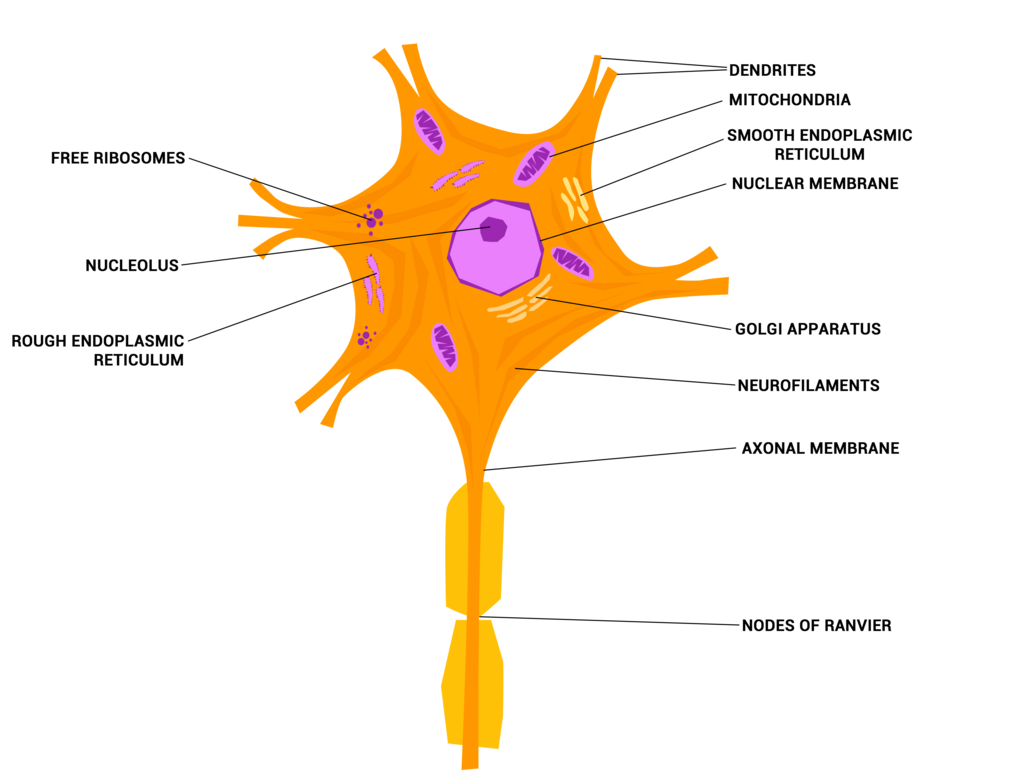
A neuron has several distinct parts, each with a specific job:
-
Dendrites: These are the tree-like branches that receive signals from other neurons. Think of them as the neuron's antennas, constantly listening for incoming messages.
-
Soma (Cell Body): This is the neuron's main hub. It contains the nucleus and other organelles needed to keep the cell alive and functioning. The soma integrates the signals received by the dendrites.
-
Axon: This is a long, cable-like projection that carries signals away from the cell body. If the soma decides a signal is strong enough, it sends an electrical impulse called an action potential down the axon.
-
Myelin Sheath: Many axons are covered in a fatty substance called myelin. This sheath acts as an insulator, much like the plastic coating on an electrical wire, allowing nerve impulses to travel much faster.
-
Axon Terminals: These are the small branches at the very end of the axon. They form connections with other cells and release chemical messengers to transmit the signal across the gap.
Neuron
noun
A specialized cell transmitting nerve impulses; a nerve cell.
While all neurons share this basic structure, they come in different types based on their function.
| Type of Neuron | Function |
|---|---|
| Sensory Neurons | Carry signals from your senses (like touch, sight, and sound) to the central nervous system. |
| Motor Neurons | Carry signals from the central nervous system to your muscles and glands, telling them what to do. |
| Interneurons | Act as connectors, passing signals between sensory and motor neurons, and between other interneurons. They form the complex circuits within the brain and spinal cord. |
How Neurons Communicate
A signal travels within a single neuron as an electrical impulse. But neurons don't physically touch each other. There's a microscopic gap between the axon terminal of one neuron and the dendrite of the next. This junction is called a synapse, and communication across it is a chemical process.
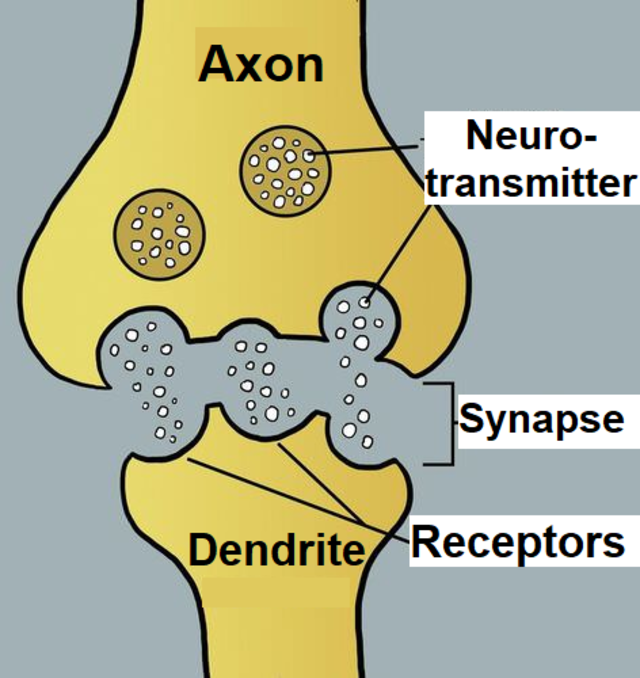
Here’s how it works:
- The electrical signal (action potential) reaches the end of the axon.
- This triggers the release of chemical messengers called neurotransmitters from small sacs into the synapse.
- These neurotransmitters drift across the gap and bind to specific receptors on the dendrites of the next neuron.
- This binding action can either excite the next neuron, making it more likely to fire its own signal, or inhibit it, making it less likely to fire.
This entire process of synaptic transmission happens in a fraction of a millisecond. Your brain is performing trillions of these calculations every second.
Glial Cells The Support Crew
For a long time, glial cells were thought to be little more than cellular glue holding the neurons in place. We now know they are crucial, active participants in brain function. In fact, they outnumber neurons in many parts of the brain.
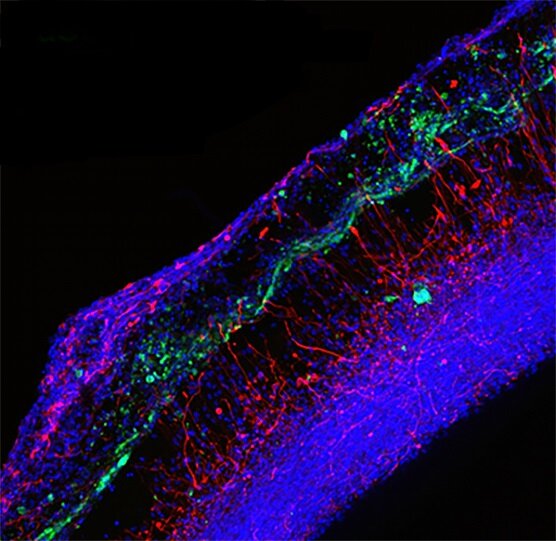
Glial cells don't transmit nerve impulses like neurons do. Instead, they perform a variety of essential support functions. There are several types, each with its own specialty:
| Glial Cell Type | Primary Function |
|---|---|
| Astrocytes | Star-shaped cells that provide nutrients to neurons, maintain the chemical balance around them, and help form the blood-brain barrier. |
| Oligodendrocytes | Form the myelin sheath around axons in the central nervous system (brain and spinal cord). One cell can myelinate multiple axons. |
| Schwann Cells | Form the myelin sheath around axons in the peripheral nervous system (the nerves outside the brain and spinal cord). One cell myelinates a single axon. |
| Microglia | Act as the brain's immune system, cleaning up dead cells and other debris to protect against disease. |
Without the constant work of these glial cells, neurons wouldn't be able to survive or communicate effectively. They are the unsung heroes of the nervous system, creating the perfect environment for neural signaling to occur.
Ready to check your understanding of the nervous system's building blocks?
What is the primary function of a neuron's axon?
How do neurons transmit signals to one another across the synaptic gap?
Understanding the roles of neurons and glia is the first step in exploring how the nervous system works. These cells form the foundation for every thought and action.