Introduction to Network Engineering
Networking Basics
What Is a Network?
At its core, a computer network is just a group of devices connected together. The goal is simple: to share information and resources. Think of it like a road system. Roads connect different houses and businesses, allowing people and goods to travel between them. Networks do the same for digital data.
The main purpose of a network is to make it possible for devices to communicate and share things like files, printers, or an internet connection.
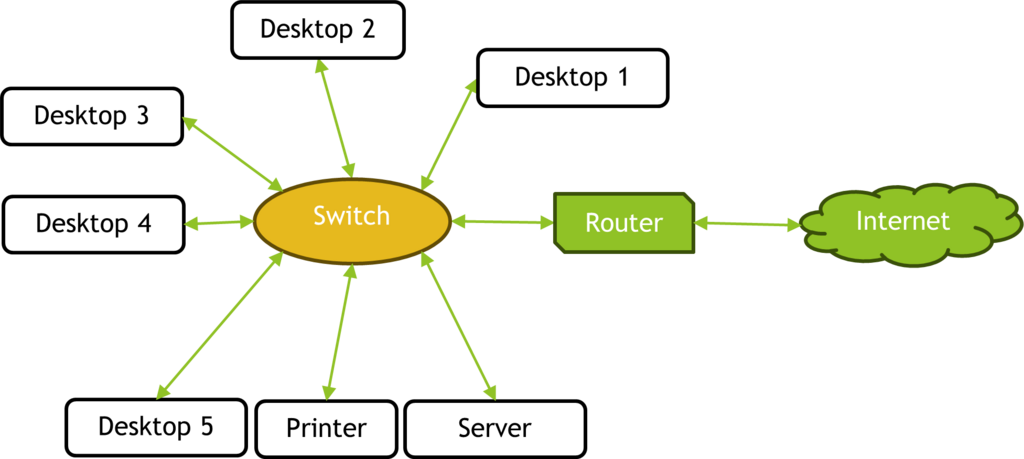
This setup allows a team in an office to use a single printer, a family to share one internet connection for multiple devices, or a company to store all its important files on a central server that everyone can access. Without networks, each device would be an isolated island.
Networks Big and Small
Networks come in different sizes, depending on the area they cover. The two most common types are Local Area Networks (LANs) and Wide Area Networks (WANs).
A Local Area Network (LAN) is a network confined to a small area, like a single home, office building, or school. If you have a Wi-Fi router at home that connects your laptop, phone, and smart TV, you've created a LAN. The connections are typically fast and are used for sharing files or printers within that local space.
A Wide Area Network (WAN) connects multiple LANs over a large geographical area. A company with offices in New York and London would use a WAN to connect their separate office LANs. The most famous and largest WAN is the internet, which connects billions of devices all over the world.
It's also useful to distinguish between wired and wireless networks. A wired network uses physical cables (like Ethernet) to connect devices. A wireless network (WLAN) uses radio waves, like Wi-Fi, to connect devices without any physical cables. Most modern networks are a hybrid, using both.
Structure and Rules
For a network to function, it needs a clear structure and a common set of rules for communication. The structure is called its topology, and the rules are defined by models like OSI and TCP/IP.
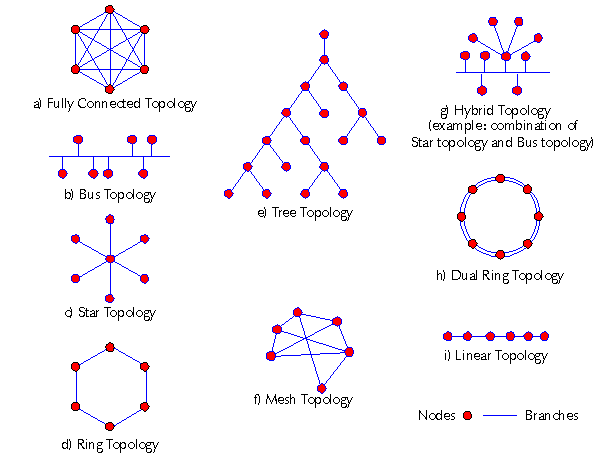
Network topology is the physical or logical arrangement of the devices in a network. Think of it as the network's map. There are several types, but one of the most common today is the star topology, where all devices connect to a central hub, like a router.
For communication to be successful, all devices must "speak the same language." This is where protocol models come in. They are conceptual frameworks that standardize how data is sent and received across a network. The two main models are the OSI model and the TCP/IP model.
-
The OSI (Open Systems Interconnection) Model is a conceptual framework that breaks down network communication into seven distinct layers. Each layer has a specific job, from the physical wires (Layer 1) to the applications you use (Layer 7).
-
The TCP/IP Model is a more practical, four-layer model that is the foundation of the modern internet. It groups some of the OSI layers together and is the protocol suite that virtually all internet traffic uses today.
Think of these models as a blueprint for an assembly line. Each layer, or station, adds or removes a piece of information from the data until it's ready for the next step, ensuring it gets from its source to its destination correctly.
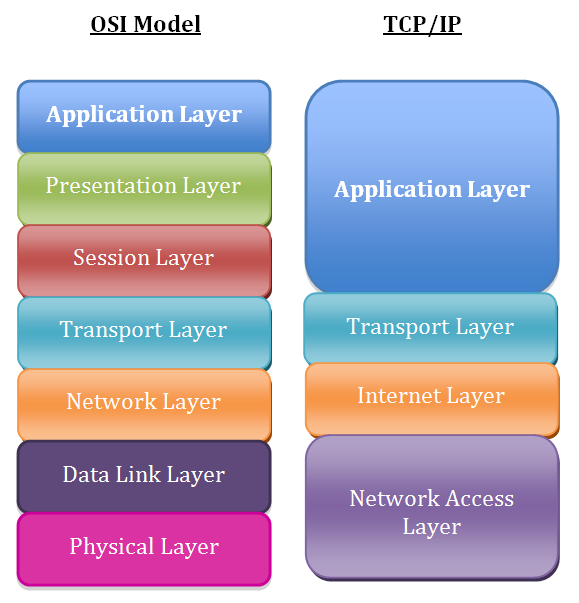
You don't need to memorize every layer right now. The key takeaway is that network communication is a complex process broken down into manageable, standardized steps. This layered approach allows different technologies from different manufacturers to work together seamlessly.
What is the primary purpose of a computer network?
A company has offices in Berlin, Tokyo, and Cairo. To connect the computer systems in all three locations, the company would need to build a ____.
Understanding these basic building blocks—what a network is, its different sizes, and the models that govern it—is the first step to understanding how our connected world works.