Introduction to Natural Language Processing
Introduction to NLP
Teaching Machines Our Language
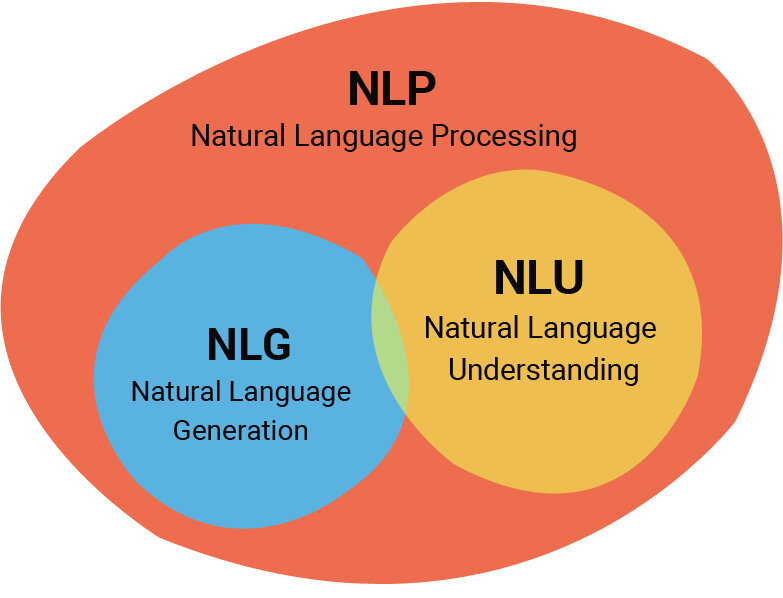
At its heart, Natural Language Processing (NLP) is about a simple, yet profound, goal: bridging the gap between human language and computer understanding. It's a field where computer science, artificial intelligence, and linguistics meet, all working to enable computers to process, interpret, and even generate language in a way that feels natural to us.
Natural language processing (NLP) is a subset of AI that helps computers understand, interpret, and generate human language.
Think about how effortlessly you understand the words on this page. You're not just reading a string of letters; you're grasping meaning, context, and intent. NLP aims to give computers a similar ability. It's the technology that powers many of the digital interactions we take for granted every day.
From Codebreaking to Conversation
The dream of computers understanding language isn't new. Its roots can be traced back to the mid-20th century, growing out of the same intellectual soil as early computer science and cryptography. Early efforts, particularly during the Cold War, focused heavily on machine translation. The goal was practical: automatically translate Russian scientific documents into English.
These initial systems were mostly rule-based. Engineers and linguists would painstakingly write grammatical rules for the computer to follow. For example, a rule might tell the machine that in English, adjectives usually come before nouns. But human language is messy and full of exceptions, and these systems were often rigid and produced clunky, literal translations.
A major shift came with the rise of statistical methods and, more recently, machine learning. Instead of being fed grammatical rules, modern NLP models learn from vast amounts of text and speech data. By analyzing patterns in billions of sentences, they learn the nuances of language on their own, leading to the far more sophisticated and natural-sounding AI we interact with today.
NLP in Your Daily Life
You might not always notice it, but NLP is working behind the scenes in many of the tools you use. It's what makes modern technology feel more intuitive and helpful.
| Application | What It Does |
|---|---|
| Machine Translation | Instantly translates text from one language to another (e.g., Google Translate). |
| Chatbots & Voice Assistants | Powers conversations with virtual agents like Siri, Alexa, or customer service bots. |
| Sentiment Analysis | Determines the emotional tone behind a piece of text, like a product review or social media post. |
| Spam Filtering | Scans your emails to identify and block junk messages based on their content and patterns. |
| Predictive Text | Suggests the next word as you type a message or email, speeding up communication. |
The Building Blocks of Language
To teach computers about language, we first need to break it down into understandable parts. In linguistics, this involves looking at language through a few key lenses: syntax, semantics, and pragmatics. NLP systems must grapple with all three to truly comprehend what we mean.
syntax
noun
The set of rules that governs the structure of sentences in a given language. It's all about correct grammar and word order.
Syntax is the grammatical foundation of a sentence. An NLP model needs to understand these rules to parse a sentence correctly and identify its components, like nouns, verbs, and adjectives.
semantics
noun
The study of meaning in language. It deals with the interpretation of words, phrases, and sentences.
Semantics is about the literal meaning. While syntax checks if a sentence is structured correctly, semantics asks if it makes sense. An NLP system uses semantics to figure out what a sentence is actually trying to say.
pragmatics
noun
The study of how context contributes to meaning. It goes beyond the literal words to understand the intended meaning, relying on social cues, situation, and shared knowledge.
Pragmatics is perhaps the most challenging aspect for a machine to learn. It requires understanding the world beyond the text—things like sarcasm, politeness, and implication. It's the difference between what is said and what is meant.
Understanding these core concepts is the first step in appreciating the complexity and power of NLP. They form the foundation upon which all advanced language technologies are built.