Introduction to Natural Language Processing
Introduction to NLP
Teaching Computers to Understand Us
Every day, we use language effortlessly. We chat with friends, read the news, and ask our phones for directions. But how does a computer make sense of all this human language? That’s the central question of Natural Language Processing, or NLP. It’s a field of artificial intelligence that gives machines the ability to read, understand, and interpret human language.
Why is this so important? Without NLP, computers would only understand instructions in rigid, structured programming languages. NLP builds a bridge, allowing us to interact with technology in a more natural way. Every time you use a voice assistant, see a spam filter in action, or get a grammar suggestion, you're seeing NLP at work. It's the magic that turns messy, complex human language into structured data a computer can work with.
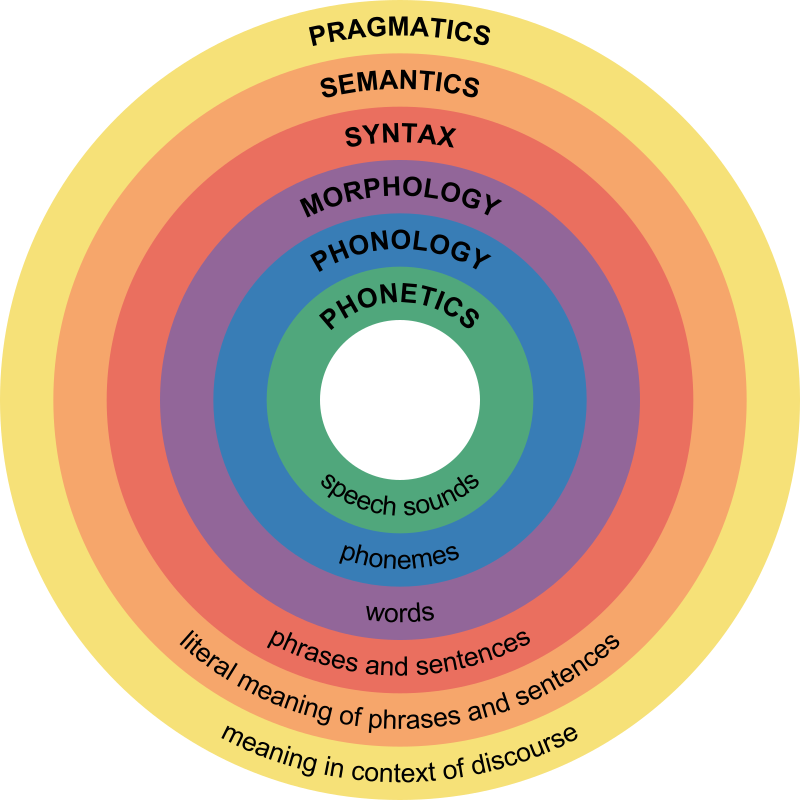
This field didn't just appear overnight. It has a long and fascinating history, evolving alongside our understanding of both language and computing.
A Brief History
The dream of computers understanding language is almost as old as computers themselves. Early attempts in the 1950s focused on machine translation, mainly between Russian and English during the Cold War. These first systems were based on complex, hand-written rules. Linguists would try to map out all the grammatical rules of a language, a massive and often brittle undertaking. If the system encountered a sentence that didn't fit the rules, it would fail.
Over the next few decades, the approach shifted. Instead of trying to teach computers grammar rules directly, researchers started using statistics. They would feed computers huge amounts of text and let them learn the patterns and probabilities of how words are used together. This was a major breakthrough.
More recently, the rise of neural networks and deep learning has revolutionized NLP once again. Modern systems can learn from even larger datasets and capture much more subtle nuances of language, leading to the powerful AI assistants and translation tools we use today.
The Building Blocks
To analyze language, NLP first needs data—and lots of it. A large, structured collection of text used for analysis is called a corpus.
corpus
noun
A collection of written or spoken material in machine-readable form, assembled for the purpose of linguistic research.
Once we have a corpus, we need to break it down into smaller pieces. The most fundamental units in NLP are tokens and types.
A token is a single instance of a word or punctuation mark in a text. A type is the unique word or mark itself. Think of it like this: if you read a book that has the word "the" 5,000 times, you have 5,000 tokens of "the," but only one type.
Consider the sentence: The quick brown fox jumps over the lazy dog.
This sentence contains 9 word tokens. But the word the appears twice, so there are only 8 unique word types (The, quick, brown, fox, jumps, over, lazy, dog).
This process of breaking text down into tokens is called tokenization. It's a critical first step for almost any NLP task.
What NLP Can Do
By analyzing tokens, types, and the patterns they form, NLP systems can perform a wide variety of tasks that help us make sense of the vast amount of text and speech data in the world. These tasks range from understanding the sentiment of a review to translating between languages in real time.
| Task | What It Does | A Real-World Example |
|---|---|---|
| Sentiment Analysis | Determines the emotional tone (positive, negative, neutral) behind a piece of text. | A company analyzes tweets about its new product to gauge public opinion. |
| Machine Translation | Automatically translates text or speech from one language to another. | Using an app to read a restaurant menu in a foreign country. |
| Text Summarization | Condenses a long document into a short, coherent summary. | Getting the key points from a long news article without reading the whole thing. |
| Named Entity Recognition | Identifies and categorizes key information (entities) in text, like names, places, and dates. | A calendar app automatically creating an event from an email that says, "Lunch with Sarah tomorrow at noon." |
These are just a few examples. NLP is a dynamic field that powers a growing number of applications, transforming how we find information, communicate, and interact with the digital world.
Ready to test your knowledge? Let's see what you've learned about the fundamentals of Natural Language Processing.
What is the primary goal of Natural Language Processing (NLP)?
In the early days of NLP (the 1950s), what was the dominant approach for tasks like machine translation?
Understanding these core ideas gives you a solid foundation for exploring the more advanced ways we teach computers to master the complexity of human language.