Introduction to Multi-Agent Systems
Introduction to Multi-Agent Systems
Beyond a Single Mind
Think about building a house. One person could do it, but it would take a very long time. A team, however, brings together specialists—carpenters, electricians, plumbers, and painters. Each person has a specific job, and by working together, they build the house far more efficiently than any single individual could.
Artificial intelligence often works the same way. While a single, powerful AI can solve complex problems, some challenges are so big or multifaceted that they're best handled by a team. This is the core idea behind a multi-agent system.
A multi-agent system (MAS) is a computerized system made up of multiple intelligent agents that interact with each other to solve problems that are beyond their individual capabilities.
These agents aren't just mindless cogs in a machine. They are individual programs that can perceive their environment and act autonomously to achieve their goals. When you put them together, they can communicate, coordinate, and negotiate, just like a human team.
The Makings of a Good Team
What makes a multi-agent system different from just running multiple programs at once? It comes down to a few key characteristics that enable them to function as a cohesive unit.
This conversation explores how specialized AI agents can collaborate to solve complex enterprise challenges, moving beyond simple information retrieval to real business impact through coordinated action and automation.
First is autonomy. Each agent has control over its own actions and internal state. It can make its own decisions without direct intervention from a human or another agent. Think of a disaster-response team where each robot decides the best path to search for survivors in its assigned area.
Next is communication. Agents need to talk to each other. They share information, make requests, and report their progress. This allows them to work in parallel without getting in each other's way. An agent in an automated warehouse might tell others, "I'm retrieving the item from aisle 5," so another agent doesn't try to do the same task.
Finally, there's coordination. This is the secret sauce. Through communication, agents can synchronize their actions to achieve a common goal. They might negotiate to divide up tasks or work together to handle a job that's too big for one agent, like two robotic arms cooperating to lift a heavy object.
Strength in Numbers
Why go to the trouble of building a team of agents instead of one super-agent? Multi-agent systems offer several powerful advantages.
They provide scalability and flexibility. If a task becomes more complex, you can add more agents to the system. If an agent fails, the others can often adapt and pick up the slack, making the entire system more robust and resilient. A single, monolithic system is often much harder to modify and can fail completely if one part breaks.
Multi-agent systems are also great for solving problems that are naturally distributed. This includes managing complex networks like power grids or supply chains, where different components need to be monitored and controlled simultaneously.
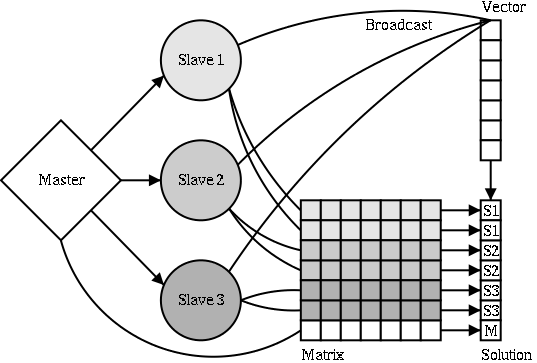
They also allow for specialization. Just as in our house-building example, you can design individual agents to be experts at specific tasks. One agent might be an expert at data analysis, another at user interaction, and a third at hardware control. Together, they form a more capable system than a single generalist agent could ever be.
Agents in the Wild
Multi-agent systems are not just a theoretical concept; they're already at work in many different fields.
In robotics, swarms of autonomous drones can coordinate to map an area, search for lost hikers, or even perform aerial light shows. Each drone is an agent, communicating its position and findings to the rest of the swarm.
Economics and finance use MAS to model complex markets. Each agent can represent an individual trader or a company, with its own strategies and goals. By simulating their interactions, economists can study market dynamics and predict how the system might react to different events.
They are also fundamental to modern e-commerce and logistics. When you buy something online, multiple agents work behind the scenes. One might find the best shipping route, another tracks the package, and a third manages warehouse inventory. Their coordination ensures your package arrives efficiently.
Even video games use multi-agent systems. The non-player characters (NPCs) in a large-scale battle or a bustling city are often individual agents. They react to the player and each other, creating a dynamic and believable world.
What is the core idea behind a multi-agent system?
Which of the following scenarios best illustrates the advantage of 'scalability' in a multi-agent system?
By breaking down large problems and enabling collaboration between specialized AIs, multi-agent systems represent a powerful approach to building more intelligent, adaptable, and robust technology.