Introduction to Morse Code
Introduction to Morse Code
A Language of Signals
Before we had phones in our pockets, sending a message across a long distance was a major challenge. In the 1830s, Samuel Morse and Alfred Vail developed a groundbreaking solution: a system for encoding text into electrical signals. This system, known as Morse code, could be sent over a simple wire, revolutionizing communication.
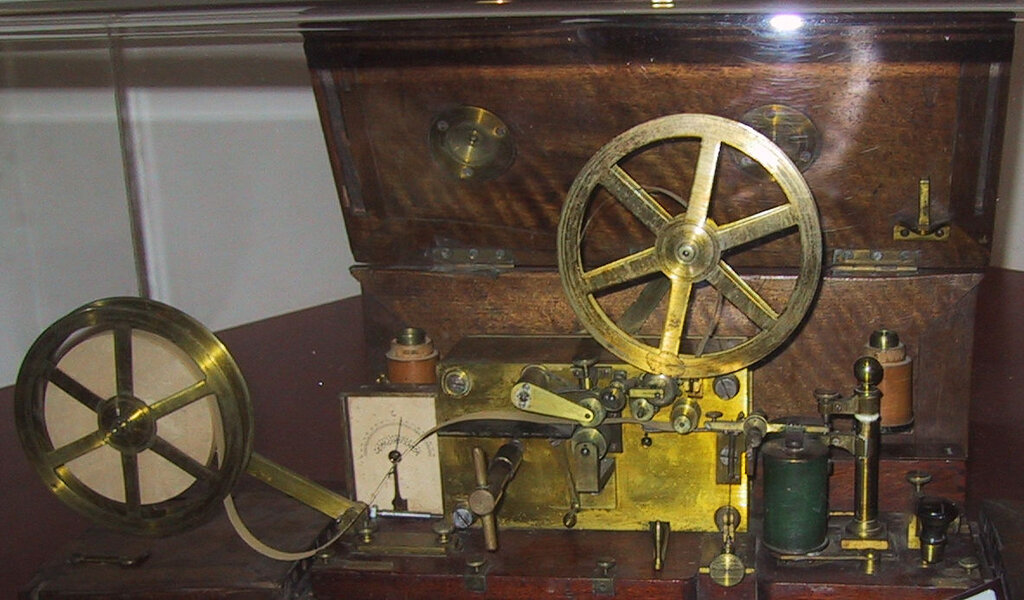
At its heart, Morse code is a way to represent the entire alphabet, numbers, and punctuation using just two simple signals. It works by translating each character into a unique sequence. These signals could be sent as electrical pulses, flashes of light, or sounds. This simplicity made it incredibly versatile and reliable.
Dots and Dashes
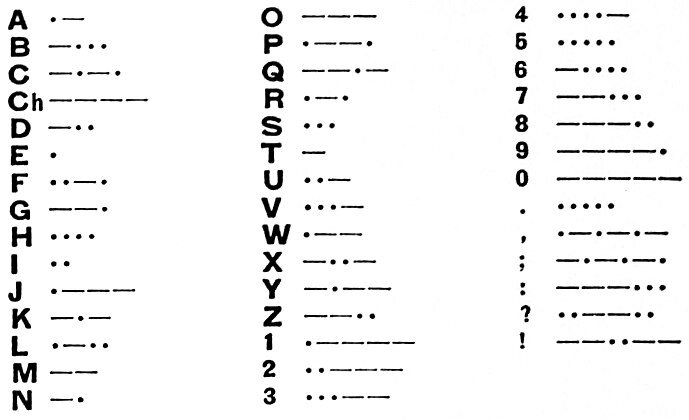
The two building blocks of Morse code are the dot (·) and the dash (–). A dot is a short signal, and a dash is a longer one. Think of it like a secret knock: a quick tap is a dot, and a longer knock is a dash. Every letter and number has its own special combination of these.
For example, the letter 'A' is represented by one dot followed by one dash: ·– The letter 'B' is a dash followed by three dots: –···
The most common letters in English, like 'E' and 'T', were given the shortest codes to make sending messages faster. 'E' is just a single dot (·), and 'T' is a single dash (–).
The Importance of Silence
Sending the right dots and dashes is only half the battle. The silence between the signals is just as important. Without proper spacing, a message becomes an unreadable jumble. Morse code has a strict set of timing rules based on the length of a single dot.
dot
noun
The basic unit of duration in Morse code. All other timings are measured relative to it.
These rules govern the rhythm of the code and allow a listener to distinguish between letters and words.
| Element | Duration |
|---|---|
| Dot (·) | 1 unit |
| Dash (–) | 3 units |
| Space between dots/dashes in a letter | 1 unit |
| Space between letters in a word | 3 units |
| Space between words | 7 units |
Let's see this in action with the message "HI THERE". We can visualize the timing, where a · is one unit of sound and a - is three units. The spaces are units of silence.
First, the letter 'H' is four dots (····). The letter 'I' is two dots (··).
···· (H) ... (space between letters) ·· (I)
Next, the word "THERE":
– (T) ... ···· (H) ... · (E) ... ·–· (R) ... · (E)
Putting it all together with the seven-unit space between words:
···· ... ·· ....... – ... ···· ... · ... ·–· ... ·
This precise rhythm is why you can learn to understand Morse code just by listening, without ever seeing the dots and dashes written down. It's a language designed for the ear.
What are the two fundamental signals that make up Morse code characters?
Why were the most common letters in English, like 'E' and 'T', given the shortest Morse codes?
Though not used as widely for general communication today, the fundamental principles of encoding information into simple signals remain a core concept in digital technology.