Introduction to Morphology
Introduction to Morphology
What is Morphology?
Think of a word you know. Any word. Let's take "unbreakable." It seems like one thing, but it's actually made of smaller parts: un-, break, and -able. Each part carries its own bit of meaning. Un- means "not," break means to shatter, and -able means "capable of being."
This is the core of morphology: the study of how words are built. It's like being a word architect, looking at the building blocks and blueprints that create the vocabulary of a language.
Studying morphology helps us understand how we create new words and understand unfamiliar ones. When you see a word like "deglobalization," you can probably guess its meaning because you understand what de- and -ization do to the root word global.
Morphology doesn't exist in a vacuum. It's closely linked to other areas of linguistics. It works with phonology (the study of sounds) to determine how word parts are pronounced, and with syntax (the study of sentence structure) to make sure words have the right endings to fit into a sentence. It also connects to semantics, the study of meaning.
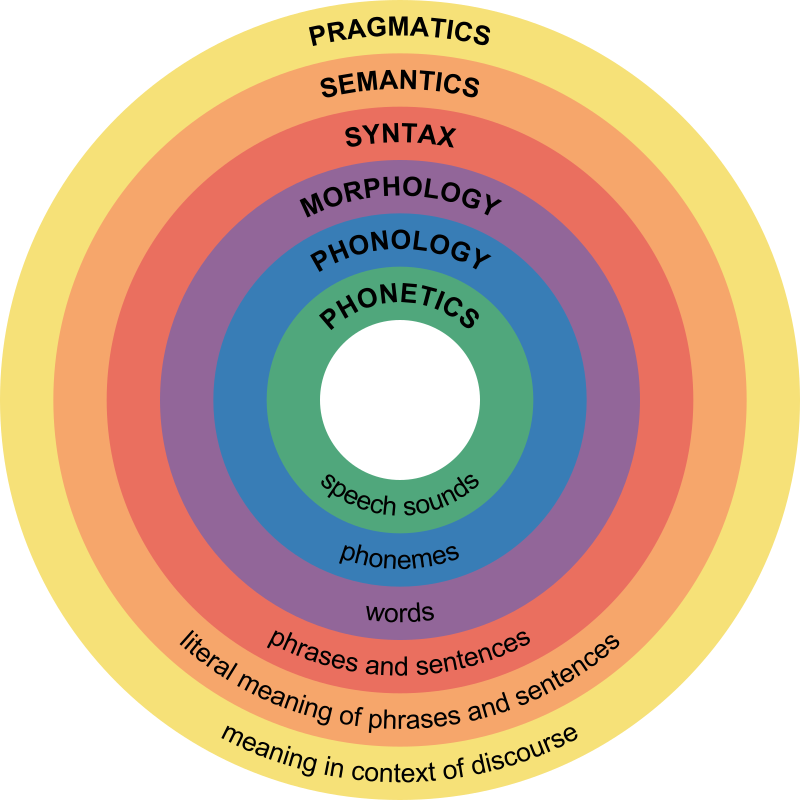
The Building Blocks of Words
The fundamental unit in morphology is the morpheme. It's the smallest piece of a word that still has meaning. A word can be made of one morpheme or several strung together.
morpheme
noun
The smallest unit of meaning in a language. It cannot be divided into smaller meaningful parts.
The word cat is a single morpheme. You can't break it down any further and still have a meaningful piece related to a feline. But cats has two morphemes: cat (the animal) and -s (meaning more than one).
Similarly, unhappiness has three morphemes: un- (not), happy (the feeling), and -ness (the state of being).
Types of Morphemes
Morphemes come in two main varieties: free and bound. The difference is simple. Free morphemes can stand alone as complete words. Bound morphemes can't; they have to be attached to another morpheme.
| Type | Description | Examples |
|---|---|---|
| Free Morpheme | Can stand alone as a word. | house, run, quick, on |
| Bound Morpheme | Must be attached to another morpheme. | -s, -ed, un-, -ly |
In the word cats, cat is a free morpheme, and -s is a bound morpheme. In unlikely, like is a free morpheme, while un- and -ly are bound morphemes.
Changing Grammar vs. Creating Words
Bound morphemes can be split into two further categories that do very different jobs. One type tweaks the grammar of a word, while the other creates a brand new word.
Derivational morphemes create new words, often changing the word's meaning or its part of speech (like turning a verb into a noun). For example, adding -er to the verb teach creates the noun teacher. Adding re- to the verb do creates redo, which has a different meaning.
Inflectional morphemes, on the other hand, only add grammatical information. They don't create new words. Adding -ed to walk just changes the tense to walked; it's still the same verb. English has only eight inflectional morphemes.
Derivational morphemes create new words. Inflectional morphemes modify existing words for grammar.
| Type | Purpose | Changes Part of Speech? | Examples |
|---|---|---|---|
| Inflectional | Adds grammatical info (tense, number, possession) | No | cat + -s; walk + -ed; John's |
| Derivational | Creates a new word with a new meaning | Often | happy (adj) + -ness -> happiness (noun) |
Understanding these basic building blocks is the first step in seeing the elegant, rule-based system that governs how words are formed and used in language.
Time to check your understanding of these core concepts.
What is the fundamental, smallest meaningful unit in the study of morphology?
How many morphemes are in the word "decentralization"?