Introduction to Molecular Biology
Introduction to Molecular Biology
The Blueprint of Life
Every living organism, from a single bacterium to a blue whale, operates on a set of instructions. This master plan dictates everything: how to build cells, how to get energy from food, what color your eyes are. This detailed instruction manual is a molecule called DNA.
DNA
noun
Deoxyribonucleic acid, a self-replicating material present in nearly all living organisms as the main constituent of chromosomes. It is the carrier of genetic information.
Think of DNA as a twisted ladder, a shape known as a double helix. The two long sides of the ladder are made of a sugar and a phosphate group, forming the sugar-phosphate backbone. The rungs connecting the sides are the most important part. They consist of pairs of chemical bases.
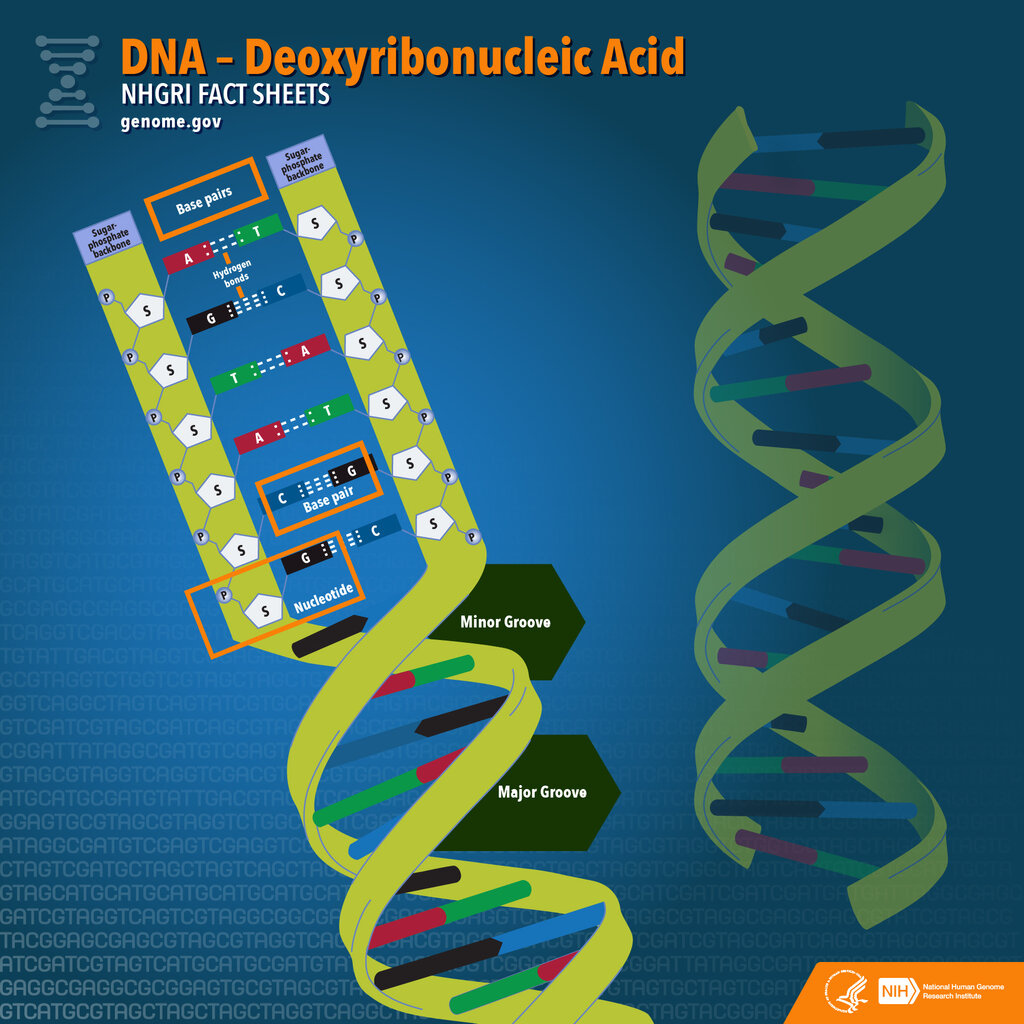
DNA uses an alphabet of just four letters: Adenine (A), Guanine (G), Cytosine (C), and Thymine (T). These bases form the rungs of the ladder, but they always pair up in a specific way: Adenine always pairs with Thymine (A-T), and Cytosine always pairs with Guanine (C-G). The specific sequence of these base pairs, stretching for millions or even billions of rungs, is the genetic code that writes the story of an organism.
From Blueprint to Action
The DNA blueprint is incredibly precious. In complex cells, like ours, it's kept safe inside a central compartment called the nucleus. But the work of building and running the cell happens outside the nucleus. So, how do the instructions get from the protected central office to the factory floor?
The cell uses a messenger molecule called RNA. When a specific instruction is needed, the cell makes a temporary copy of that part of the DNA. This copy is RNA.
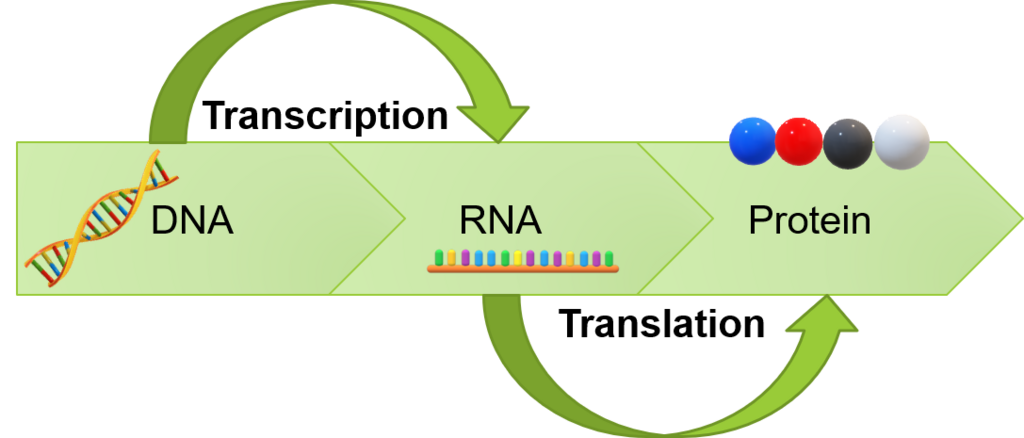
The flow of genetic information follows what scientists call the central dogma of molecular biology: DNA makes RNA, and RNA makes protein.
This flow of information is the core principle of molecular biology. It's a two-step process:
- Transcription: A segment of DNA is copied into a messenger RNA (mRNA) molecule.
- Translation: The mRNA molecule carries the code to a cellular machine called a ribosome, which reads the code and builds a specific protein.
Proteins are the workhorses of the cell. They act as enzymes, provide structural support, and carry out countless other tasks. The specific sequence of DNA bases ultimately determines the sequence of amino acids in a protein, which in turn determines the protein's function.
Organizing the Library
A single human cell contains about two meters of DNA. To fit all this information into a microscopic nucleus, it has to be organized incredibly efficiently. The DNA is tightly coiled around proteins called histones. This DNA-protein complex is called chromatin, which is further condensed to form structures we can see under a microscope: chromosomes.
Humans have 23 pairs of chromosomes in most cells. Your entire set of DNA, across all chromosomes, is your genome. It's the complete library of genetic instructions for building and maintaining you.
A genome is the complete set of genetic instructions for an organism.
Within this vast library, specific sections of DNA that contain the instructions for making a single protein are called genes. You can think of the genome as a library, chromosomes as the bookshelves, and genes as the individual books. When a cell needs to perform a function, it finds the right 'book' (gene) and makes a copy (mRNA) to send out to the workshop.
This system of storing, copying, and acting on information is the foundation of life. Understanding this process opens the door to understanding heredity, disease, and what makes every living thing unique.
What is the characteristic shape of a DNA molecule, often described as a twisted ladder?
According to the rules of base pairing in DNA, Cytosine (C) always pairs with which other base?