Introduction to MLIR
Introduction to Compiler Design
From Code to Machine
When you write a line of code in a language like Python or C++, you're giving instructions in a language humans can understand. But a computer's processor, its brain, speaks a completely different, much simpler language called machine code. A compiler is a special program that acts as a translator, converting your human-readable source code into the machine code that a processor can execute.
A compiler works in several stages to transform high-level source code into efficient machine code.
This translation isn't a single, magical step. It's more like an assembly line, where your code passes through several distinct phases. Each phase takes the output of the previous one, refines it, and passes it along to the next. Let's walk through this process.
The Compiler's Assembly Line
The journey from source code to machine code has five main stops. This entire process is often called the compilation pipeline.
1. Lexical Analysis
The first step is for the compiler to read your code. It doesn't see lines or functions; it just sees a long string of characters. The lexical analyzer, or lexer, scans this string and groups characters into meaningful chunks called tokens. Think of tokens as the words of your code. For example, in the code x = 10;, the lexer would produce tokens for x (an identifier), = (an assignment operator), 10 (a number), and ; (a semicolon).
2. Parsing (Syntax Analysis)
Once the code is broken into "words," the parser checks if they are arranged in a grammatically correct way. Does the sequence of tokens follow the rules of the programming language? This is called syntax analysis. The parser builds a tree-like structure, often called a syntax tree, to represent the grammatical structure of the code. If you write something like 10 = x;, which is grammatically incorrect in most languages, the parser will catch the error here.
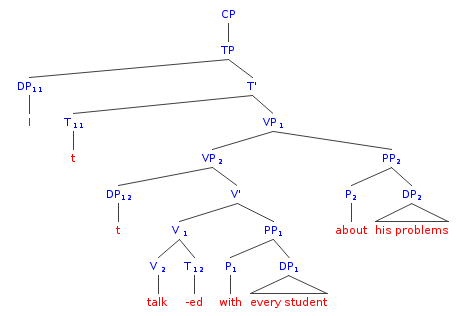
3. Semantic Analysis Just because a sentence is grammatically correct doesn't mean it makes sense. The classic example in linguistics is "Colorless green ideas sleep furiously." The grammar is fine, but the meaning is nonsensical. Semantic analysis is the compiler's check for meaning. It uses the syntax tree to ensure the code is logical. For instance, are you trying to add a number to a piece of text? Are you using a variable that hasn't been declared? This phase catches those kinds of errors.
4. Optimization After verifying that your code is correct and meaningful, the compiler tries to improve it. The optimization phase rewrites the code to make it run faster or use less memory, without changing its actual behavior. It might remove unnecessary steps, pre-calculate constant values, or rearrange operations to be more efficient. A good optimizer can have a huge impact on a program's performance.
5. Code Generation This is the final step. The code generator takes the optimized, verified code and translates it into the target machine code for a specific processor architecture. The output is a file that the computer can directly execute.
A Universal Language
Think about how many programming languages exist and how many different computer architectures there are (x86, ARM, etc.). Writing a full compiler from scratch for every single language-architecture pair would be a monumental task.
To solve this, modern compilers use a clever design. They split the process into two major parts: the front end and the back end.
Front End: Handles the language-specific tasks: lexical analysis, parsing, and semantic analysis.
Back End: Handles the machine-specific tasks: optimization and code generation.
But how do they connect? They communicate through an Intermediate Representation (IR). The front end's job is to translate the source code into this common IR. The back end's job is to take that IR and translate it into machine code for a specific target.
This architecture is incredibly efficient. To support a new programming language, you only need to write a new front end that produces the existing IR. To support a new processor, you only need to write a new back end that consumes the IR. This 'many-to-many' problem becomes two much simpler 'many-to-one' and 'one-to-many' problems, with the IR at the center.
Now that you have an overview of how a compiler works, let's test your knowledge.
What is the primary function of a compiler?
During which phase of compilation would an error like trying to add a number to a string (e.g., "hello" + 5) be caught?
Understanding this compilation pipeline is the first step toward appreciating the complex and elegant engineering that turns our ideas into software.