Introduction to Mineralogy
Introduction to Mineralogy
The Building Blocks of Earth
Look around you. The salt on your table, the graphite in your pencil, and the glass in your window all have something in common: they come from minerals. Minerals are the fundamental building blocks of our planet.
Mineral
noun
A naturally occurring, inorganic solid with a definite chemical composition and an orderly, crystalline internal structure.
Let's break that down. To be a mineral, a substance must meet five criteria:
- Naturally Occurring: It can't be made in a lab. Steel is not a mineral.
- Inorganic: It isn't made by a living organism, and it never was. Coal, formed from ancient plants, is not a mineral.
- Solid: It isn't a liquid or a gas at standard temperature and pressure.
- Definite Chemical Composition: Each mineral has a specific chemical formula. Quartz, for example, is always —one part silicon to two parts oxygen.
- Orderly Internal Structure: Its atoms are arranged in a repeating, geometric pattern. This ordered structure is what forms crystals.
A mineral is a naturally occurring inorganic substance having an orderly internal structure and characteristic chemical composition, crystal form, and physical properties.
Minerals vs. Rocks
So what's the difference between a mineral and a rock? It's simple: rocks are made of minerals.
Think of minerals as ingredients and a rock as the finished cookie. A cookie can have flour, sugar, and chocolate chips. Similarly, a rock is an aggregate, or a mixture, of one or more minerals.
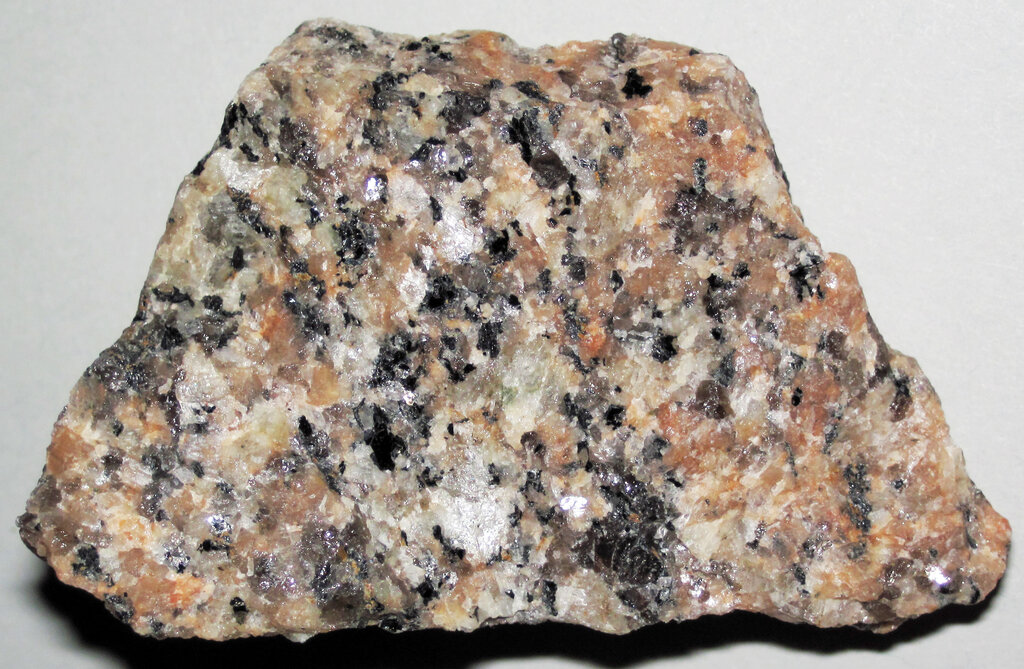
Some rocks, like limestone, are made almost entirely of one mineral (calcite). Others, like the granite shown above, are a blend of several different minerals locked together. The specific minerals present, and how they are arranged, determine the type of rock.
Meet the Common Minerals
Thousands of minerals exist, but only a handful are truly common. These rock-forming minerals make up the vast majority of Earth's crust. Let's meet a few of them.
Quartz: One of the most abundant minerals on Earth. It's known for its hardness and durability. You can find it everywhere, from sandy beaches to the glass in your phone screen. Its chemical formula is .
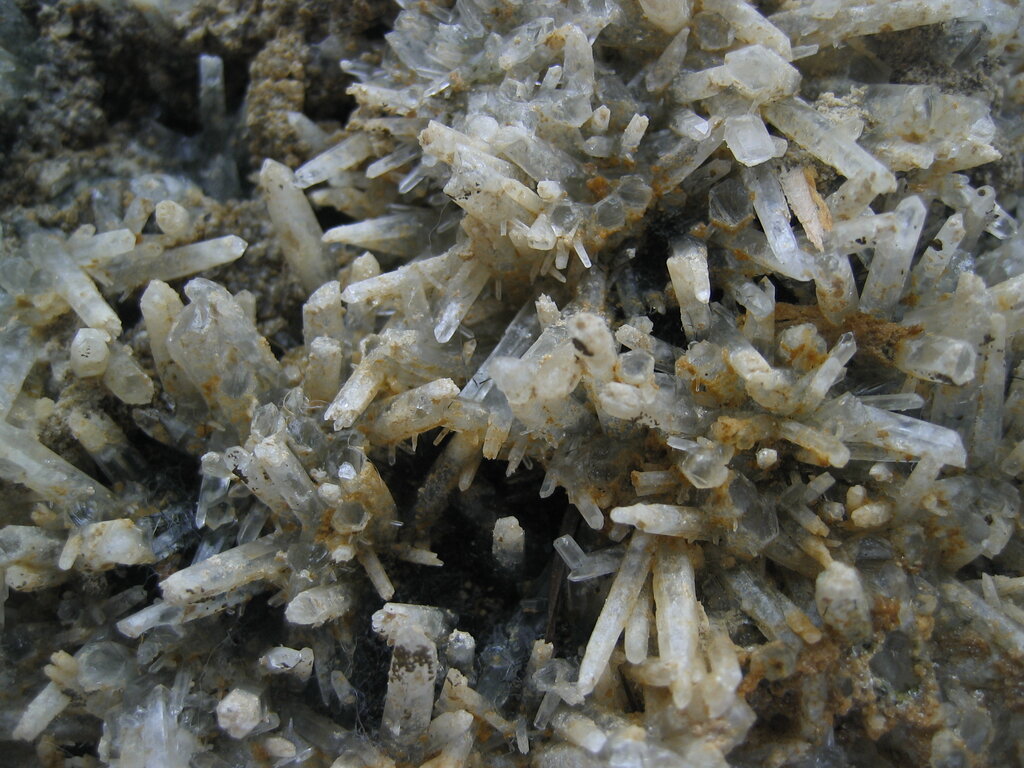
Feldspar: This is actually a group of minerals, and it's the single most abundant group in the Earth's crust. They are key ingredients in rocks like granite and are used in making ceramics and glass.
Mica: Known for its perfect cleavage, mica splits easily into thin, flexible sheets. This property made it useful for early windowpanes, and today it's used in electronics and cosmetics to add a shimmer.
Amphibole: This group of minerals, which includes hornblende, typically forms dark, needle-like or blocky crystals. They are common in both igneous and metamorphic rocks.
Olivine: A green-colored mineral that is a major component of the Earth's upper mantle. It's often found in dark volcanic rocks and is also the gemstone peridot.
Calcite: The main component of limestone and marble. It's much softer than quartz and will fizz when it comes into contact with a weak acid. The shells of many marine organisms are made of calcite.
Why Minerals Matter
Minerals are essential to our daily lives and to the planet itself. We use halite (salt) to season food. We extract iron from minerals like hematite to make steel for our buildings and cars. The wiring in our homes is made of copper, which comes from minerals like chalcopyrite.
Beyond their direct uses, minerals are the foundation of Earth's geology. They form the rocks of the crust, and their physical and chemical properties dictate how those rocks behave. They weather and break down to form soil, providing the nutrients needed for life to thrive. The constant cycling of these materials, as shown in the rock cycle, shapes our planet's surface.
Understanding minerals is the first step to understanding Earth. They are the alphabet of geology; by learning to read them, we can begin to understand the planet's history and processes.